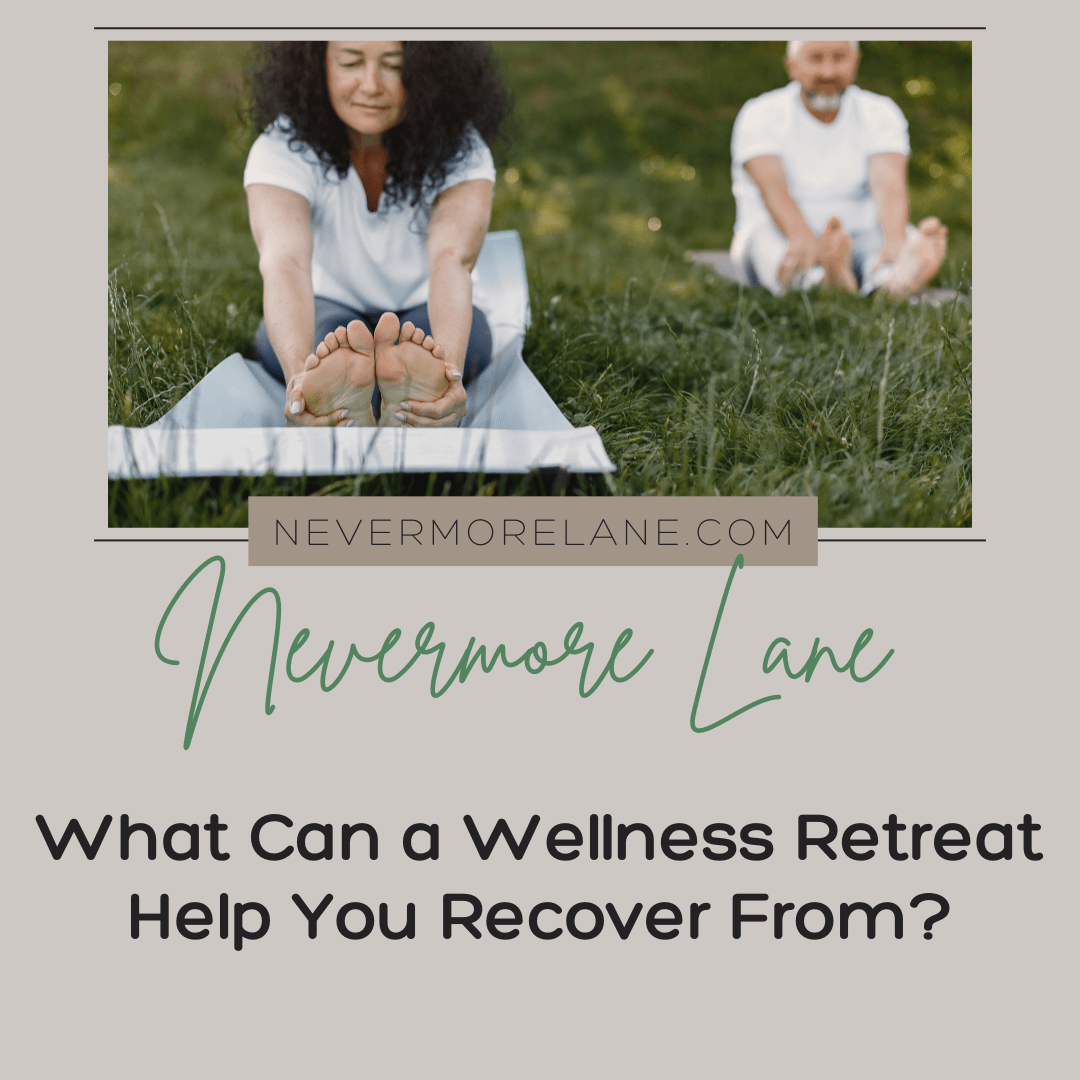
What Can a Wellness Retreat Help You Recover From?
The word “recovery” tends to make people picture one specific thing, and it is usually the most dramatic version. Addiction. Rock bottom. A crisis loud enough that everyone could see it. But the longer I spend thinking and writing about healing, the more convinced I am that recovery is a far wider, gentler word than that. We recover from all sorts of things, many of them quiet, many of them invisible to the people around us. And a wellness retreat, at its best, is simply a dedicated space to do that recovering, whatever shape yours happens to take.
So I want to walk through some of the things a thoughtful retreat can actually help with. Not as a sales pitch, and not as a promise that a few days away will solve a lifetime of hurt, but as an honest look at what becomes possible when you step out of the life that wore you down and into a setting designed to help you heal.
A gentle note before we begin: this is a personal and informational piece, not medical advice. If you or someone you love is struggling with a mental health or substance misuse condition, please reach out to a licensed professional. You can call or text the 988 Suicide & Crisis Lifeline any time or call SAMHSA’s free, confidential National Helpline at 1-800-662-HELP (4357), day or night.
Burnout and the Kind of Tired That Sleep Won’t Fix
Let’s start with the one almost no one escapes anymore. Burnout is not just being a little overworked. It is a deep, structural exhaustion that settles into your body and your spirit and refuses to lift no matter how early you go to bed. The World Health Organization now recognizes burnout as an occupational phenomenon precisely because so many people are living inside it, running on fumes, mistaking depletion for their permanent personality.
A retreat interrupts that cycle in a way a regular weekend simply cannot. It pulls you out of the environment that keeps refilling your stress and gives you long, unstructured hours to do the one thing burnout makes impossible at home: genuinely rest. And rest, real rest, is not laziness or a reward you have to earn. It is a repair. This is the truth I keep coming back to, that rest itself becomes a form of self-care, the load-bearing kind. Part of what feeds burnout is a world that never stops asking for our attention, which is why learning to make your home a haven from the noise matters just as much once you return.
Anxiety and a Nervous System Stuck in High Gear
For a lot of people, the everyday baseline has quietly become a low hum of dread. A racing mind at 3 a.m., a chest that never fully unclenches, a sense of bracing for something that never quite comes. Anxiety thrives on stimulation and isolation, two things modern life serves up in endless supply, and it can be very hard to calm a nervous system while standing in the middle of everything that keeps activating it.
A retreat offers something rare here: a deliberately calmer container. Quiet, routine, time in nature, and practices like breathwork and meditation that gently teach an overstimulated system how to settle again. Just as important, a good retreat helps unpick the stories we tell ourselves about our own anxiety, the shame, and the catastrophizing. It can be genuinely freeing to let go of the myths about anxiety that keep us stuck, and to start navigating life’s storms through mindfulness and self-care rather than white-knuckling through them alone.
Grief and Loss That Never Got Room to Breathe
Grief is one of the most undertreated wounds there is. The world gives us a few days, maybe a couple of weeks, and then quietly expects us to be functional again. So we pack the loss away and keep moving, and it sits there, unprocessed, shaping us from the inside. A retreat can be one of the few places where grief is finally allowed to surface and move, where there is space and gentleness and no calendar demanding you be over it.
Whether the loss is a person, a marriage, a pregnancy, a future you had counted on, or a version of yourself you have had to leave behind, grief deserves real care. If you are walking through that particular dark, you may find tenderness in these reflections on caring for your mental health after a funeral. Healing here is rarely tidy, but it is real, and it tends to happen faster when we stop forcing ourselves to grieve on the run.
Addiction and Substance Use
This is the recovery most people picture, and it absolutely belongs on the list. For substance misuse and addiction, the change of environment a retreat or residential setting provides is not a luxury; it is often essential. Stepping away from the triggers, the routines, and the relationships woven around a substance give a person the space to actually break the pattern, supported by people who understand what they are facing.
The strongest programs treat the whole person rather than just the symptom, recognizing that addiction usually grows in soil made of pain, trauma, and disconnection. If you are exploring this kind of dedicated, immersive support, you can look at a structured recovery retreat program to understand what comprehensive, environment-centered care can look like. And because so much of lasting sobriety depends on no longer feeling alone in it, the value of support groups in emotional healing is hard to overstate.
Major Life Transitions and Starting Over
Not every reason to recover is a diagnosis. Sometimes what flattens us is change itself: a divorce, a career ending, an empty nest, a move, the slow realization that the life we built no longer fits. These transitions can be just as destabilizing as any clinical crisis, and they rarely come with built-in support. A retreat can be a powerful place to sit in that in-between and begin to imagine what comes next.
If you are in one of those tender thresholds, you are in good company, and there is wisdom in these reflections on the strange season of having outgrown your old life but not yet settled into the new one. For those rebuilding after a marriage ends, there is real encouragement in these mindset shifts for thriving post-divorce, and more broadly, in the ongoing, lifelong art of reinventing yourself through lessons, mistakes, and fresh starts.
The Body Itself, and the Disconnection We Carry
So many of us live almost entirely in our heads, treating our bodies like inconvenient luggage. Chronic stress, poor sleep, years of ignoring our own signals: these leave a physical residue, and part of what a retreat can help you recover is simply your relationship with your own body. Movement, nourishing food, time outdoors, and practices that draw you back into the present can begin to repair that disconnection.
This whole-person view is the heart of it, the kind of self-care that nurtures the mind, body, and spirit together rather than in isolation. There is real science behind why the natural world is so often part of this work, and many people describe how nature-based experiences can reset their perspective on life in ways no amount of thinking ever could.
Choosing Well, With Your Eyes Open
Here is the part I want you to read slowly, because hope and caution have to hold hands. The wellness and recovery world is full of genuinely wonderful, ethical providers doing life-changing work. It also contains some that are not, and the more popular this kind of healing becomes, the more it attracts both. Where you or a loved one goes is one of the most consequential decisions a family can make, and it deserves far more scrutiny than booking a vacation.
A few things are worth verifying before committing anywhere. Ask whether a facility is licensed by its state and whether it holds independent accreditation from a respected nonprofit body such as The Joint Commission or CARF International. Ask whether their methods are evidence-based, supported by real research rather than glossy promises. You can learn what sound, science-backed care looks like through the National Institute of Mental Health, the National Institute on Drug Abuse, and, for mind-body practices, the National Center for Complementary and Integrative Health, all part of the National Institutes of Health.
The most reliable starting point I can offer is the government’s own free, anonymous treatment locator, FindTreatment.gov, run by SAMHSA. It lets you search licensed facilities with no sales pitch attached. Use it, and cross-reference whatever any program tells you against these independent sources. Be a little wary of anything that sounds too perfect. Real recovery is never effortless, even when it happens somewhere beautiful, and any program promising a guaranteed cure or an overnight fix is telling you something important about itself.
What Comes After the Retreat
Whatever you go to recover from, the days away are a beginning, not an ending. The life you return to is where healing is truly sustained, which is why the best experiences plan for that homecoming from the very start. For many people, that means continued, structured support that fits around ordinary life, exactly what outpatient mental health services are built to provide.
It also helps to remember that the instinct behind a retreat can be practiced in smaller, ongoing ways. You do not need to cross the country every time you need tending. Even setting aside a single afternoon for a solo self-care getaway close to home keeps the practice alive. And matching the kind of care to the kind of person you are matters enormously, which is the heart of why personalized care is so important on any wellness journey.
A Gentle Word Before You Go
Whatever brought you to this page, whatever you are quietly hoping to recover from, I want you to know it counts. You do not have to be in a dramatic, visible crisis to deserve care. Burnout counts. Grief counts. The slow erosion of a hard year counts. The fact that healing feels far away does not mean it is out of reach. It only means you have not arrived yet, and not arriving yet is a very different thing from never getting there.
A retreat will be there when the time is right, but you do not have to go anywhere at all to take the first step. You can take it from right where you sit, today, with a single phone call or a few honest minutes with yourself. Help is real, it is often free, and you are far more deserving of it than the hardest voice in your head wants you to believe. Wherever your path leads, be gentle with yourself on the way there.
Help Available Right Now
- 988 Suicide & Crisis Lifeline — call or text 988, 24/7, free and confidential.
- SAMHSA National Helpline — 1-800-662-HELP (4357), free, confidential, 24/7/365 treatment referral and information, in English and Spanish.
- FindTreatment.gov — the government’s free, anonymous locator for licensed treatment facilities.
About the Author
Negin Rezaei is a behavioral health advocate and communications specialist focused on connecting individuals and families with trusted resources for healing. She works at the intersection of digital media and wellness, amplifying compassionate, evidence-based care options and ensuring that life-changing recovery information reaches those who need it most.
According to Negin, being in the right environment is an important part of the healing process. Her digital outreach and advocacy work is designed to help destigmatize mental health and point people in the right direction to get the help they deserve to start over.
Sources & Further Reading
- Substance Abuse and Mental Health Services Administration (SAMHSA) — National Helpline and FindTreatment.gov
- National Institute of Mental Health (NIMH), National Institutes of Health — nimh.nih.gov
- National Institute on Drug Abuse (NIDA), National Institutes of Health — nida.nih.gov
- National Center for Complementary and Integrative Health (NCCIH), National Institutes of Health — nccih.nih.gov
- The Joint Commission — jointcommission.org
- CARF International — carf.org
Disclaimer: This article is for general informational and educational purposes only and does not constitute medical, psychological, or professional advice. Always seek the guidance of a qualified health provider with any questions you may have regarding a medical or mental health condition. If you are in crisis, call or text 988 immediately.