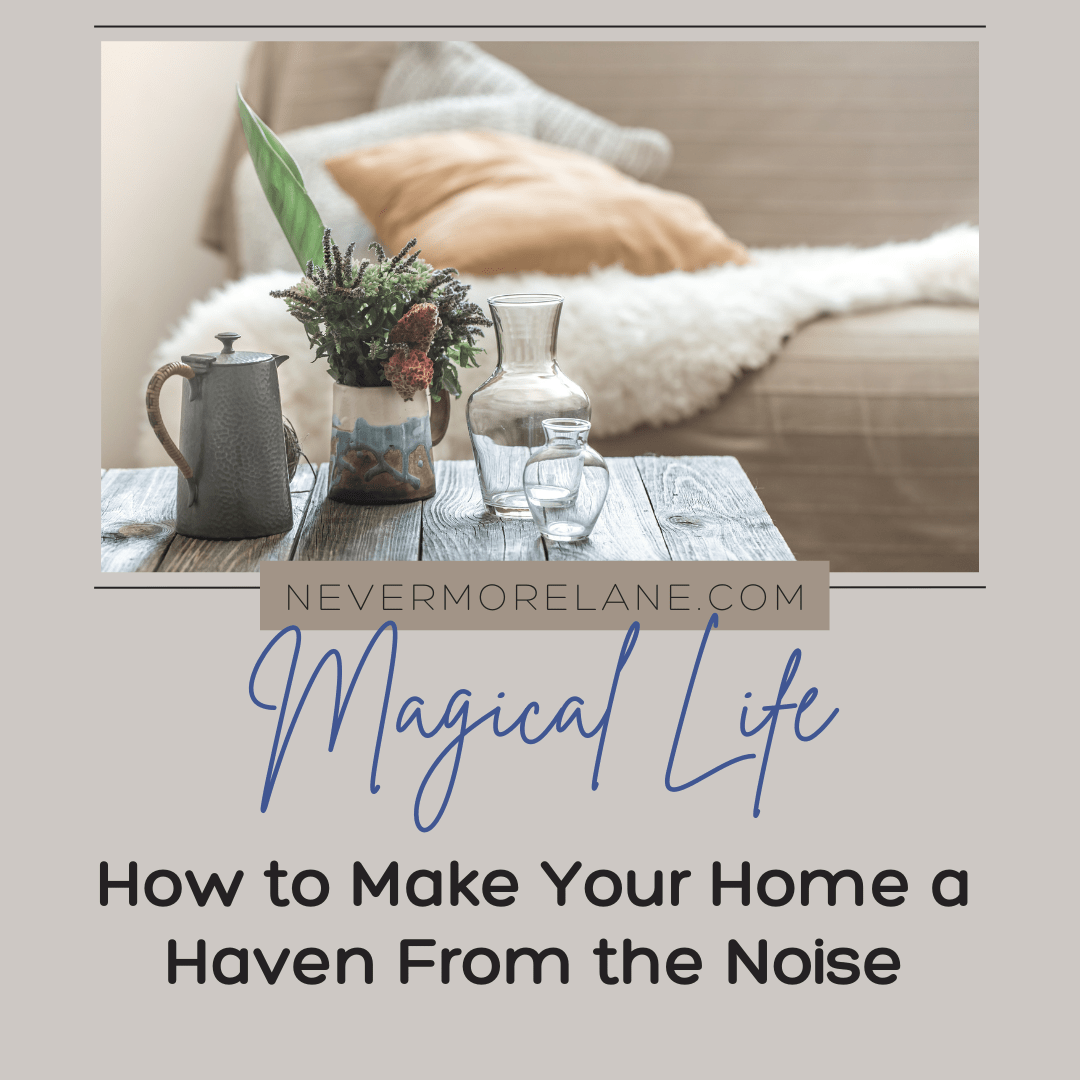
How to Make Your Home a Haven from the Noise
There is a particular kind of exhaustion that has nothing to do with how many hours you slept. It settles into your shoulders somewhere around midday and follows you through the front door, past the pile of shoes, and straight onto the couch where you were hoping to finally exhale. The world outside is genuinely loud right now. Not just in the auditory sense, though that is certainly true, but in the way it demands your attention at every turn. Notifications, opinions, urgency, noise. It compounds.
I have been thinking a lot about what it actually means to come home. Not just to a place where you keep your things, but to somewhere that genuinely receives you at the end of the day. A space that says, without words, that you can stop performing now. That is the kind of home I have been slowly, intentionally building for myself, and it is less about aesthetics than it is about feeling. It is about what the space does to your nervous system when you walk through the door.
If you have been craving that kind of stillness but are not sure where to start, you are in the right place. Slow living is not a design trend. It is a decision, made again and again, to choose quiet over chaos wherever you have the power to do so. Your home is one of the few places in the world where you hold most of that power. Here is how to use it.
How to Create a Sensory Boundary Between the Outside World and Your Home
The transition from outside to inside matters more than most people realize. When you walk through your front door still carrying the energetic residue of traffic, screens, and other people’s stress, your home never really gets a chance to do its job. One of the most effective things you can do is create a small, intentional ritual that signals to your body that the shift has happened.
This does not have to be elaborate. It might be removing your shoes and changing into something soft the moment you arrive. It might be washing your hands slowly with a scented soap you genuinely love, letting the warm water and the familiar smell act as a reset. It might be lighting a candle before you do anything else. The specifics matter less than the consistency. Your nervous system learns from repetition.
Scent, in particular, is underused as a tool for creating atmosphere. Because smell bypasses the thinking brain and connects directly to memory and emotion, certain fragrances can shift your mood in seconds. A diffuser running something grounding like cedarwood or vetiver, a beeswax candle with a low warm flame, or even a pot of something simmering on the stove can transform the emotional temperature of a room before you have even sat down. Think of your front hallway or entryway as a decompression chamber. What it holds, and what it asks of you, sets the tone for everything that follows.
How Sound and Silence Shape the Feeling of a Peaceful Home
Most people do not realize how much ambient noise they are tolerating until they remove it. The television running in the background as company, the hum of alerts and notifications, the neighbor’s music leaking through the wall. None of it is registering as noise exactly, but all of it is costing you something. Attention, presence, the ability to actually hear your own thoughts.
Silence is not always accessible, and for some people it is not even comfortable at first. If you have spent years filling quiet with sound, a sudden absence of it can feel unnerving. The goal is not to achieve monastic stillness but to become more deliberate about what you are listening to. Curated sound is a very different experience from background noise. A playlist you chose, a record you love, rain on the window, birdsong drifting in from outside. These things feel nourishing rather than depleting because you are engaging with them rather than simply tolerating them.
Physical materials in your home also absorb or amplify sound in ways worth paying attention to. Hard floors, bare walls, and empty surfaces create echo. Rugs, curtains, upholstered furniture, bookshelves filled with books, and soft textiles all dampen sound and make a space feel quieter and more enclosed in the best possible way. If your home feels loud even when nothing is playing, look at what is in the room. Sometimes the fix is softer than you think.
How to Design Low-Stimulation Zones in Your Living Space
Not every room needs to serve multiple purposes, and not every surface needs to hold something. Visual clutter is a form of noise, and it operates on your brain the same way auditory noise does, fragmenting your attention and keeping your nervous system in a low-level state of alert. Creating even one area in your home that is visually calm can make a significant difference in how the whole space feels.
A low-stimulation zone does not require a dedicated room. It can be a reading chair positioned away from the television, a corner of your bedroom cleared of work materials, or a small table set up with just a lamp, a cup, and a notebook. The key is that the space asks nothing of you. There are no tasks implied by what you see there. No laundry waiting to be folded, no screens with their constant suggestions. Just a place to be.
Lighting plays an enormous role in this. Overhead lighting is practical but rarely peaceful. Lamps, candles, and string lights at lower levels create pools of warmth that feel intimate and contained rather than exposed. Dimming the lights in the evening is one of the simplest ways to signal to your body that the active part of the day is winding down. It is not a small thing. Light is one of the primary cues your circadian rhythm uses to regulate your mood and energy, and most of us are fighting that system without realizing it.
How to Protect Your Home’s Peace From Digital Intrusion
Your phone is not a neutral object. Every time it is within reach, some portion of your attention is allocated to it, even when you are not actively using it. Studies consistently show that the mere presence of a smartphone on a desk or nearby surface reduces cognitive capacity, even if it is face down and silent. This is not a moral failing. It is simply how the technology is designed. It is built to capture attention, and it is very good at its job.
Creating physical separation between yourself and your devices, especially during the hours you are trying to rest or connect with your home, is one of the highest-leverage changes you can make. A small basket or drawer near the door for phones. A charging station in a room that is not the bedroom. A simple rule is that screens go off an hour before sleep. None of these things are revolutionary, but they protect something important: the experience of being somewhere without simultaneously being everywhere else.
The analog alternatives matter here too. A paper book instead of an e-reader when you are trying to wind down. A handwritten list instead of a notes app. A conversation instead of a scroll. There is a particular quality of presence that becomes available when your hands are doing something that does not require a screen, and your home becomes a different kind of place when it is not organized around devices. Quieter. More yours.
Finding Your Way Back to the Home That Actually Holds You
Making your home a haven is not a project you complete once and then check off. It is an ongoing practice of noticing what is draining you and gently removing it, of adding small things that restore you, and of returning, again and again, to the question of what you actually need in order to feel at ease. Some of that will shift with the seasons. Some of it will surprise you.
Start with one thing. Light a candle when you come home. Move the phone to another room for an evening. Sit in a chair without anything in your hands and notice what the quiet feels like. You do not have to transform your entire home overnight to begin feeling the difference. Slow living is built in increments, and the increments add up.
Your home is on your side. It is waiting for you to let it do what it does best: hold you, receive you, and give you somewhere to be that the rest of the world cannot reach.
If this resonated, come wander a little further through Nevermore Lane. There are more posts here on slow living, analog rhythms, and the small practices that make a quiet life feel full.
And if you would like to sit with me for a while, pour yourself something warm and join me for coffee. I would love the company.
Like what you read? Drop me a line – let’s chat over virtual coffee.
~ Chrystal