The Autumn Witch: Embracing the Season of Harvest, Shadow, and Slow Magic
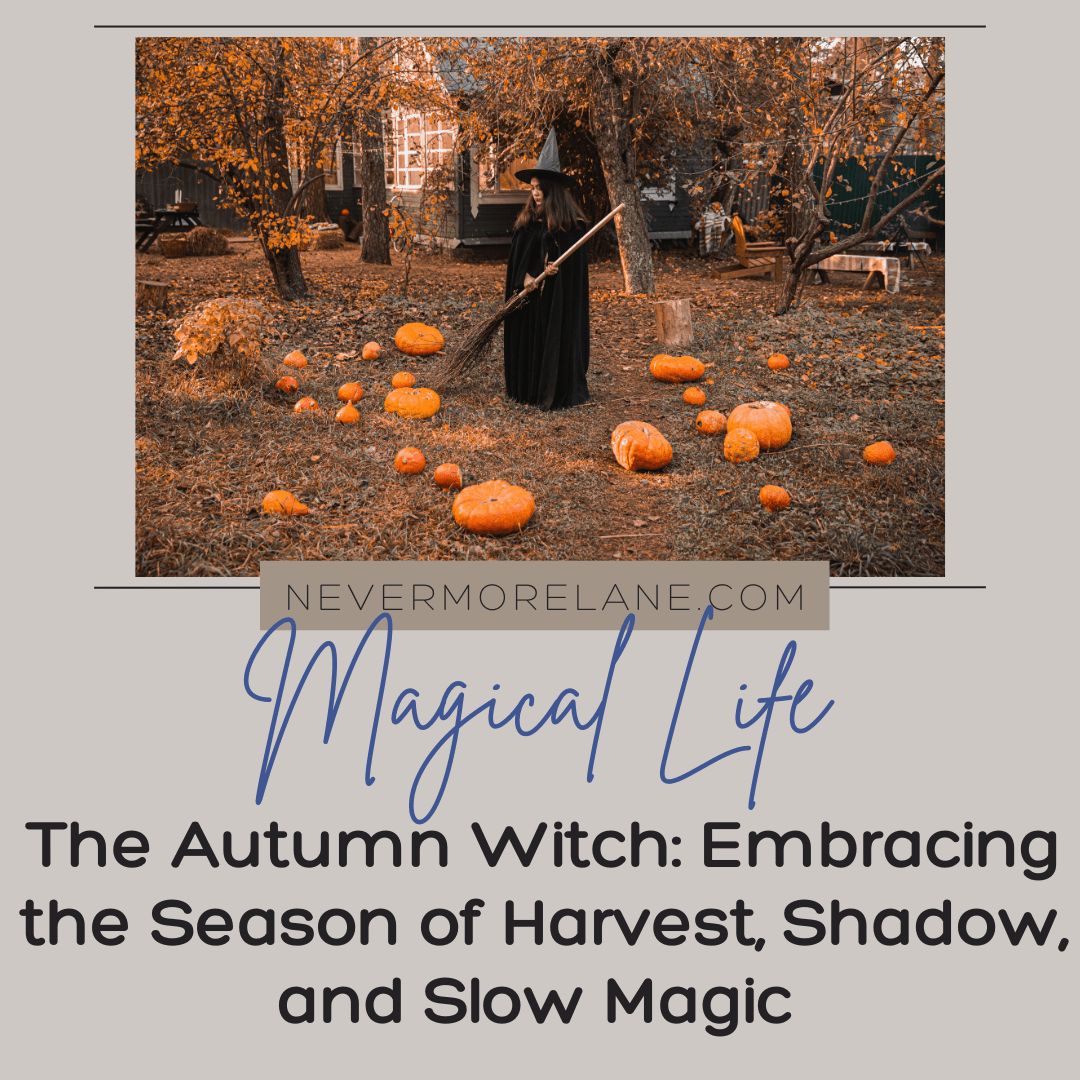
There is a particular kind of magic that arrives right around the first cool morning of September, when the light turns golden and the air smells faintly of woodsmoke and ripe apples. If you have ever felt your whole body exhale with relief the moment autumn shows up, you might already be an autumn witch without ever calling yourself one. I know I felt that pull long before I had a name for it, back when I was just a woman who could not stop buying candles that smelled like cinnamon and dried leaves.
Here at Nevermore Lane, autumn is not just a season we tolerate on the way to Halloween decorations. It is the season that makes the most sense to me, the one where slowing down finally feels acceptable instead of lazy. The autumn witch archetype speaks to that shift, the way nature itself starts pulling inward, gathering what it needs, and preparing to rest. There is nothing rushed about it, and that is exactly the point.
So today I want to talk about what it actually means to be an autumn witch, where this identity comes from, and how you can weave a little more of that seasonal magic into your own life, whether you have practiced witchcraft for twenty years or you just really love a good harvest candle. Grab your tea or cider, settle into your coziest chair, and let’s talk about the witch that autumn brings out in all of us.
What Is an Autumn Witch and Where Does the Term Come From
An autumn witch, sometimes called a seasonal witch, is a practitioner whose craft is closely tied to the energy, symbols, and rhythms of fall. Rather than following one fixed tradition, this identity centers on attunement to the season itself, the shortening days, the harvest, and the slow turn toward darkness that autumn represents. It is less about a formal title and more about a felt connection to what is happening in the natural world during September, October, and November.
This connection has deep roots in older harvest traditions, particularly Mabon, the autumn equinox celebration sometimes called the Witches’ Thanksgiving. Mabon falls between September 21st and 23rd and marks the second of three harvest festivals on the Wheel of the Year, following Lughnasadh in August and preceding Samhain in late October. It is a moment when day and night stand in near perfect balance before darkness begins to outweigh light, which is part of why so much autumn witch practice revolves around themes of balance, gratitude, and release.
You do not need a coven or years of study to claim this identity if it resonates with you. Many modern practitioners are solitary, blending old folklore with personal intuition and whatever feels meaningful in their own life. If you find yourself drawn to apple picking, gathering acorns, journaling by candlelight, or simply feeling more like yourself once the leaves start turning, you are already practicing a form of autumn witchcraft, whether or not you use spells or altars at all.
Rituals and Symbols That Define Seasonal Witchcraft
Autumn witchcraft leans heavily on symbols pulled directly from the harvest itself. Apples, gourds, pinecones, acorns, dried corn, and wheat all show up on altars and in seasonal decor because they represent abundance and the literal fruits of a year’s labor. Colors matter too, with deep reds, burnt oranges, warm golds, and rich browns dominating candles, altar cloths, and even clothing choices during this stretch of the year. These are not just aesthetic choices, they are intentional reminders of what the earth is offering and what we are being asked to notice.
Ritual during this season often centers on gratitude and reflection rather than big, dramatic spellwork. A simple Mabon ritual might involve lighting a candle, sitting with a basket of seasonal items like apples and dried herbs, and reflecting on what you have harvested in your own life over the past several months. This can mean literal accomplishments, but it just as often means lessons learned, relationships that grew, or habits you finally released. Many practitioners write down what they are grateful for on one side of a paper and what they are ready to let go of on the other, then fold it up as a symbolic offering to the season.
Nature walks and foraging also play a major role in seasonal witchcraft, and this is one of the easiest entry points if you are new to the practice. Walking beneath oak trees to collect acorns, gathering colorful leaves for divination, or picking the first apples of the season connects you directly to the harvest energy without requiring any special tools or training. Some practitioners even slice an apple horizontally to reveal the natural pentagram shape inside, sprinkle it with protective herbs like rosemary or sage, and bury it near their front door as a small act of seasonal protection. It is simple, it is grounded, and it feels like something anyone could do on a quiet Sunday afternoon.
Bringing Autumn Witch Energy Into Everyday Life
You do not have to overhaul your entire life to bring more autumn witch energy into your days. Start with your space. Refreshing an altar, or even just a windowsill or bookshelf, with seasonal items like dried flowers, small pumpkins, candles in warm colors, and a bowl of acorns is an easy way to make your home feel aligned with the season. This kind of intentional decorating is not just decor for decor’s sake, it is a quiet daily reminder to slow down and notice the shift happening outside your window.
Cooking and baking are another beautiful way to lean into this energy, and honestly, this might be my favorite part of the whole season. Preparing meals with root vegetables, baking with apples and pumpkin, or simmering a pot of mulled cider fills your home with the scent of the season and turns an ordinary weeknight dinner into something that feels a little more sacred. Food has always been part of harvest traditions, and sharing a seasonal meal with people you love, even something as simple as a pie, connects you to centuries of people who marked this same turning point in their own kitchens.
Journaling and quiet reflection round out the everyday practice of an autumn witch. Because this season sits at the balance point between light and dark, it is a natural time to sit with questions about what you want to carry forward into the colder months and what you are finally ready to release. You might set aside fifteen minutes with a cup of tea and simply write about what this year has taught you so far. There is no wrong way to do this, and you do not need any special background in witchcraft to find it meaningful. The goal is simply presence, noticing the season, and letting it shape how you move through your own life for a little while.
Why This Season Deserves a Slower, More Intentional Kind of Magic
Autumn asks something different of us than the rest of the year does. Where summer pushes us outward toward activity and constant motion, fall gently pulls us back in, and that shift deserves to be honored rather than rushed past on the way to winter. Whether you call yourself an autumn witch, a seasonal witch, or simply someone who loves this time of year a little too much, the invitation is the same. Notice the harvest around you, give thanks for what has grown, and let yourself rest before the deepest dark of the year arrives.
If this kind of slow, seasonal magic speaks to you, I would love for you to stick around Nevermore Lane a little longer. Explore more posts on seasonal rituals, cozy home magic, and everyday witchcraft right here on the blog, and if you want to keep the conversation going, come join me for coffee. I would genuinely love to hear how you are welcoming autumn into your own life this year.
Like what you read? Drop me a line – let’s chat over virtual coffee.
~ Chrystal
Photo by Monstera Production: https://www.pexels.com/photo/woman-in-black-dress-standing-on-brown-dried-leaves-5635132/