How Morning Pages Changed My Creative Life
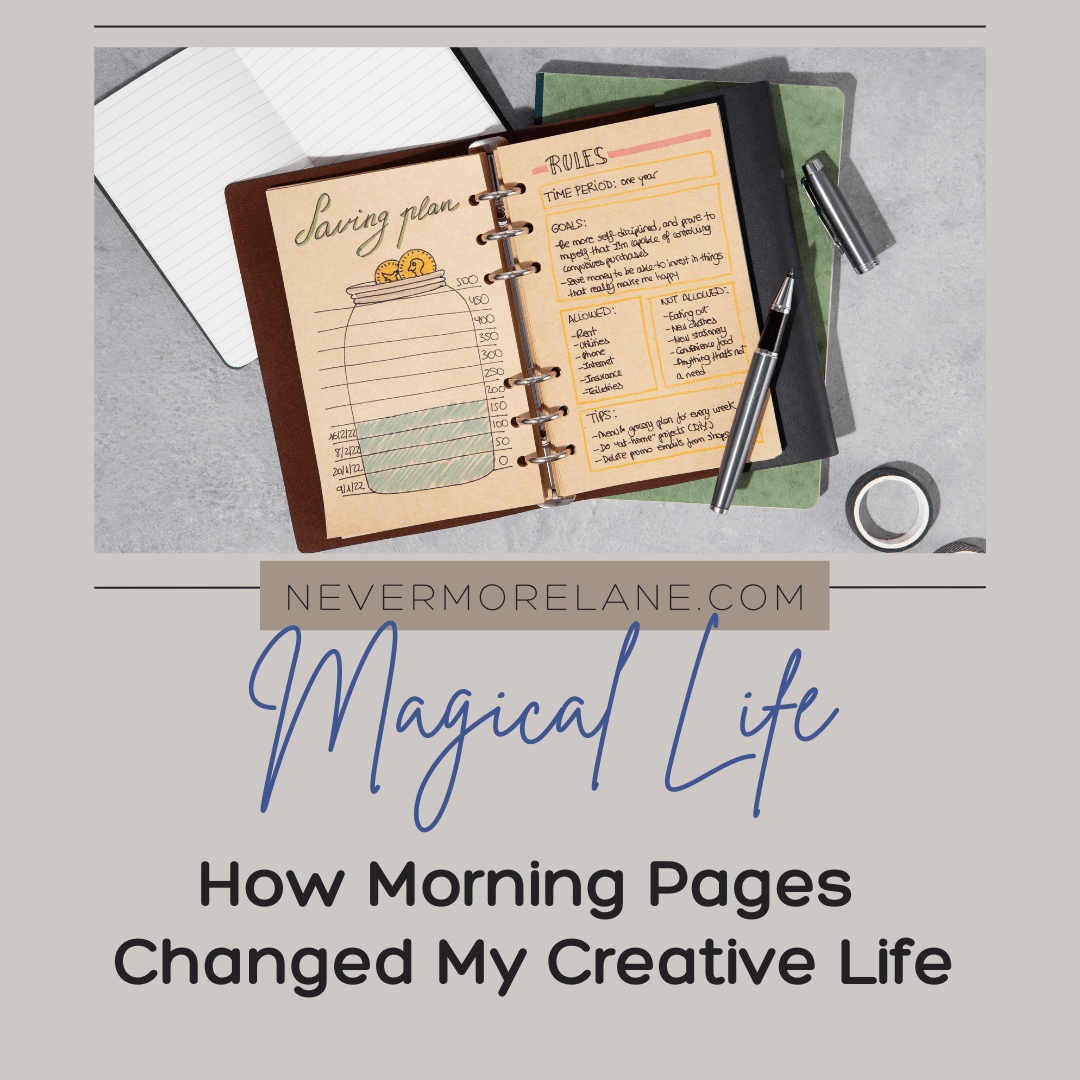
There is something almost sacred about the early morning hours before the world decides to need things from you. The light is still soft. The house is quiet in that particular way that feels intentional rather than accidental. And if you are anything like me, those first waking moments carry a kind of creative potential that the rest of the day tends to erode, one notification and obligation at a time. I spent years letting that window slip by, reaching for my phone before I had even fully arrived in my own body. It took a very old idea, three pages and a pen, to teach me how to stay.
Morning pages are not new. Julia Cameron introduced the practice in The Artist’s Way back in 1992, and writers, artists, and creatives of all kinds have been quietly filling notebooks in the dark ever since. The premise is almost embarrassingly simple: write three longhand pages first thing every morning, without stopping, without editing, without any expectation of brilliance. Stream of consciousness. Whatever is in your head. Grocery lists and grief and half-remembered dreams and the anxiety you cannot quite name. It all goes on the page. The magic, as it turns out, is not in what you write. It is in what writing it frees up.
I started my own morning pages practice on a cold January morning with a notebook I had been saving for something important. I figured this qualified. What I did not expect was how quickly those three pages would stop feeling like a task and start feeling like the truest part of my entire day. If you have been curious about the practice, or if you tried it once and gave up before it had a chance to take hold, I want to share what it has genuinely done for my creative life. Not the polished version. The real one.
What Morning Pages Actually Do to Your Creative Brain
The first thing morning pages did was show me how loud my own mind actually was. Before I started writing those pages, I thought I was a relatively calm person. The notebook disagreed. Page after page of worry and to-do lists and unfinished thoughts I had been carrying around for weeks made it abundantly clear that I was operating with a tremendous amount of mental clutter I was not even aware of. The pages became a daily clearing. A drain for the noise.
This is not just poetic framing. There is a real neurological argument for why writing longhand first thing in the morning works differently than typing, or than thinking, or than doing nothing at all. When you write by hand, you engage a different, slower part of your cognition. You cannot write as fast as you think, which forces a kind of deliberate processing that typing never requires. You are not transcribing your thoughts so much as you are excavating them. And what gets excavated, over time, is surprisingly useful.
What I noticed after about three weeks of consistent practice was that I was arriving at my actual creative work with far less friction. Blog posts that used to take me two hours of circling and procrastinating started coming more readily. Ideas I had been trying to force began appearing on their own, usually somewhere around page two of my morning writing. The pages were not producing the creative work. They were clearing the path to it.
How Morning Pages Broke My Perfectionism Habit
I have been a writer for a long time, and perfectionism has followed me for most of it. The particular flavor I struggled with was the kind that stops you before you start, the internal critic that auditions every sentence before it is allowed to exist. Morning pages are an almost brutally effective cure for this, because they make it structurally impossible to be precious. There is no time. There is no audience. There is no going back.
When you commit to writing three pages every morning without editing, you are essentially practicing imperfection on purpose. You write the bad sentence. You write the half-formed thought. You write the thing that makes no sense and follow it anyway to see where it goes. Over weeks and months, this rewires something. The internal editor does not disappear, but it learns its place. It learns that the first draft is not its territory.
This shift quietly transformed my relationship to every kind of writing I do. I started leaving first drafts messier and trusting the revision process more. I stopped abandoning pieces mid-draft because they were not yet good. I started finishing things. That last part alone made morning pages worth every minute of sleep I traded to sit with my notebook in the dark.
The Unexpected Ways Morning Pages Deepened My Creativity
What I did not anticipate was how morning pages would affect the parts of my creative life that had nothing to do with writing. My eye for imagery sharpened. I started noticing the quality of light differently, the way certain colors made me feel, the textures and atmospheres that wanted to live in my work. The pages gave me a daily practice of paying close attention to my own inner landscape, and that attention spilled outward in ways I am still discovering.
I also began keeping a small section at the end of my morning pages for what I call creative seeds: images, phrases, questions, or ideas that surfaced during my writing and felt worth returning to. These were not assignments. They were more like breadcrumbs. And over time, those breadcrumbs became some of the most interesting creative territory I have ever explored. Several of my favorite Nevermore Lane posts began as a single strange sentence on a morning pages page.
There is something about the daily nature of the practice that compounds in ways that feel almost alchemical after a while. You are not writing three pages. You are building a relationship with your own creative self, one morning at a time. And that relationship, tended consistently, changes the quality of everything you make.
Building a Morning Pages Ritual That Actually Sticks
The most common reason people abandon morning pages is the same reason they abandon most practices: they try to make it perfect before it has had a chance to become habitual. They wait for the right notebook, the right pen, the right amount of time. They skip one day and decide the practice is broken. It is none of these things. The only rule that actually matters is that you show up.
That said, ritual does help. I write my pages at the same small table every morning, with the same cup of tea and a fountain pen that makes the whole thing feel like it belongs to me in a way a ballpoint never quite did. The physical consistency is part of what signals to my brain that we are doing the thing now. It does not take long before the ritual itself becomes a kind of comfort, something you move toward rather than away from.
If you are just starting out, I would suggest letting go of the three-page target for the first week and simply committing to showing up with your notebook every morning, even if you only write three sentences. Build the habit of arrival before you worry about the volume. The pages will grow. The practice will deepen. You will find your own version of it, which is always better than following someone else’s exactly.
The Pages Are Still Waiting
Morning pages did not make me a different person. They made me a more present version of the one I already was. They gave my creative life a foundation it had always been missing, a daily act of showing up for myself before I showed up for anyone or anything else. That is not a small thing. That might be everything.
If you have been sitting with a creative practice you cannot quite get started, or one you loved and let go, I hope something here nudged you back toward the notebook. You do not need a perfect morning. You do not need the right journal. You need three pages and a willingness to begin.
Come sit with me a little longer. There is more slow living, analog life, and creative practice waiting for you here on Nevermore Lane. And if you want to bring a cup of something warm and keep the conversation going, I would love that very much. Pull up a chair and stay awhile.
Browse more posts on creative practice, analog living, and the quiet magic of intentional mornings here on Nevermore Lane.
Like what you read? Drop me a line – let’s chat over virtual coffee.
~ Chrystal