Slow Reading: Why I Stopped Trying to Read Fast
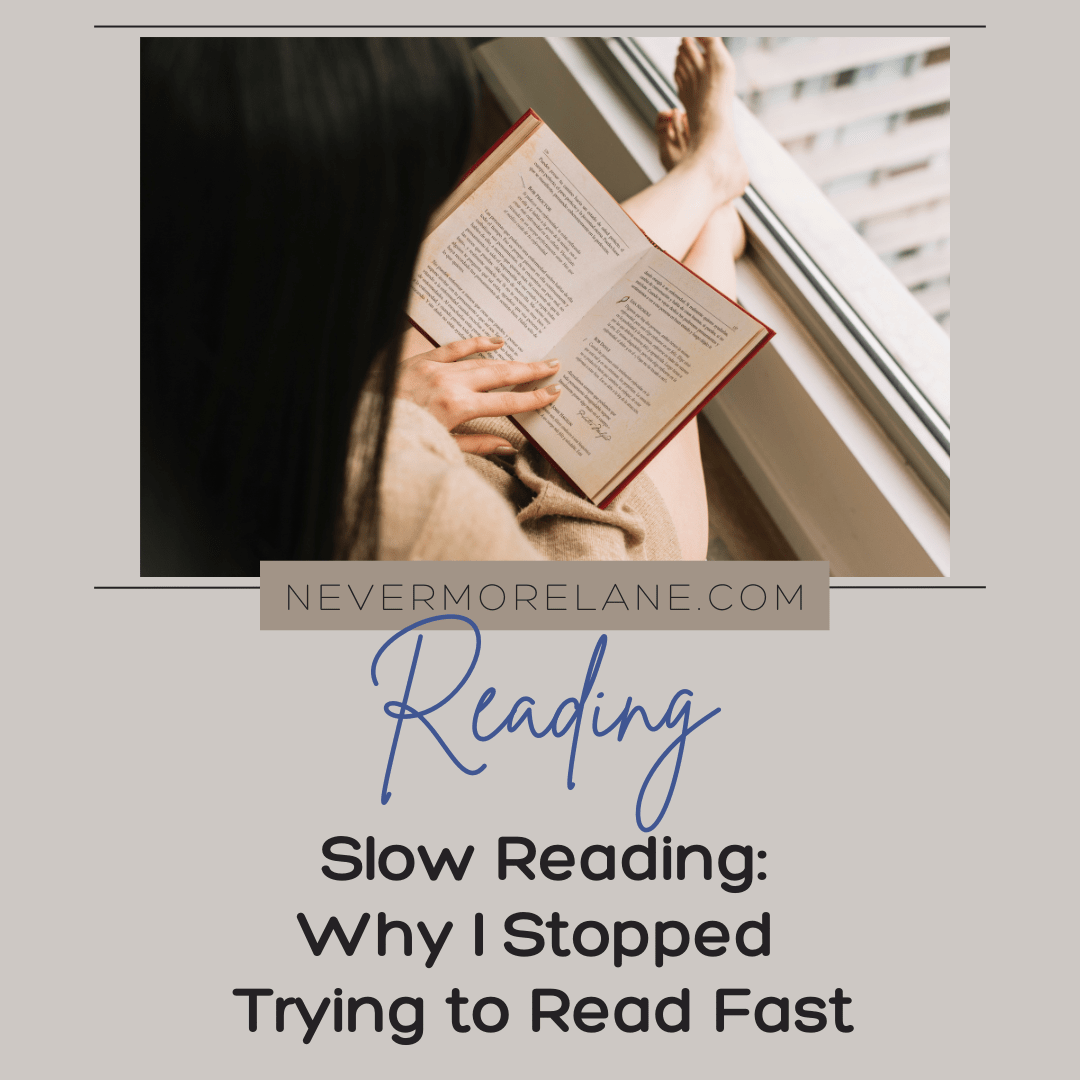
There is a quiet rebellion happening on the pages of dog-eared books, in the margins filled with pencil notes, and in the unhurried afternoon hours of people who have decided that reading is not a race. It is not a leaderboard. It is not a metric. It is a life. And if you have ever felt the creeping anxiety of a towering to-be-read pile, the pressure of a Goodreads goal blinking at you like a judgment, or the hollow feeling of finishing a book you barely remember reading, then this post is for you.
I used to be a fast reader, or at least I tried to be (there are some days I still am.) I tracked every title, chased every challenge, and wore my reading numbers like a badge of honor. Two hundred books a year sounds impressive until you realize reading, the one thing that has always felt like home, starts to feel like homework. That was the moment I knew something had to change.
What I found on the other side of slowing down was not a smaller reading life. It was a richer one. Slow reading is not about reading fewer books out of laziness or lack of ambition. It is about reading with presence, intention, and a willingness to let a story actually land. It is, in every sense of the phrase, the more magical way to read.
One thing that helped was being able to listen to audiobooks during the day while I worked.
How Speed Reading Culture Quietly Stole the Joy from Books
We live in a world that worships productivity, and the reading community is not immune. Challenges with triple-digit goals, apps that gamify your page count, and social media feeds full of “I read 300 books this year” posts have turned what was once a deeply personal and contemplative practice into something that looks a lot like hustle culture in a cardigan.
Speed reading techniques promise you can absorb more in less time, and some of them are not entirely without merit for certain kinds of material. Skimming a business report or scanning a textbook chapter for key terms is a practical skill. But applying that mindset to fiction, to memoir, to poetry, to the kind of writing that asks something of you emotionally and imaginatively, hollows out the experience. You get the plot. You miss the point.
The pressure to read fast also introduces something insidious into the experience: guilt. Guilt when you read slowly. Guilt when you reread a favorite passage. Guilt when you spend two weeks with a single novel because you are savoring it. This guilt does not belong in your reading life, and recognizing where it came from is the first step in letting it go. Speed reading culture sold us a lie dressed up as self-improvement, and slow readers everywhere are quietly handing it back.
What Slow Reading Actually Means for Magical Lifestyle Readers
Slow reading is not a technique or a movement with a manifesto. It is a practice, and like most meaningful practices, it looks a little different for everyone. At its heart, slow reading simply means giving a book the time and attention it deserves, allowing yourself to be present on the page rather than racing toward the end.
For those of us drawn to magical living, to the rhythm of seasons and the language of earth and story, slow reading fits naturally into an intentional life. It pairs beautifully with a cup of tea grown cold from neglect, a candle burning low, an afternoon with nowhere particular to be. It is the literary equivalent of a slow walk through autumn woods, where the point is never the destination but everything you notice along the way.
In practice, slow reading might mean reading only one book at a time. It might mean setting a timer for thirty uninterrupted minutes each evening instead of cramming chapters into stolen moments between tasks. It might mean keeping a reading journal where you jot down sentences that move you, questions the text raises, or emotions a scene stirs up. However it looks for you, the common thread is intentionality. You are choosing to be in the book, not just moving through it.
The Unexpected Benefits of Reading Without a Finish Line
When I let go of the reading race, some surprising things happened. My retention improved dramatically. I can tell you the emotional arc of a novel I read two years ago when I read it slowly and with attention. The books I raced through have blurred into a general impression of having read a lot.
There is also something that happens to your relationship with language when you slow down. You start to notice how a writer builds a sentence. You feel the weight of word choice. You begin to understand, on a cellular level, why some books endure and others disappear. This is not just good for your reading life. For anyone who writes, and many of us at Nevermore Lane do write, slow reading is one of the most powerful tools for improving your craft.
Perhaps most unexpectedly, slowing down made me more present in the rest of my life, too. The habit of attention you build through slow reading does not stay between the covers. You begin to notice more. To listen more carefully. To resist the urge to skim the surface of experiences in favor of moving on to the next thing. Slow reading, in its quiet way, is a practice in being alive to what is right in front of you.
How to Begin a Slow Reading Practice Without Losing Your Love of Books
The good news is that you do not have to overhaul your entire reading life overnight. Slow reading is something you ease into, and it begins with a single, honest question: Am I actually enjoying this book, or am I just trying to finish it?
Start by choosing one book, just one, and deciding that you will read it without any timeline attached. Let yourself linger. Reread the paragraph that made you catch your breath. Look up the historical figure the author mentions in passing. Sit with the ending for a few days before you pick up something new. Notice how different that feels from your usual pace.
You might also consider releasing yourself from reading challenges, at least partially, or reframing them. A challenge that asks you to read twelve books in a year, one per month, is very different from one demanding you hit two hundred. Reading goals can be joyful when they invite you in rather than pressure you to perform. The best reading goal you can set is simply to read books you love, with as much presence as you can bring to them. Everything else is just a number.
Here are the challenges I am sticking with:
- Expand Your Reading Magic: Join the 2026 Non Fiction Reader Challenge
- The 2026 Audiobook Challenge: Building on Last Year’s Magic
- Gilmore Girls’ Rory Gilmore Lifetime Reading Challenge (Forever working on this one and desperately needs updated!)
Slow Reading and the Magical Life: Finding the Ritual in the Pages
Books have always been a form of magic, a way of stepping through a doorway into another world, another mind, another life. When we read slowly, we honor that magic instead of rushing past it. We allow the transformation that good literature is capable of to actually take root.
In a magical lifestyle practice, ritual matters. The way you light a candle before a tarot reading, the way you prepare your space before a meditation, the way you choose your tea with intention before you settle in for the evening. Slow reading fits into this framework beautifully. Your reading space, your reading time, even the book you choose can all become part of a deliberate practice that nourishes you.
I have found that slow reading pairs especially well with the turning of seasons. Autumn invites long, immersive novels. Winter calls for poetry and the kind of dense, atmospheric fiction you want to disappear into. Spring opens the door to lighter reads and nature writing. Summer stretches out with memoirs and essays. When you are not racing through your list, you have the space to let the season guide what you read, and there is something deeply satisfying about that alignment between the world outside your window and the world in your hands.
The Books Are Not Going Anywhere
Here is the truth about slow reading that nobody tells you when you are deep in the hustle of reading challenges and TBR anxiety: the books will wait. There will always be more books than you have hours to read them. This is not a tragedy. It is one of the most beautiful aspects of being a reader, that the world of literature is essentially infinite, that there is always another story waiting for you.
When you accept that you cannot read everything, you become free to read anything, really read it, with your whole self. The goal is not to conquer your reading list. The goal is to let reading do what it has always been capable of doing: opening you, changing you, giving you language for things you felt but could not name, and reminding you, again and again, that you are not alone in the human experience.
Slow reading is not a compromise. It is a homecoming. It is the return to why you loved books in the first place, before anyone told you your worth as a reader was measured in annual totals. Come home to the page. The story has been waiting.
If you found yourself nodding along to any of this, I would love for you to explore more posts here at Nevermore Lane, where we talk about intentional living, book culture, earth magic, and the quiet art of a life well savored. And if you want to carry a cup of something warm into the conversation, pull up a chair and join me for coffee. There is always room at this table for a fellow slow reader.
Like what you read? Drop me a line – let’s chat over virtual coffee.
~ Chrystal