Samhain History and How to Celebrate a Magical Autumn Evening
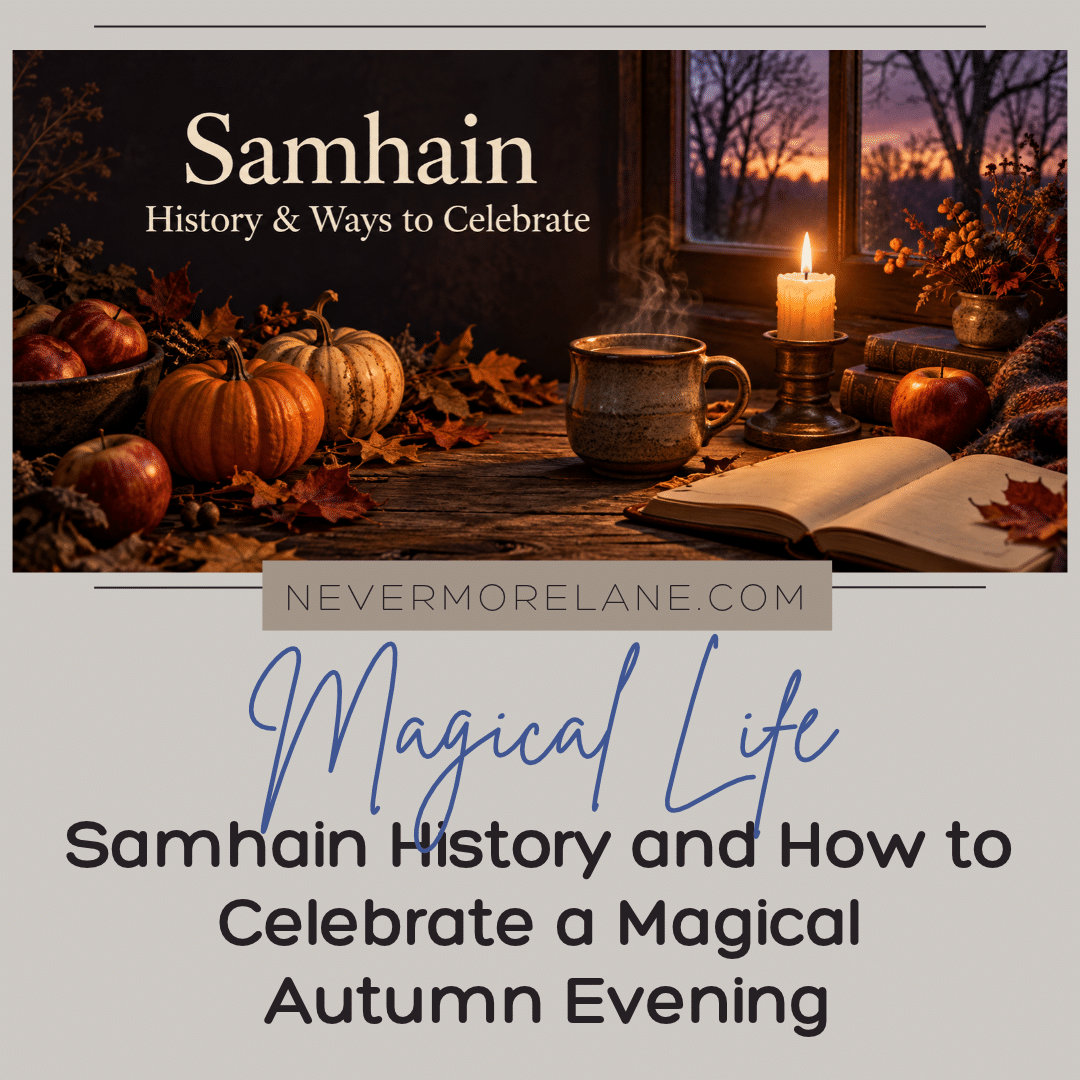
By the end of October, I am usually ready to surrender to the quieter side of autumn. Give me a warm mug, a lamp glowing in the corner, and an evening with nowhere in particular to be. I love the pumpkins and the playful side of Halloween, but I also find myself craving something softer beneath all the activity. I want a little time to notice the changing trees, remember the people I miss, and consider what this season is asking of me.
That is what draws me to Samhain. Its history offers more than a spooky backdrop for the end of October. Rooted in Gaelic seasonal tradition, Samhain marks the movement from summer into winter, with associations that include gathering, feasting, and the otherworld. Later Irish customs also connect the evening with the return of departed loved ones.
Here at Nevermore Lane, I like to leave room for both curiosity and a little everyday enchantment. Exploring Samhain can mean learning about its history while creating a thoughtful observance that fits your own beliefs. Whether you are drawn to remembrance, seasonal reflection, or a cozy evening with a meaningful meal, there are gentle ways to welcome the occasion without turning it into another thing you have to do perfectly.
What Is Samhain and When Is It Celebrated?
Samhain, commonly pronounced “SOW in,” is a Gaelic seasonal festival associated with the end of summer and the beginning of winter. The National Museum of Ireland identifies November 1 as the festival day, with celebrations beginning on its eve, October 31, known in Irish as Oíche Shamhna.
That place in the calendar helps explain the festival’s character. Samhain sits at a seasonal turning point, when the productive months give way to the darker part of the year. Historical accounts and folklore connect it with feasting, gatherings, and encounters with the otherworld, although those descriptions come from different periods rather than one complete record of ancient practice.
For a personal observance today, that turning point offers a useful invitation to pause. You might consider what has sustained you through the year, what feels finished, and what you want to protect during the coming months. These are modern reflection prompts, not requirements borrowed from an ancient ceremony.
I like the idea of meeting the season where it is. Rather than trying to make late October feel like the busiest part of summer, a Samhain evening can become permission to enjoy a different rhythm. A warm kitchen, an earlier bedtime, or an unhurried conversation can be enough to give the occasion meaning.
Samhain History and the Origins of Halloween
Samhain has deep roots in Irish tradition, but its earliest history requires some care. Medieval Irish literature refers to the festival, while many detailed descriptions of familiar seasonal customs come from later folklore. We do not have a complete record showing exactly how every ancient community observed it.
That distinction matters because popular retellings sometimes gather many different customs into one tidy story. A practice recorded in more recent Irish folklore is not automatically proof of what people did thousands of years earlier. Recognizing the gaps allows us to appreciate the evidence without filling every quiet space with certainty.
Halloween also developed through more than one influence. Samhain forms part of its history, alongside Christian observances honoring saints and the dead, including All Saints’ Day and All Souls’ Day. The name Halloween refers to the evening before All Hallows’ Day, another name for All Saints’ Day.
Later Irish Halloween traditions included festive foods, games, disguises, and beliefs about returning spirits. The National Museum of Ireland describes the occasion as a spirit night, when the souls of the dead were expected to revisit the family home. These recorded customs help explain the season’s mixture of hospitality, mystery, celebration, and remembrance.
To me, that layered history makes Samhain more compelling. Traditions can change and still carry meaning. Learning where a custom comes from, and being honest when we are creating something new, gives our celebrations a more thoughtful foundation.
How to Celebrate Samhain with a Simple Seasonal Space
If you want to celebrate Samhain at home, begin with what you already have. You do not need to purchase a collection of decorations or turn an entire room into a ceremonial space. A small tray, the corner of a table, or a clear spot on a bookshelf can hold everything you want to include.
For a modern personal display, choose a few objects that reflect the season and your intentions. A small pumpkin might sit beside a family photograph. A favorite autumn poem could rest near a bowl of apples. An electric candle can add a soft glow, especially if you would rather avoid an open flame.
Think about the meaning behind each item instead of whether the arrangement looks impressive. A photograph could represent someone you want to remember. A handwritten note might hold a lesson from the past year. A favorite mug could be a reminder to make room for ordinary pleasures.
Once you have arranged your space, spend a few quiet minutes there. You might read the poem, write a sentence in your journal, or simply enjoy your drink without reaching for your phone. Treat this as a personal seasonal practice, not a reconstruction of a documented ancient ritual.
Honoring Loved Ones and Ancestors at Samhain
Remembrance is an important part of later Irish folklore surrounding the season. Accounts preserved by the National Museum of Ireland describe the belief that departed souls would return to their family homes on Halloween night. That connection gives historical context to the remembrance practices many people associate with Samhain today.
A gentle way to explore this theme is through a familiar recipe. Make the soup someone always served when the weather turned cold, or brew the tea they kept ready for visitors. You do not need to create a formal ceremony. Preparing something connected to a person you miss can be your chosen way of making space for their memory.
You might also begin a remembrance notebook. Write down the stories you do not want to lose, including the small details that rarely make it into official family histories. Record a favorite saying, an unusual recipe instruction, or the way someone could make an ordinary afternoon feel special.
Not every family history feels comforting, and you do not have to pretend otherwise. Your personal observance can honor a beloved friend, a mentor, a companion animal, or someone whose kindness changed your life. You can also leave remembrance out of your celebration if it does not feel right for you.
The point is not to force a particular emotion. You can choose a quiet activity, stop when you have had enough, or spend the evening doing something entirely different. Your relationship with the occasion is allowed to be personal.
Samhain Food Traditions and Ideas for a Cozy Feast
Food offers one of the clearest connections between seasonal celebration and everyday life. The National Museum of Ireland describes fruit and nuts gathered for Halloween festivities, including their use in games. Broader historical accounts also identify feasting as a feature of Samhain.
For a modern celebration, you might take inspiration from the idea of gathering around seasonal food rather than trying to reproduce a specific historical meal. Vegetable soup, roasted squash, warm bread, baked apples, or a cherished family dish could all suit the evening. These are suggestions for your table, not a prescribed Samhain menu.
Keep the meal manageable. If making soup from scratch sounds lovely, enjoy the process. If you would rather warm something simple and spend your time reading, that can be your celebration, too. There is no reason for a reflective evening to leave you exhausted before you sit down.
If you are sharing the meal, invite everyone to bring a story as well as a dish. You could talk about someone you remember fondly, something the past season taught you, or a small moment you want to carry forward. Leave room for laughter alongside reflection.
A solo supper can be just as intentional. Use the bowl you love, pour something warm, and make a little space around your meal. You deserve hospitality in your own home, even when you are the only person at the table.
Simple Samhain Rituals for Reflection and Letting Go
Modern Samhain observances often include remembrance, reflection, and intentions for the coming season. These practices can draw inspiration from the festival’s seasonal themes without being described as ceremonies preserved unchanged from antiquity.
For a simple writing ritual, divide a page into three sections: what I want to remember, what I am ready to release, and what I want to nurture. Let the answers be honest rather than impressive. A small, specific intention can give you something clearer to work with than a promise to change your entire life.
Perhaps you want to remember that you made it through a difficult month. Perhaps you are ready to release an obligation you no longer want to carry. Perhaps you want to nurture your creativity by spending one evening a week writing for yourself instead of working on another assignment.
If tarot or oracle cards are already part of your personal practice, you could use their imagery as a journaling prompt. A poem, a photograph, or a passage from a favorite novel can serve the same purpose. Ask what the image or words bring to mind, then explore your own response without requiring a prediction.
Close the practice with one practical action. Put a quiet evening on your calendar, place your journal beside your favorite chair, or send a note to someone you appreciate. This gives your reflection somewhere to go after the candlelight and autumn atmosphere have faded.
Welcoming Samhain Magic into Everyday Life
The part of Samhain I find most inviting is the chance to notice what might otherwise pass quietly by. A remembered voice. A favorite recipe. The way the house feels when the evening settles around it. A seasonal observance can give those ordinary details a little more room.
Your celebration might include a shared meal, a remembrance space, a journal entry, or nothing more elaborate than a thoughtful cup of coffee. Let it reflect your beliefs and circumstances. You can respect the history of Samhain while being clear about which parts of your evening are personal, modern creations.
You do not have to manufacture a profound experience. Set aside some time, choose what matters to you, and allow the evening to unfold. A small celebration can still be a meaningful one.
For more seasonal inspiration, read more posts here at Nevermore Lane, where we make room for cozy rituals, thoughtful living, and a little everyday enchantment. Then join me for coffee. Bring your favorite mug, settle into a comfortable chair, and let us enjoy the quieter magic of autumn together.
Like what you read? Drop me a line – let’s chat over virtual coffee.
~ Chrystal