Living by the Seasons Instead of the Algorithm
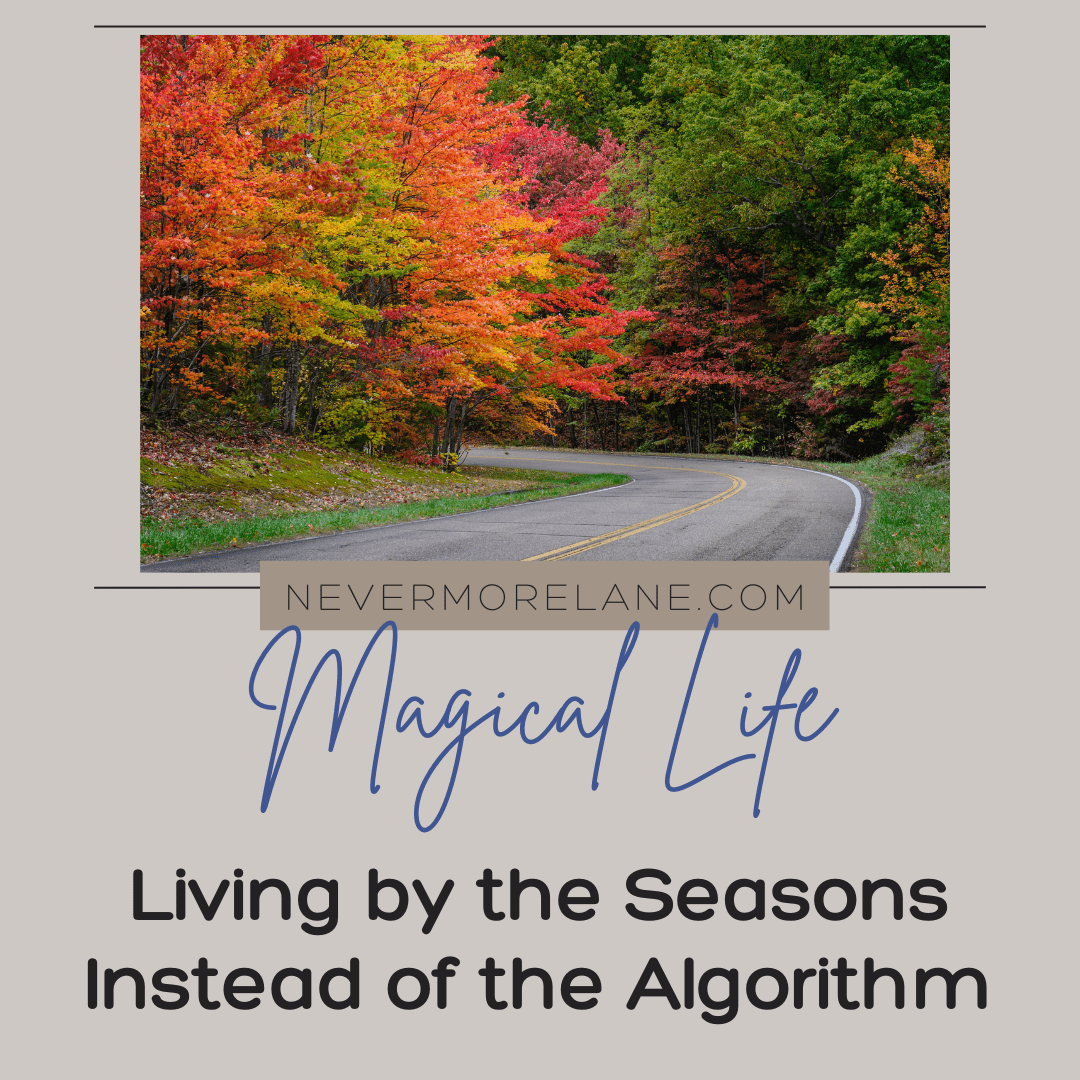
I used to wake up and immediately reach for my phone. Before my feet hit the floor, before I even registered what day it was, I was scrolling. Checking notifications. Watching stories. Consuming whatever the algorithm decided I needed to see that morning. The irony wasn’t lost on me that I’d be watching videos about intentional living while my coffee went cold, completely disconnected from the actual morning happening around me. The light changing outside my window, the birds starting their day, the way the air feels different in October than it does in June. All of it happening without me because I was too busy keeping up with a feed that never ends.
It took longer than I’d like to admit to realize that this wasn’t just a bad habit. It was a different way of living entirely. I’d unknowingly handed over my daily rhythm to something designed to keep me engaged, not to keep me connected to anything real. The algorithm doesn’t care about the first frost or the return of the robins. It doesn’t notice when the light starts lingering longer in the evenings or when the leaves begin their slow turn toward gold. It just wants me to keep scrolling, keep consuming, keep coming back for more.
But there’s another way. A way that humans have lived for thousands of years before screens and feeds and notifications. A way that aligns with something older and truer than any trending topic. Living by the seasons means paying attention to the world that’s actually happening around you. It means letting nature set the pace instead of some distant server farm. It means rediscovering rhythms that feed your soul instead of deplete it. And once you start living this way, you realize how much you’ve been missing.
Why Seasonal Living Feels Foreign in a Digital World
We’ve become so accustomed to constant availability that the idea of seasonal living sounds almost quaint. After all, the internet never sleeps. Social media never takes a winter rest. The algorithm doesn’t slow down in summer or speed up in spring. It just churns forward at the same relentless pace, day after day, season after season. This creates a strange disconnection where our digital lives exist in perpetual motion while the natural world continues its ancient cycle of growth, harvest, rest, and renewal.
The algorithm thrives on urgency and FOMO. It wants you to believe that if you step away for even a day, you’ll miss something crucial. Some trends will pass you by. Some opportunities will vanish. Some connection will be lost. This manufactured urgency keeps us tethered to our devices even when our bodies and minds are crying out for something different. In winter, when nature is telling us to slow down and turn inward, the algorithm is still demanding we produce, engage, and perform at summer’s pace.
Living seasonally asks us to reject this always-on mentality. It invites us to recognize that there’s a time for everything. A time for outward energy and a time for quiet reflection. A time for growth and a time for rest. A time for gathering and a time for solitude. When we ignore these natural rhythms in favor of the algorithm’s demands, we end up exhausted, disconnected, and wondering why nothing feels quite right. We’re running a race that has no finish line, in a season that never changes, toward goals that keep shifting just out of reach.
How the Natural Year Creates Its Own Rhythm
The earth doesn’t need our permission to shift from one season to the next. It just does it, with a reliability that our digital world can’t match. Spring arrives whether we’re ready or not, bringing longer days and new growth. Summer follows with its abundance and outward energy. Fall comes with its call to gather and prepare. Winter settles in with its invitation to rest and restore. This cycle has repeated itself for millennia, and it will continue long after every algorithm has been replaced with something newer.
When you start paying attention to these seasonal shifts, you notice patterns you’d been missing. The quality of light changes throughout the year. Morning in December looks nothing like morning in July. The sounds outside your window shift. The birds that visit in spring disappear by winter. The way the air feels on your skin tells you something different in each season. Even the foods that appeal to you change. Your body naturally craves lighter foods in summer and heartier, warming foods in winter. These aren’t random preferences. They’re your biology recognizing what season you’re in and adjusting accordingly.
The natural year also creates a rhythm of activity and rest that the algorithm completely ignores. In agricultural communities, people have always known this. You plant in spring, tend in summer, harvest in fall, and rest in winter. Even if you’re not farming, this rhythm still makes sense for human life. There are times for beginning new projects and times for completing them. Times for being social and outward-facing, and times for turning inward. Times for trying new things and times for maintaining what you’ve already built. When you align with these rhythms instead of fighting them, everything becomes easier.
Practical Ways to Align Your Days with Seasonal Cycles
Start by noticing what season you’re actually in. This sounds almost too simple, but when you’re spending most of your time indoors looking at screens, it’s easy to lose track. Make it a practice to step outside every day, even just for five minutes. Notice the temperature, the light, the sounds, the smells. What’s happening in the natural world right now? Are leaves budding or falling? Are birds nesting or migrating? Is the sun rising earlier or later than last month? This simple awareness creates a foundation for everything else.
Adjust your daily routines to match the season. In winter, when darkness comes early, let yourself rest more. Go to bed earlier. Say no to evening commitments that drain you. Use the long nights for quiet activities like reading, journaling, or simply sitting with your thoughts. In summer, when light lingers late into the evening, allow yourself to be more social and active. Take advantage of the energy the season offers. This doesn’t mean forcing yourself into some rigid schedule. It means giving yourself permission to flow with what the season is offering rather than maintaining the exact same pace year-round.
Bring seasonal rhythms into your creative work and content consumption. Instead of posting, creating, or consuming content at the same rate every month, consider what makes sense for the season. Maybe winter is when you plan and dream about future projects rather than launching them. Maybe spring is when you start new things with fresh energy. Maybe summer is for experimenting and playing. Maybe fall is for wrapping up loose ends and preparing for a quieter season ahead. The algorithm wants you to produce constantly, but your creativity works better when it’s allowed to ebb and flow.
What You Gain When You Stop Following the Feed
The first thing you notice when you step away from algorithm-driven living is how much time you suddenly have. Hours that used to disappear into scrolling become available for things that actually matter to you. You can finally start that creative project you’ve been thinking about. You can read actual books instead of just threads. You can sit with your morning coffee and actually taste it instead of consuming it mindlessly while watching stories. This reclaimed time is a gift, but it’s also a responsibility. You get to choose what fills it.
You also gain a sense of rootedness that’s hard to find in the digital world. When your life follows seasonal rhythms, you develop a relationship with the place where you live. You know what month the lilacs bloom. You recognize when the light starts shifting. You notice patterns in the weather, the wildlife, the plant life around you. This creates a sense of belonging that scrolling through photos of other people’s lives can never provide. You’re not just existing in some generic, timeless digital space. You’re living in a specific place during a specific season, and that specificity is grounding.
Perhaps most importantly, you gain back your own internal compass. The algorithm is designed to tell you what to think about, what to care about, what to want. It’s very good at its job. But when you step away from that constant input, you start hearing your own thoughts again. You remember what you actually enjoy, not what you’re supposed to enjoy. You reconnect with your own desires, your own rhythms, your own sense of what matters. This isn’t selfish. It’s essential. You can’t live an intentional life if you’re constantly taking direction from something that doesn’t know you and doesn’t care about your wellbeing.
When Technology Serves the Season Instead of Replacing It
Living seasonally doesn’t mean abandoning technology or pretending the digital world doesn’t exist. It means using it intentionally instead of letting it use you. Technology can actually support seasonal living when you approach it with awareness. You can use apps to identify the birds visiting your yard in different seasons. You can follow accounts that share information about foraging, gardening, or seasonal cooking. You can set phone reminders for things like the autumn equinox or the first day of spring, creating small moments of seasonal awareness throughout your year.
The key is making technology serve your seasonal intentions rather than pulling you away from them. This might mean turning off notifications so you can actually enjoy a winter afternoon without interruption. It might mean using screen time limits that get stricter in winter when you want to rest more, and looser in summer when you’re naturally more active. It might mean curating your feeds so they actually reflect and support the kind of life you want to live rather than keeping you trapped in comparison and consumption.
Consider creating seasonal practices around your technology use. Maybe you take a social media break every winter solstice. Maybe you delete certain apps during specific seasons and reinstall them later. Maybe you have different screen time goals for different times of year. The point isn’t to follow someone else’s rules about digital minimalism. The point is to notice how your relationship with technology affects your ability to live seasonally, and then adjust accordingly. You’re looking for balance, not perfection.
Finding Your Own Seasonal Rhythm Takes Time
If you’ve been living by the algorithm for years, shifting to seasonal living won’t happen overnight. Your body and mind need time to recalibrate. The first winter you try to rest more, you might feel guilty about it. The first spring you try to start new projects, you might worry you’re doing it wrong. The first fall you try to slow down and prepare for winter, you might feel like you’re falling behind. This is normal. You’re unlearning years of conditioning that told you to maintain the same pace regardless of what season it is.
Give yourself at least a full year to experiment. Notice what each season asks of you and how your energy naturally shifts. Pay attention to what feels good and what feels forced. There’s no single right way to live seasonally. Someone in a warm climate will have a different experience than someone in a place with dramatic seasonal shifts. Someone who works from home will have different opportunities than someone with a traditional office job. Someone with young children will have different constraints than someone living alone. The goal isn’t to perfectly replicate some idealized version of seasonal living. The goal is to find your own rhythm.
Keep coming back to the simple question: what does this season need from me right now? Sometimes the answer will be rest. Sometimes it will be action. Sometimes it will be solitude. Sometimes it will be a connection. The answer changes, and that’s exactly the point. Unlike the algorithm, which always wants the same thing from you, the seasons offer variety, depth, and a natural ebb and flow that matches how humans actually work best.
Reclaiming Your Time from the Endless Scroll
The algorithm will always be there, ready to fill every empty moment with content designed to keep you engaged. But the seasons won’t wait. Spring will come and go whether you notice it or not. Summer will pass. Fall will arrive. Winter will settle in. Each one offers something different, something the digital world can’t replicate. Each one invites you into a different way of being, a different pace, a different focus.
When you choose to live by the seasons instead of the algorithm, you’re not rejecting progress or technology. You’re reclaiming something ancient and essential. You’re remembering that you’re part of a natural world that existed long before social media and will continue long after it. You’re giving yourself permission to rest when winter asks you to rest, to grow when spring invites you to grow, to enjoy when summer offers abundance, and to gather when fall calls you inward.
This isn’t about perfection. Some days you’ll still scroll too much. Some seasons you’ll miss the shift until it’s already halfway over. Some moments you’ll choose the algorithm over the awareness. That’s okay. What matters is the overall direction. Are you moving toward a life that aligns with natural rhythms, or are you letting yourself be pulled deeper into a digital world that recognizes no seasons at all? The choice is yours, and it’s one you get to make again and again, day after day, season after season.
If you’re ready to explore more ways to live intentionally and align with nature’s rhythms, I invite you to read more posts here on Nevermore Lane. And if you’d like to continue this conversation over a warm cup of coffee, I’d love that. Join me, and let’s talk about building a life that feels as good as it looks.
Like what you read? Drop me a line – let’s chat over virtual coffee.
~ Chrystal