How to Plan a Water-Wise Landscape That Looks Great and Works Efficiently

Key Takeaways
- A water-wise landscape begins with a site plan, not a plant-shopping trip.
- Plants, turf, trees, and garden beds should be grouped by similar watering needs.
- Efficient irrigation requires compatible equipment, correct pressure, and routine inspections.
- Healthy soil, mulch, and dependable drainage help landscapes retain water without creating standing-water problems.
- Smart controllers can improve scheduling, but they cannot fix leaks, poor coverage, or damaged components.
A water-wise landscape can be colorful, shaded, and inviting while using irrigation more thoughtfully. The goal is not to eliminate every lawn area or plant only one type of shrub. It is to design the property so water reaches the right places, at the right rate, and with less waste.
For projects that need compatible irrigation, drainage, and landscape materials, wholesale irrigation store resources from AGC Outdoor Supply can help turn a plan into a practical materials list. AGC Outdoor Supply is an Ocala-based irrigation and landscape supplier that provides product guidance, irrigation components, drainage supplies, landscape materials, synthetic turf, and lighting products for homeowners and professionals throughout Ocala, Marion County, The Villages, and Central Florida.
Why Water-Wise Landscaping Matters
Outdoor watering affects maintenance demands, water use, and the condition of plants and hardscapes. A landscape that receives too much water may develop runoff, shallow roots, weeds, or drainage issues. Too little water can weaken turf and ornamental plants. Designing for the property’s conditions creates a more resilient starting point than relying on frequent watering to keep unsuitable plants alive.
Water-wise planning matters in humid and rainy regions as much as in dry climates. Heavy storms, compacted soil, uneven grades, and sprinkler overspray can all move water toward walkways, driveways, and structures. A balanced design accounts for rainfall, drainage, sun exposure, and the changing needs of plants as they mature.
Start With a Simple Site Check
Walk the property before choosing equipment or plants. Make a simple sketch and note where water naturally collects or moves after a storm. This step can reveal problems that are easier to solve before installation.
- Mark full-sun, partial-shade, and deep-shade areas.
- Identify slopes, compacted soil, standing water, exposed roots, and erosion.
- Locate buildings, fences, driveways, utilities, existing trees, and drainage outlets.
- Measure lawn, planting beds, and other areas that may need separate irrigation zones.
- Observe the yard during rain to identify runoff paths and low spots.
Build Irrigation Zones Around Plant Needs
A hydrozone is an area containing plants with similar watering requirements. Turf, shrubs, trees, vegetable gardens, and drought-tolerant plants often need different schedules. Putting them on a single valve can cause some areas to receive too much water while others receive too little.
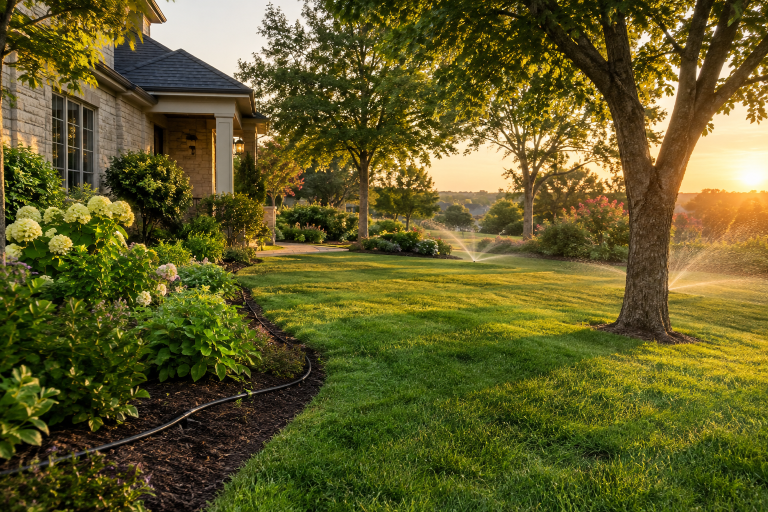
- Use spray heads or rotary nozzles where they are appropriate for open turf areas.
- Use drip tubing or emitters for many planting beds, trees, and shrubs.
- Do not mix drip irrigation and conventional spray heads on the same zone because their application rates differ.
- Match sprinkler heads and nozzles within a zone to improve coverage.
- Label valves and controller zones so future adjustments and repairs are easier.
Choose Plants That Fit the Site
Select plants according to local climate, soil conditions, sunlight, and mature size. Native and climate-adapted plants can be useful choices when they fit the desired appearance and location. Group plants with comparable water needs, and leave enough room for their mature spread. Crowded plants require more pruning, compete for water, and can make irrigation repairs harder.
A water-wise yard can include a lawn, especially when turf is limited to areas where it serves a purpose, such as play space or a usable outdoor gathering area. Good soil preparation, correct mowing height, complete sprinkler coverage, and seasonally adjusted run times matter more than simply watering longer.
Use Soil, Mulch, and Drainage as a Team
Soil supports roots, stores moisture, and influences whether water infiltrates or runs off. Compost or other amendments may improve some planting areas, but the right approach depends on the existing soil and the plants being installed. Avoid assuming every bed needs the same amendment or depth of added material.
Mulch helps limit evaporation, moderate soil temperature, and suppress weeds. Keep it clear of tree trunks, siding, and building foundations. Where water collects, consider solutions such as correcting the grade, adding catch basins, installing channel drains, or installing a French drain system to direct water to an appropriate discharge area.
Smart Controllers Need Smart Settings
Weather-based and soil-moisture-based controllers can help adjust irrigation schedules, but they are tools rather than complete solutions. The irrigation guidance on checking irrigation systems and controller settings reinforces an important point: automation works best when zones, sensors, nozzles, and schedules are maintained.
Review settings at the start of each season and after extended rain, storms, new planting, or major landscape changes. If runoff occurs, reduce the length of each watering cycle and add soak time between cycles to allow water to enter the soil rather than flow away.
Plan a Reliable Product List
Create a purchase list only after the layout is complete. Include the controller, rain sensor, valves, valve boxes, pipe, fittings, adapters, sprinkler heads or drip components, pressure regulation, filtration, drainage materials, mulch, edging, and soil products. Confirm component compatibility before installation to reduce delays and unnecessary repeat purchases.
Common Mistakes That Waste Water
- Giving every zone the same run time.
- Watering during heavy rain or strong wind.
- Ignoring broken heads, clogged emitters, leaks, or pressure problems.
- Allowing sprinklers to spray sidewalks, walls, driveways, or fences.
- Covering valve boxes or emitters with soil and mulch.
- Installing drainage without identifying where collected water will go.
A Simple Maintenance Schedule
Every Month
- Run each zone and look for leaks, dry spots, clogged emitters, broken heads, and overspray.
- Check the controller clock and confirm seasonal settings are appropriate.
- Look for unusually wet areas that may indicate a leak or drainage issue.
At the Start of Each Season and After Major Weather
- Inspect valves, filters, sensors, exposed connections, drains, basins, and grates.
- Clear debris, refresh mulch where soil is exposed, and adjust schedules for current conditions.
- Check for erosion, shifted soil, damaged pipes, and water collecting near structures or walkways.
Questions Readers May Have
Is a smart irrigation controller worth it?
It can be worthwhile for properties with multiple zones or for those with changing weather conditions, provided the system is in good repair and the owner reviews settings periodically.
Is drip irrigation better than sprinklers?
Neither is universally better. Drip irrigation often suits beds, trees, and shrubs, while sprinklers may be appropriate for turf and broad open areas. The correct choice depends on the plants, layout, pressure, and maintenance needs.
How can homeowners reduce runoff?
Use shorter cycles with soak periods, repair damaged components, maintain mulch, improve soil where appropriate, and correct grading or drainage problems. Practical landscape water-efficiency practices also include reviewing schedules and regularly inspecting irrigation equipment.
Final Planning Checklist
- Map sun, shade, slope, soil, and drainage patterns.
- Group plants by water needs and select equipment for each zone.
- Verify pressure, coverage, and component compatibility.
- Use mulch and drainage solutions where appropriate.
- Inspect the system regularly and update the plan as plants mature.
Water-Wise Lanscapes
A water-wise landscape is a connected system of suitable plants, healthy soil, efficient irrigation, drainage planning, and routine maintenance. Starting with a careful site check helps homeowners and landscape professionals create outdoor spaces that remain attractive, functional, and easier to manage over time.