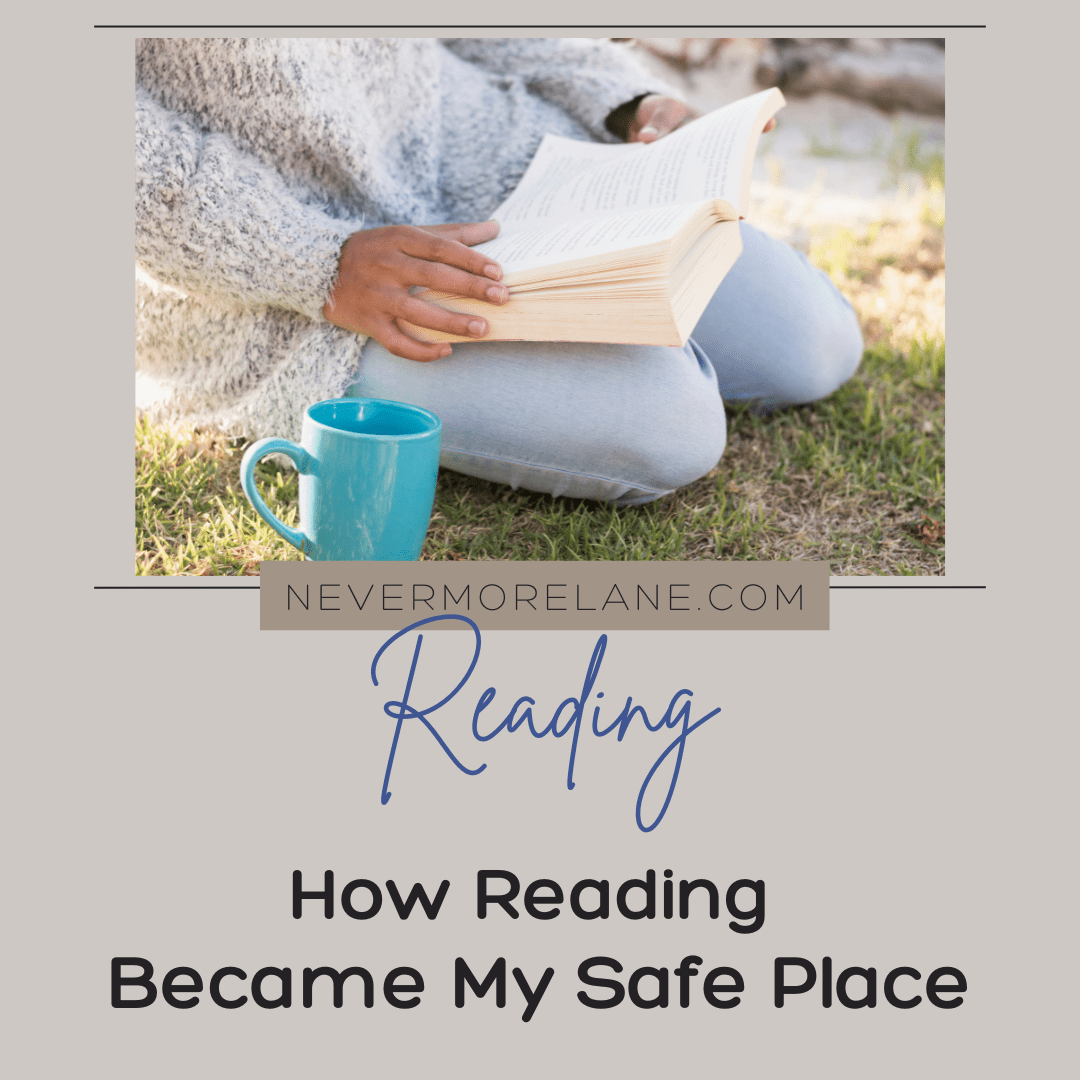
How Reading Became My Safe Place
There is a particular kind of quiet that only happens between the covers of a book. Not silence exactly, but something warmer than that. A hush. A held breath. The feeling that whatever is happening outside in the world, outside your window, outside your own head, it can wait for just a little while longer. I found that quiet as a child, pressing a flashlight under my blankets long past bedtime, and I have been chasing it ever since.
I did not always understand what I was chasing. For years, I thought I simply loved stories, loved the way language could arrange itself into something that felt true even when it was entirely made up. But the older I get, the more I understand that what I was really looking for was a place to belong. A place where the pace was mine, where the noise of being human fell away, and where I could slip into someone else’s life long enough to understand something better about my own.
Reading, for me, has never been a hobby. It is a practice. It is the thing I return to when I am overwhelmed, when I am grieving, when I am bored in that restless, bone-deep way that nothing else seems to touch. It is also where I go when I am happy and want to stretch the feeling out, to press it like a flower between pages so it lasts a little longer. If you have ever felt that way about books, if you have ever reached for one the way some people reach for tea or a familiar song, then you already know exactly what I mean.
Why Books Offer the Emotional Refuge We Rarely Talk About
We talk a lot about self-care in slow living circles. We talk about candles and herbal teas and long walks and the restorative power of stepping away from screens. All of that is real and all of it matters. But we do not talk enough about reading as one of the most accessible forms of emotional regulation available to us, and I think that is a gap worth closing.
When you open a book, something happens in your nervous system that is genuinely different from scrolling or watching or listening to a podcast. Research has found that reading literary fiction can reduce stress levels, but what I notice in my own body is something even simpler than a study could measure. My breathing slows. My shoulders drop. The mental chatter that follows me through the day loses its grip, just enough to let me breathe.
There is also something deeply important about the way stories let us practice feeling. When we read about a character navigating grief or joy or moral ambiguity, we are not just entertained. We are exercising our emotional range in a safe container. We get to feel things alongside fictional people and then close the book and sit with what those feelings stirred up. Over and over across my reading life, I have understood something about myself through a character who never existed. That is not a small thing.
The Books That First Taught Me I Was Not Alone
I grew up in a household where certain feelings were not named out loud. Not because anything was wrong, exactly, but because that was simply not the culture. You moved on. You managed. You did not linger in the difficult parts of being a person. Books were where I first learned that lingering was allowed. That the difficult parts were, in fact, the most human parts.
The novels that shaped me most were not the cheerful ones. They were the ones that looked directly at loneliness and said, yes, this is real, and you are not strange for feeling it. They were the ones with characters who were smart in ways that made them awkward, who loved too much or in the wrong direction, who wanted things they could not name. I recognized myself in those pages before I had the language to recognize myself anywhere else.
There is a particular kind of companionship that comes from reading a book that sees you. It is different from the companionship of friendship, though it can be just as sustaining. When I was a teenager who felt relentlessly out of step with the world around her, books were the place I went to remember that out of step people existed, that they had interior lives worth reading about, that they mattered. That reminder carried me through a lot.
Now, decades later and with shelves of beloved books around me, I still feel that same quiet recognition when the right story finds me. The context has changed. The loneliness that drives me to those pages looks different now than it did at fourteen. But the relief of being seen, of having something I felt reflected back in language, has never gotten old.
How Reading Slowly Changed the Way I Move Through the World
I am a different person because I am a reader, and I mean that in a very specific, practical sense. Not because reading made me smarter or better informed, though it may have done both. But because spending thousands of hours inside other perspectives has changed the way I instinctively respond to people.
When I meet someone whose choices confuse me or whose worldview feels foreign, there is a small, almost involuntary moment where I reach for context the way I reach for context in fiction. I want to understand what chapter they are living in. What happened before this scene. What they are afraid of that they have not said aloud. That habit of looking for the interior story, the one beneath the visible behavior, came directly from reading. It is one of the gifts I am most grateful for.
Reading slowly, which has become a conscious practice for me over the last few years, deepened this even further. When I stopped rushing through books to reach some imagined finish line and started sitting with sentences, rereading paragraphs that moved me, pausing to think rather than just consuming, I found that the benefit of reading spilled further into my daily life. The slowness itself became a teaching. Not every moment needs to be hurried through. Not every experience needs to be finished in order to be worth having.
That lesson has touched everything from how I move through my morning to how I show up in hard conversations. Books did not just give me a safe place to retreat. They gave me a slower, more curious way of being present. That is the kind of gift you cannot get from any other single practice I know.
Building a Reading Life That Feels Like Home
The way I read has evolved over the years into something that feels less like a habit and more like an environment I have built around myself. My reading life has its own rhythms, its own rituals, its own aesthetic. The physical books on my shelves are not just objects. They are evidence of a life lived in relationship with stories.
I have my favorite reading spots, the worn chair by the window with good afternoon light, the bed when the rain is loud enough to feel cozy rather than dreary. I have my preferred times, those slow morning hours before the day fully asserts itself, and late evenings when the house goes quiet and I feel most like myself. I have specific moods that call for specific kinds of books. Literary fiction when I want to be challenged. Cozy mysteries when I want comfort. Poetry when I want language to do something nothing else can, and let’s not forget my love of nonfiction.
Creating this environment intentionally, treating my reading life as something worth tending, has made the safe place books offer feel more stable and more available. I do not have to wait until I am depleted to find refuge in a book. The refuge is already built and waiting. That shift from reactive reading to intentional reading changed everything about how nourishing the practice is.
If you are someone who feels called to books but has not quite found your reading rhythm yet, I want to encourage you to think of it as building a home rather than developing a habit. A home requires attention and care. It develops personality over time. It reflects who you are and what you need. Your reading life can be exactly that kind of place, a place that is yours, that holds you, that is always waiting when you need to come back.
Come Sit With Me
Reading has been my anchor through every season of my adult life, and I imagine it will be through every season to come. There is something deeply comforting about knowing that no matter what changes, the world of books will still be there. That the particular quiet of a good story is always one page turn away.
If this resonated with you, I would love for you to explore more slow living reflections right here on Nevermore Lane. There is plenty waiting for you, from thoughts on analog life and intentional rhythms to cozy corners of the magical everyday. Follow the links below and keep wandering.
And if you want to slow down together in the most literal way, come join me for coffee. Pull up a chair, bring whatever you are currently reading, and let’s sit in that good quiet for a while.
Like what you read? Drop me a line – let’s chat over virtual coffee.
~ Chrystal