From Coffee Spills to Pet Hair: What Professional Couch Cleaning Actually Fixes
The Couch Has Seen Things
Every couch has a biography. The morning a mug tipped over during a work call. The puppy phase. The toddler with a purple marker and a strong artistic vision. The flu week. The pizza Friday that quietly became pizza Saturday.
Most of it gets handled in the moment: a paper towel, a quick scrub, a cushion flipped to the good side. Problem solved. Or so it seems.
The thing is, a couch remembers. And when people finally get around to a deep clean – the kind of work described on rhino-service.com – they’re usually surprised less by what comes out than by what turns out to be fixable. Some problems vanish completely. Some fade. A few stay. Knowing which is which saves a lot of disappointment.
Coffee, Tea and the Brown Ring Mystery
Why the stain comes back
Coffee is a sneaky one. Mostly water, with tannins and a little oil, plus milk and sugar for those who like it that way. Blot it, and the surface looks clean. Then a day later a light brown ring shows up around the spot.
That ring is called wicking. The liquid soaked into the padding below, and as it dried it traveled back up through the fabric, carrying dissolved color with it. Home scrubbing often makes it worse by pushing more water down.
What a pro can do
Extraction rinses the padding along with the fabric and pulls the liquid out instead of letting it dry in place. Tannin stains respond well to the right pre-treatment, so most coffee marks either come out or fade to the point where nobody notices. Milk and sugar leave a sticky residue that attracts dirt, which is exactly why those spots benefit most.
Pet Hair, Dander and That Smell
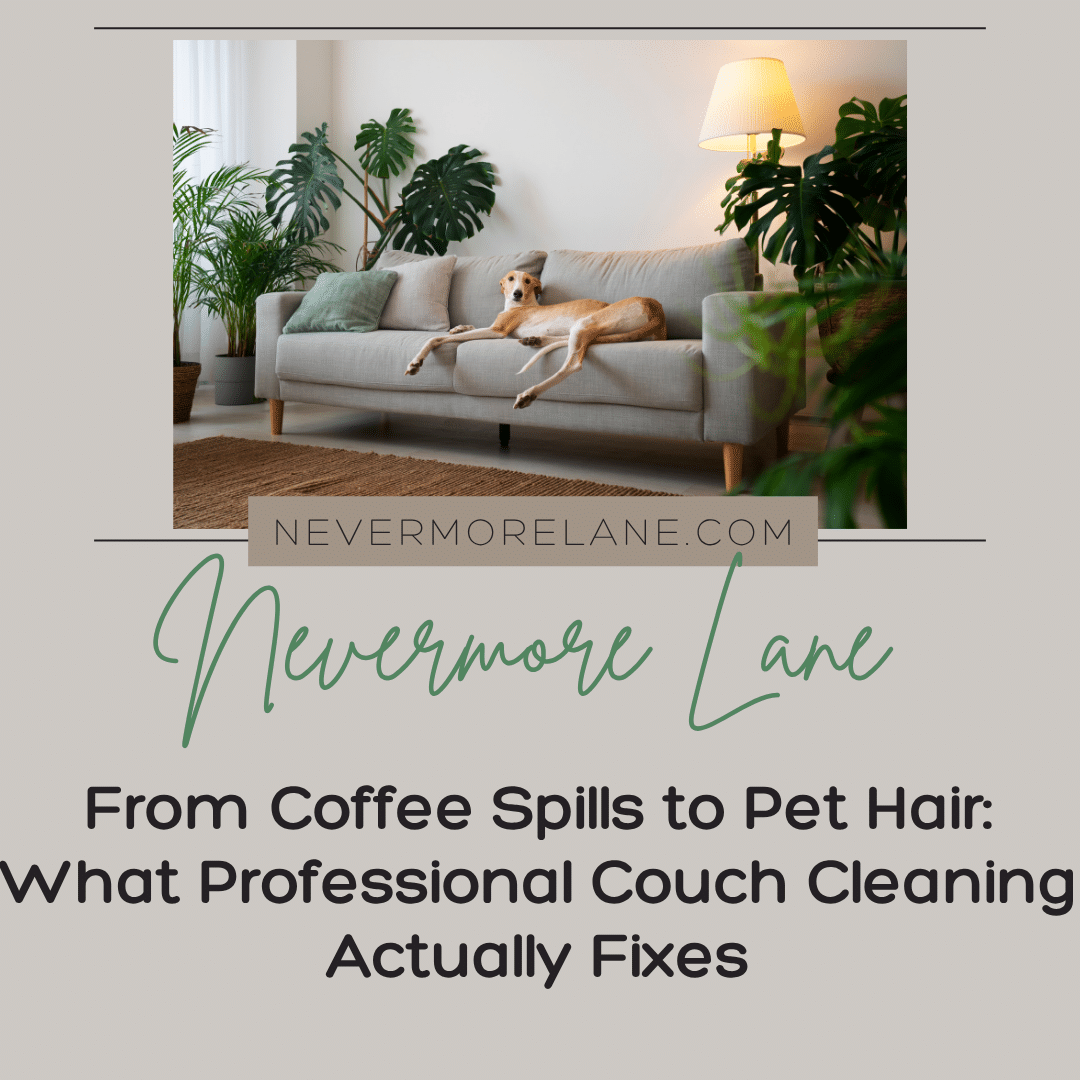
It’s often said online that roughly two thirds of American households keep a pet. Anyone who owns one knows the couch is the pet’s favorite spot, whatever the house rules say.
Hair
Pet hair weaves itself into fabric, especially microfiber and textured weaves. A lint roller handles the top layer. Professional vacuuming and rubber-bristle grooming get the rest, including the hair packed into seams and under the cushions.
Dander
What really bothers allergic guests isn’t the hair, it’s dander – tiny flakes of skin. Light, sticky, persistent. Deep cleaning removes a large part of it, and sensitive visitors often feel the difference.
Urine and odor
Now the honest part. Fresh accidents usually clean up well. Old ones that soaked into the foam are harder. Enzyme treatments break down the organic compounds behind the smell, but if the foam is saturated, replacing the insert may be the only full fix. A good technician says so upfront instead of promising miracles.
Charles M. Schulz called one of his books Happiness Is a Warm Puppy. True. Also true: the warm puppy sheds.
Food, Grease and Body Oils
Greasy spots – pizza, chips, popcorn butter, hand lotion – are a different category. Oil doesn’t dissolve in water, so plain scrubbing just spreads it around. Armrests and headrests collect body oils over the years and slowly darken. Usually nobody notices until the cushions are cleaned and the arms suddenly look two shades darker than everything else.
Degreasing pre-treatments break these deposits down. The results are often dramatic. The “dark” fabric turns out to be the original color, just hiding.
What Cleaning Usually Can’t Undo
Fair is fair. Some damage is permanent, and it’s better to know before booking:
- sun fading, where the dye itself is gone
- worn-through or pilled fibers on high-contact spots
- bleach marks and chemical burns
- stains that were set with heat from a hair dryer or iron
- foam that has collapsed or crumbled with age
- dye bleeding caused by earlier aggressive cleaning
Cleaning can make these areas look better by removing the dirt around them, but it can’t bring back color or fiber that’s no longer there.
How to Get the Most From a Deep Clean
A little preparation makes the visit far more effective:
- Note every stain and what caused it, if known. Coffee, wine and ink each need a different approach.
- Mention pets, allergies and any products already tried on the fabric.
- Find the care tag, usually under a cushion or on the deck.
- Clear the space around the couch so every side can be reached.
- Plan for drying time and keep pets and kids off the fabric until it’s dry.
- Ask about fabric protection afterwards if spills are a regular event.
Will Durant, summing up Aristotle, wrote that we are what we repeatedly do. Couches are a bit like that too. They become whatever happens on them every day.
The Couch After
A professionally cleaned couch rarely looks brand new. That’s not really the point. It looks like itself again: the right color, the right texture, no ghost of last spring’s coffee and no faint dog aroma greeting guests at the door.
And then life starts writing on it again. Which, honestly, is what couches are for.