Can Border Officers Search Your Phone? What Travelers Should Know Before Crossing the Border
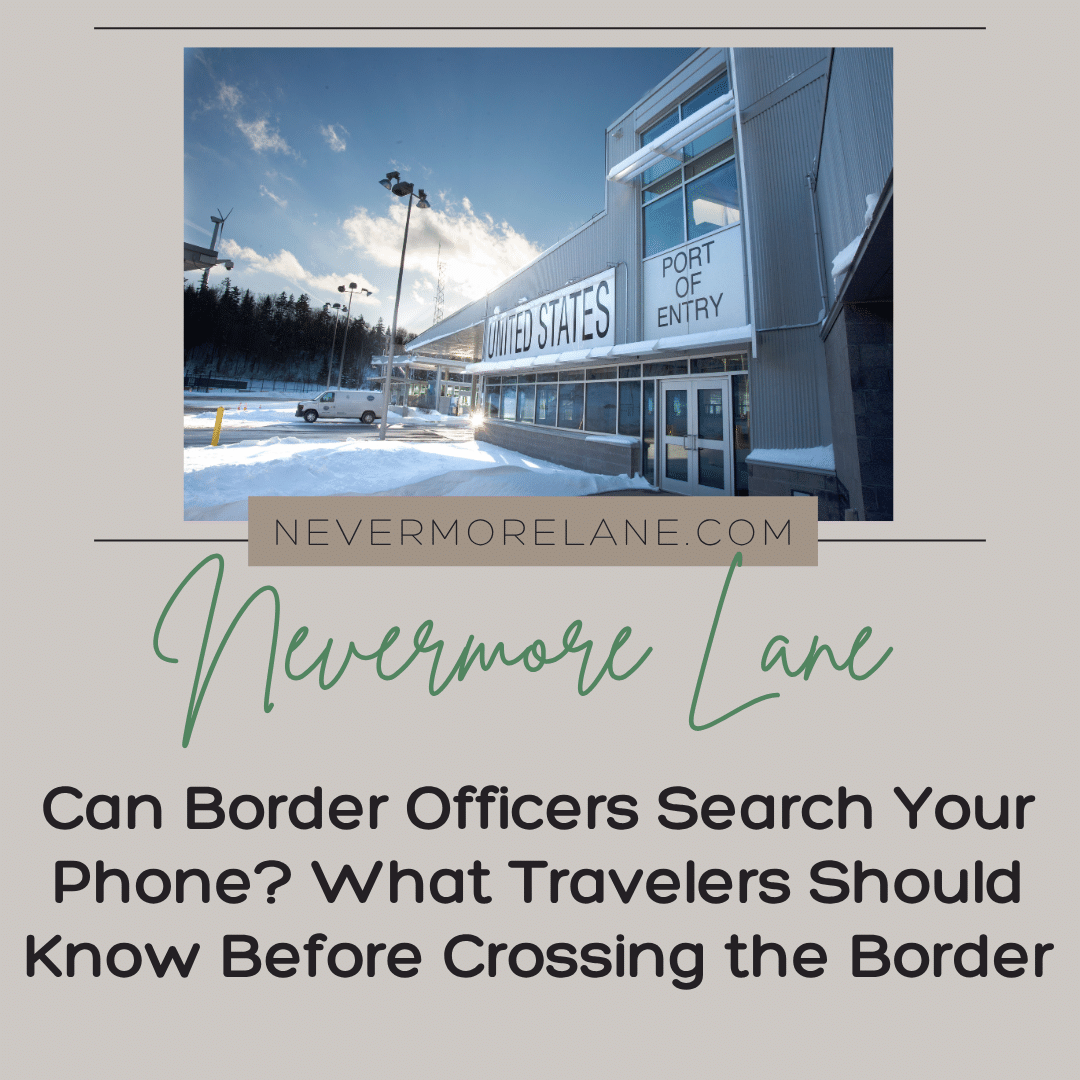
Most travellers anticipate showing a passport, answering a few questions, collecting their luggage, and then continuing their journey. Fewer still would predict that a border official would ask them to enter the unlock code for their smartphone.
Many individuals find that request somewhat intrusive. Smartphones contain years’ worth of pictures, private conversation history, banking data, email files, work-related documentation, travel plans, and even individual notes. However, travellers crossing an international boundary do not generally have the same level of expectation of privacy as they do in daily life.
Understanding what a Canadian border official can look at when you cross the border will reduce confusion when a surprise device search occurs.
Can Canadian Border Officials Search My Smartphone?
The Canada Border Services Agency (CBSA) has the authority to review items entering Canada. This authority extends to personal digital devices, including smartphones, laptops, tablets, cameras, removable hard drives, smartwatches, etc.
It is not a requirement for an officer to scroll through every item contained within a traveller’s phone. According to the CBSA, personal digital devices are reviewed by the officer when they have reasonable grounds to suspect that a violation of the Canada Customs Act occurred and/or the legislation provides for the review of the personal digital device. Indicators or concerns may relate to a traveller’s identity, their admissibility to Canada, undeclared or restricted items, or compliance with other border legislation.
Device reviews occur infrequently. In fact, according to the CBSA, between November 2017 and the end of 2025, approximately 0.007% of travellers processed at the border were subjected to a review of their personal digital device.
What Does an Officer Look at During an Examination of a Smartphone or Laptop?
When a CBSA officer conducts an examination of a phone or laptop, they typically place it in airplane mode, thereby disabling its network connection.
This is an important detail.
An officer cannot use the device while examining it to view material contained remotely on internet servers or in cloud-based storage systems.
Material found on the device itself may include:
- Text messages
- Emails
- Photos and videos
- Documents
- Receipts
- Files stored locally
- Any other digital records associated with the review
For most travellers, this serves as an additional reminder that crossing an international border is more than simply packing what you need in your suitcase. In addition to what you pack in your suitcase, the device in your pocket contains a wealth of information about where you have travelled, where you shopped, and whom you contacted.
What Happens to My Phone If I Won’t Provide the Password?
Most smartphones currently in circulation utilize some form of protection mechanism to prevent unauthorized use. These mechanisms can include PINs/passwords, fingerprints, and facial recognition.
Based on the CBSA’s guidance material, an officer conducting an examination of your protected device may require you to provide the password needed to access the content of that device. The CBSA indicates that travellers are required to provide the password requested by an officer conducting an examination. Refusal to comply with this request may result in your device being detained or seized pursuant to applicable border legislation.
Refusing to cooperate may present you with a difficult decision, especially if you believe there is material on your device that may cause you harm.
Akash Dhillon is a criminal defence lawyer practising at A. Dhillon Law in Brampton. He specializes in matters involving Charter rights, searches and seizures, digital communication, and other forms of evidence.
“When you ask for your cell phone to be unlocked so that the data contained in it can be reviewed (presumably for immigration purposes) and this process develops into an evidentiary examination (i.e., potential criminal charges), then the method by which the data was obtained becomes very important along with how that data can be used as evidence.”
Border examinations are frequently limited to simply being a part of a routine customs inspection; however, if a border examination develops into a criminal investigation, many of the legal issues could go far beyond the scope of a typical customs inspection.
Your Right to Privacy Has Not Changed When You Crossed the Border
You retain your right to privacy in Canada.
Section 8 of the Canadian Charter of Rights and Freedoms protects individuals from unreasonable searches and seizures. For over two decades, courts have consistently held that privacy expectations are diminished at international borders due to governmental interests in determining who enters Canada and what enters Canada.
Modern smartphones pose a problem for this existing equilibrium because each device can contain a massive amount of private information.
Prior to the last parliamentary session ending, Bill C-51 was tabled by the federal government to establish a statutory threshold for searches of personal digital devices conducted by a CBSA officer at our international borders. Unfortunately, this bill did not pass prior to Parliament adjourning. Therefore, until Bill C-51 becomes law, if it does, online news articles referencing new laws with regard to searching personal digital devices at our international borders may be outdated.
As stated by the CBSA, examinations of personal digital devices are not commonplace, and officers require “indicators” or “concerns” regarding non-compliance with border legislation prior to conducting an examination.
What About Sensitive Business or Legal Matters Contained on My Device?
Some travellers may bring sensitive professional information on their devices.
Lawyers are one group of professionals whose communications with clients may be protected by solicitor-client privilege. The CBSA advises that if an officer identifies information on your device that appears to be protected by solicitor-client privilege, they will cease reviewing that particular document. If there is a dispute regarding whether solicitor-client privilege applies, your device will be placed out of reach pending determination by a court.
Business travellers may also wish to consider how much confidential company information they transport internationally.
Different Countries Have Different Laws
Regardless of whether you are crossing into Canada or another country, the laws differ depending on where you are going.
When travelling outside of Canada, no matter where you go, including the United States, Europe, or Asia, you should never assume that your privacy rights or search procedures will follow you to that location. Each country has its own rules pertaining to border searches, passwords, and consequences for failure to cooperate.
This is especially true for Canadians travelling through airports with U.S. preclearance facilities. Travellers meet U.S. border authorities prior to departing Canada, and different legislation applies to that process.
Reviewing government-issued travel advisories before embarking on your trip will assist in avoiding unpleasant surprises.
Preparing Yourself Will Help Ease Your Passage Across Borders
While most travellers will never have their phone examined at the border, with the CBSA’s own statistics indicating examinations occur extremely rarely, modern travel entails carrying substantially more personal information than ever before.
Consider storing your important data locally on your devices and backing it up securely prior to leaving home. Additionally, familiarize yourself with the regulations governing where you are headed.
Should a border examination develop into detention or seizure of your device(s), lead to questioning regarding possible criminal offences, or ultimately result in a criminal investigation, your experience will transcend beyond a simple travel inconvenience. Consulting with a criminal defence lawyer will enable you to better understand what transpired, what rights exist, and what actions you should take moving forward.
The passport in your pocket gets you across the border. However, your phone located beside it is often viewed as equally deserving of scrutiny.