Europe’s Best Cross-Border City Breaks You Can Do in a Weekend
Europe’s Best Cross-Border City Breaks You Can Do in a Weekend
A weekend can be enough to experience two countries when Europe’s cities are connected by fast, reliable transport. Instead of spending precious holiday time travelling between airports, crossing a border by rail can turn the journey itself into part of the adventure. Friday evening can begin in one capital and Saturday morning can unfold somewhere entirely different, with new architecture, food, languages, and local traditions waiting beyond the station.
For travellers who enjoy making the most of a short break, Europe’s compact geography creates plenty of possibilities. London and Paris, Vienna and Budapest, Copenhagen and Malmö, or Brussels and Amsterdam can each form the basis of a rewarding two or three-day escape.
London to Paris: Two Capitals, One Weekend
Few combinations are as tempting as London and Paris. The train from London to Paris makes it possible to leave the British capital in the morning and arrive in central Paris around lunchtime, giving visitors much more usable time than a typical airport journey. Once there, the Seine, Louvre, Eiffel Tower, and historic neighbourhoods provide plenty of options. A short weekend does not need to include every famous landmark. Walking through the Marais, enjoying a long lunch, or sitting outside a neighbourhood café can be just as memorable. For a return journey, leave enough time to reach the station comfortably and keep the final morning relatively relaxed.
Vienna and Budapest: Imperial Elegance Meets Riverfront Energy
Central Europe is particularly well suited to weekend travel. Vienna and Budapest are close enough to combine without turning the journey into the main event. Vienna offers grand boulevards, historic palaces, coffee houses, and elegant public spaces. Budapest has a more varied visual character, with the Danube separating Buda’s hills from the lively streets of Pest. A weekend could begin with Vienna’s historic centre on Friday, continue with Schönbrunn Palace and a relaxed dinner on Saturday, then move towards Budapest for riverside views, thermal baths, and atmospheric evening walks. The contrast between the two cities makes the pairing especially appealing.
Brussels and Amsterdam: Canals, Squares and Creative Streets
A short break linking Belgium and the Netherlands can combine impressive architecture with a more relaxed urban atmosphere. Brussels is known for its ornate central square, Art Nouveau heritage, chocolate shops, and lively cafés. Amsterdam offers a completely different visual experience. Its canals, narrow houses, bridges, museums, and cycling culture create an environment best explored at a leisurely pace. Travellers can spend the first day discovering Brussels before continuing to Amsterdam. Once there, a canal cruise or walk through the Jordaan can provide an easy introduction to the city. Because both destinations have excellent public transport, there is little need to hire a car.
Copenhagen and Malmö: A Border Crossing With a View
The journey between Copenhagen and Malmö is one of Europe’s most distinctive short cross-border trips. The Øresund connection links Denmark and Sweden, making it possible to experience two national cultures during the same weekend. Copenhagen brings colourful harbourfront buildings, contemporary design, historic streets, and an excellent food scene. Malmö has a smaller scale, with attractive squares, modern architecture, parks, and waterfront areas. The journey across the Øresund is part of the experience. Seeing the bridge and water from the train adds a memorable geographical element to what would otherwise be a simple city transfer.
Strasbourg and Germany’s Rhine Cities
Strasbourg offers another fascinating border-region experience. Its location near Germany has shaped its architecture, cuisine, and cultural identity over centuries. The historic centre features canals, timber-framed buildings, and an impressive cathedral. Visitors can spend hours walking through Petite France before enjoying regional dishes in a traditional restaurant. Those with additional time can continue towards cities across the Rhine. The relatively compact distances make this region particularly useful for travellers who want a weekend with a strong sense of place without covering enormous distances.
Geneva and France’s Alpine Borderlands
Geneva provides a slightly different kind of city break. The Swiss city combines an international atmosphere with lake views and an impressive mountain backdrop. Lake Geneva is the obvious starting point, particularly on a clear day. The old town adds narrow streets and historic buildings, while the waterfront offers plenty of opportunities to slow down. Crossing into nearby France can introduce a more relaxed regional atmosphere, with lakeside communities and Alpine scenery providing a change from the urban environment. This option works particularly well for travellers who prefer scenery alongside sightseeing.
Luxembourg and Metz: Small Cities, Big Character
Not every weekend adventure requires famous capitals. Luxembourg and Metz offer an appealing combination of historic architecture, walkable centres, and distinct national identities. Luxembourg City’s dramatic position above deep valleys gives it a memorable setting. Fortifications, bridges, and old neighbourhoods can be explored without needing a complicated itinerary. Metz, across the border in France, adds elegant squares, colourful markets, and distinctive architecture. The two destinations demonstrate how smaller European cities can provide satisfying short breaks without overwhelming visitors with endless attractions.
Salzburg and Germany’s Bavarian Neighbours
Salzburg is famous for its musical heritage, baroque architecture, and Alpine surroundings. The compact historic centre makes it particularly suitable for a short visit. Visitors can explore Mirabell Gardens, admire the old town, and look towards the mountains before crossing into neighbouring Bavaria. The regional connection makes it possible to combine Austrian and German scenery without committing to a lengthy road trip. For travellers who enjoy castles, traditional architecture, and mountain landscapes, the area provides considerable variety within a relatively small geographical space.
Tallinn and Helsinki: A Baltic Weekend
For something farther north, Tallinn and Helsinki offer a fascinating combination. Tallinn’s medieval centre is filled with cobbled streets, towers, colourful buildings, and historic walls. Helsinki has a more contemporary Nordic character, with modern design, waterfront neighbourhoods, open public spaces, and distinctive architecture. The two cities are separated by the Gulf of Finland rather than a land border, but their close connection makes a combined weekend entirely possible. The ferry crossing adds a maritime element to the trip and gives travellers a different perspective on regional travel.
Ljubljana and Trieste: Two Sides of the Adriatic
Ljubljana is one of Europe’s most appealing smaller capitals, with a pedestrian-friendly centre, riverside cafés, bridges, and a relaxed atmosphere. Trieste, just across the border in Italy, has a fascinating blend of Central European and Mediterranean influences. Grand squares open towards the Adriatic, while cafés and historic buildings reflect the city’s complex past. Combining the two creates a weekend with a distinctly different rhythm from larger capital-city breaks. There is time to wander rather than constantly moving between major attractions.
Making a Two-Country Weekend Work
The secret to a successful cross-border city break is restraint. Trying to fit six attractions into every afternoon can make a short holiday feel exhausting. Choose one or two key experiences in each destination, then leave room for meals, neighbourhood walks, and spontaneous discoveries. Accommodation near a central station can save valuable time, especially when the stay is only two nights. Packing lightly is equally helpful. A small suitcase or backpack makes transfers faster and eliminates the need to find luggage storage between activities.
Choosing the Right Pair
Different city combinations suit different interests. Art lovers may gravitate towards Paris and London, architecture enthusiasts could choose Brussels and Amsterdam, while travellers interested in history may prefer Vienna and Budapest. For outdoor scenery, Geneva or Salzburg can work particularly well. Copenhagen and Malmö suit design enthusiasts, while Tallinn and Helsinki offer a distinctly northern atmosphere. The best pairing is not necessarily the one with the greatest number of famous sights. It is the one where the two destinations complement each other.
Our Final Thoughts
Cross-border weekend breaks demonstrate just how accessible European travel can be. A short rail journey or ferry ride can place travellers in another country, surrounded by a different language, cuisine, architecture, and cultural atmosphere. From grand capitals to compact historic towns, the possibilities extend far beyond the traditional weekend getaway. With light luggage, sensible scheduling, and a willingness to explore at a comfortable pace, two countries can become part of one surprisingly rich short break.
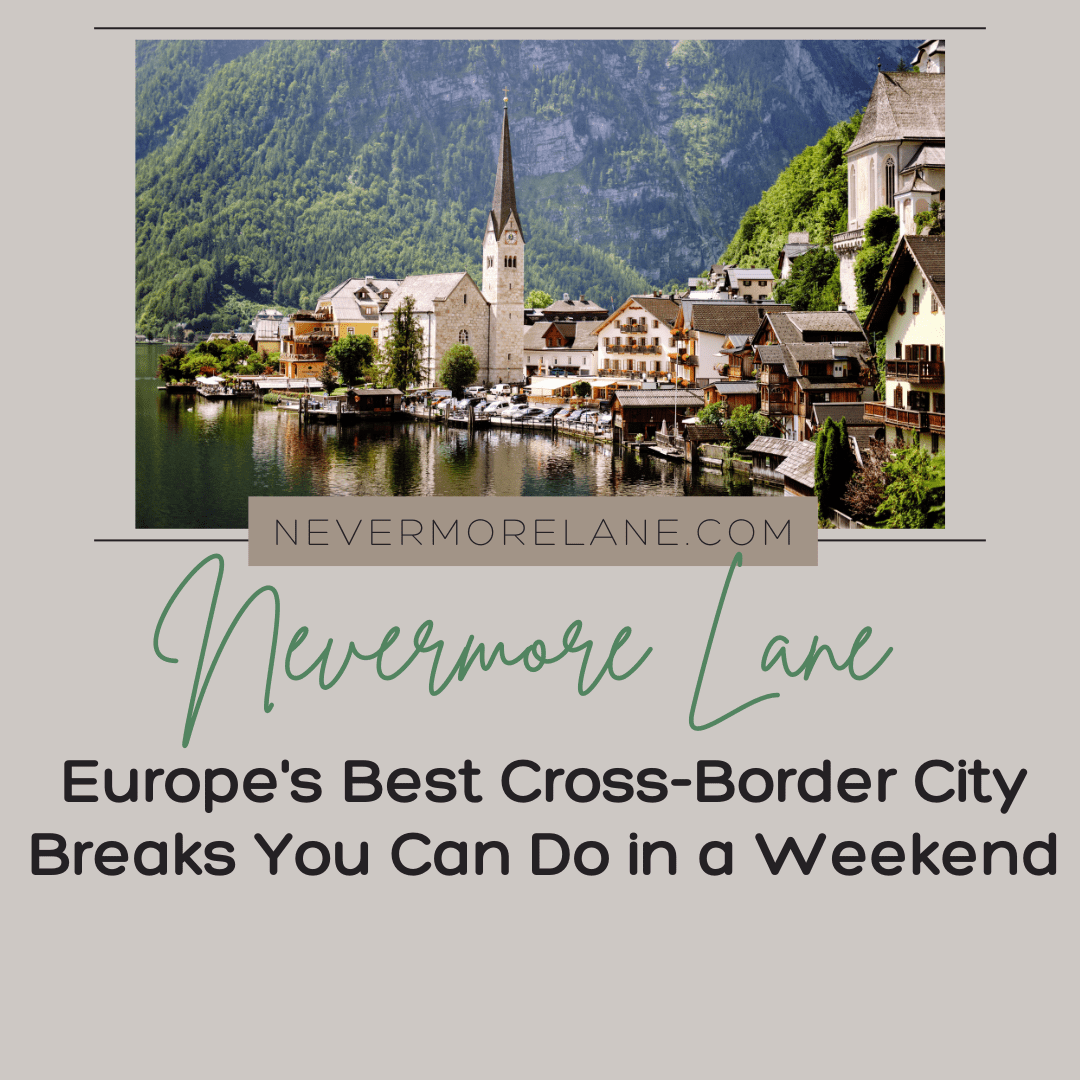
Photo by Aravind Sreekumar Nair : https://www.pexels.com/photo/beautiful-scenic-view-of-hallstatt-in-austria-29049225/