Why Mass-Produced Furniture Fails and What to Buy Instead
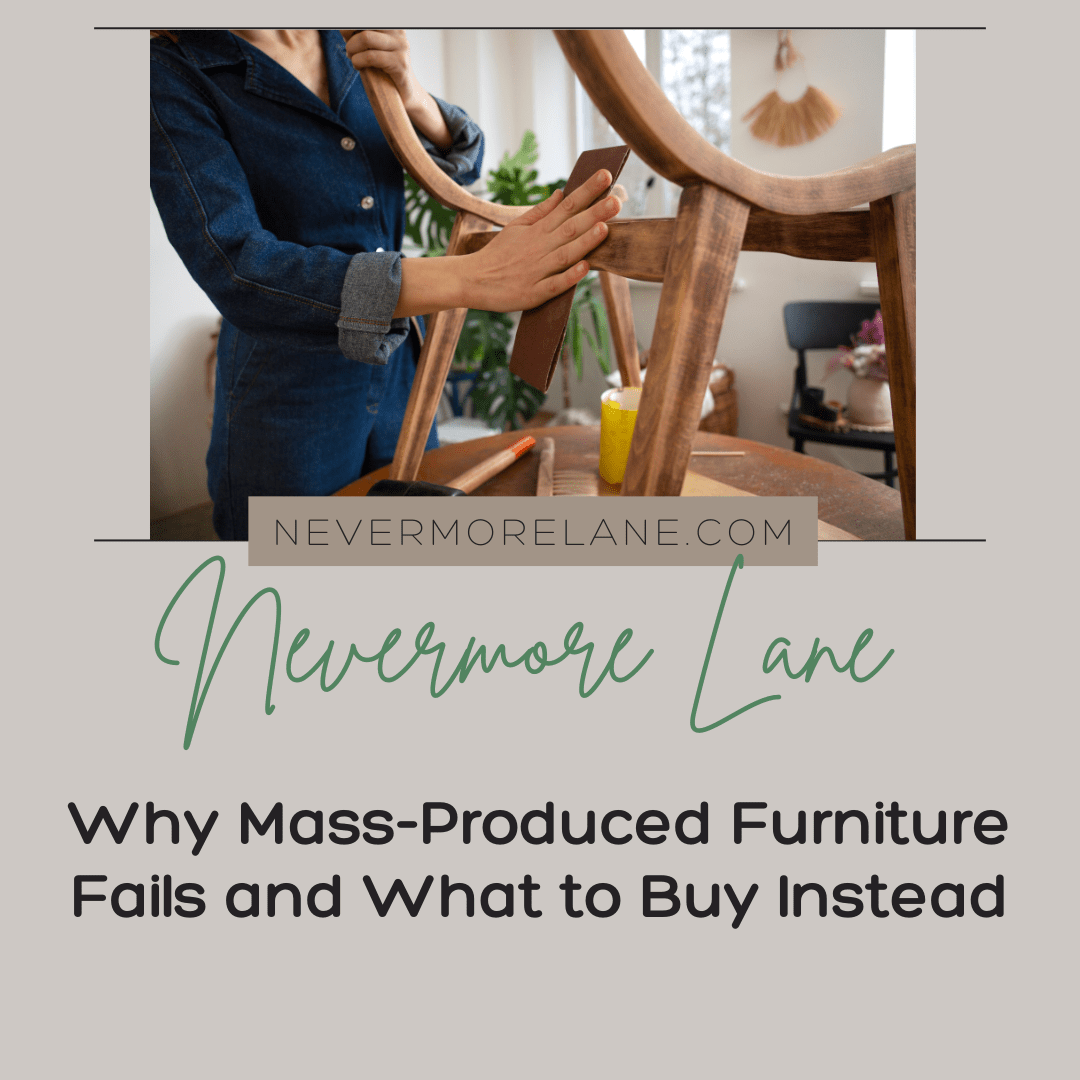
The majority of furniture available for purchase these days is not designed to be durable. And it’s not a coincidence. It’s planned obsolescence, and you pay for it, but it only makes sense if you don’t consider the overall cost.
Furniture that can be easily moved from one place to another in “knockdown” form for ease of shipping, like IKEA or a lot of mail-order furniture, isn’t exactly the same thing as fast furniture, though a lot of it is. There is really no way a fully assembled sofa bed would make any economic sense to ship; but when that’s all you buy even from a reputable dealer and expect it to last all of ten years, well, you’re bidding a premature farewell to the thing that year nine. And the threadbare couch and chair you’re sitting in is probably right about there with you and that no-longer-serviceable dresser you’re about to throw out too.
The alternative isn’t to spend a fortune, it’s to spend on the right things: solid hardwood joined with proper mortise-and-tenon or dovetail joints, frames cut from kiln-dried timber rather than particleboard, cushions built on a real sprung base instead of a block of stapled foam. None of that is a luxury flourish, it’s just what furniture looked like before manufacturers worked out how cheap they could get away with building it. A table made this way gets sanded and re-oiled every decade or so and comes out better for it; a veneered one delaminates the first time a cold glass sweats on it, and there’s nothing left to repair, only to replace. Look for makers who’ll tell you what’s actually in the piece rather than leaning on words like “premium” that cost them nothing to print, and don’t assume price alone is doing the work, since plenty of expensive furniture is built the same as the cheap stuff, just dressed better.
What to Actually Check Before You Buy
You don’t have to be a woodworker to see the distinction between something made to last and something made to sell. A couple of checkpoints do most of the work:
Drawer construction. Pull a drawer out and look at the joints connecting the sides to the front. Dovetail joints – the interlocking triangular pattern – indicate real craftsmanship. Stapled or glued butt joints mean the drawer box will loosen and ultimately fall apart.
Frame joinery. On chairs and tables, check where legs meet the seat or tabletop. Mortise-and-tenon joints, where one piece of wood is carved to fit snugly into a slot in another, carry weight for generations. Glue and a metal bracket do not.
Material, not just appearance. Wood veneer over plywood is a legitimate quality feature, not a red flag – it’s how furniture makers have used figured wood economically for over a century, and it can be sanded and refinished. Printed laminate that just mimics a wood pattern is a different thing entirely. It can’t be refinished, and once it chips, it’s cosmetic damage you can’t fix.
Weight. Pick up a corner. Solid hardwood has heft. If a dresser feels light enough to lift with one hand, it’s probably hollow-core construction dressed up to look substantial.
Once you know what you’re looking for, sourcing gets a lot easier. Estate sales and auctions have always been where heirloom-quality pieces surface, but you can spend a lot of weekends hunting for one good find. These days, browsing a curated dealer like High End Used Furniture gets you pieces that have already been vetted for the construction details above, without the guesswork of sorting through a garage full of someone else’s flat-pack castoffs.
The Real Cost Isn’t the Price Tag
Let’s break it down: A flat-pack dresser (or anything with the words “assembly required” on the box) might seem like a great deal at the time but doesn’t hold up as a solid investment long-term. Maybe you’re just starting out and pinching pennies, we get it. But here’s the deal, cheap isn’t cheap if you have to replace it over and over.
That $400 dresser seems too good to be true, and that’s because it is. In just a few years, it’ll be wobbly, the drawers will stick, and the veneer will be peeling. That’s if you even keep it that long. Most folks eventually get fed up and lug it to the curb. So now we’re talking that $400 dresser over just three years. At the end of it, you pay to have it hauled away. Bye-bye, $400.
A well-built used dresser in solid hardwood, bought for $500 to $700, behaves completely differently. It holds its value because the material and joinery are still sound decades in. Some pieces, particularly recognized mid-century modern designs, actually appreciate because the supply of intact originals only shrinks over time. Cost-per-year, the “expensive” vintage piece is often cheaper than the “budget” one, and you’re not replacing it every few years.
The Environmental Math Backs This up Too
It’s not only about money. In 2018, the US produced approximately 12.2 million tons of furniture and furnishings waste, and almost 9.7 million tons of that waste was sent directly to landfills rather than being recycled or reclaimed (EPA). This accounts for about 80% of all discarded furniture. Particle board and laminate cannot be efficiently recycled – they are glue and wood dust compressed together, and once those materials are dismantled, they simply turn into garbage. In comparison, solid wood furniture can be fixed, refinished, and reupholstered instead of being replaced, which directs the solid material away from landfills.
Vintage Doesn’t Mean Worn Out
Buyers are most reluctant to envision something tired and dated that doesn’t work in their space. That is an upholstery and finish issue, not a frame problem. A solid frame with good joinery can be reupholstered in any fabric you want, stripped and restained to a different tone, or hardware-swapped to look current. You’re paying for new fabric and finish work, not a new frame, which is a fraction of what bespoke furniture costs. The frame – the part that actually determines whether the piece survives another twenty years – was already built right the first time.
Buy the frame that lasts, and everything sitting on top of it is negotiable.