The Ritual of Warm Feet: A Slow-Living Guide to Wool Socks
Comfort begins at the place where the body meets the ground.
Some forms of comfort announce themselves: a fire catching in the grate, rain beginning against the window, a kettle clicking off in a quiet kitchen. Others are so close to the body that we barely name them. Warm, dry feet belong to that second kind.
A good pair of socks can change the texture of an ordinary hour. It can soften the first cold floorboard in the morning, steady a long walk, or mark the moment we return home and loosen the day. In a slow-living practice, these small transitions matter because they bring attention back to the present body.

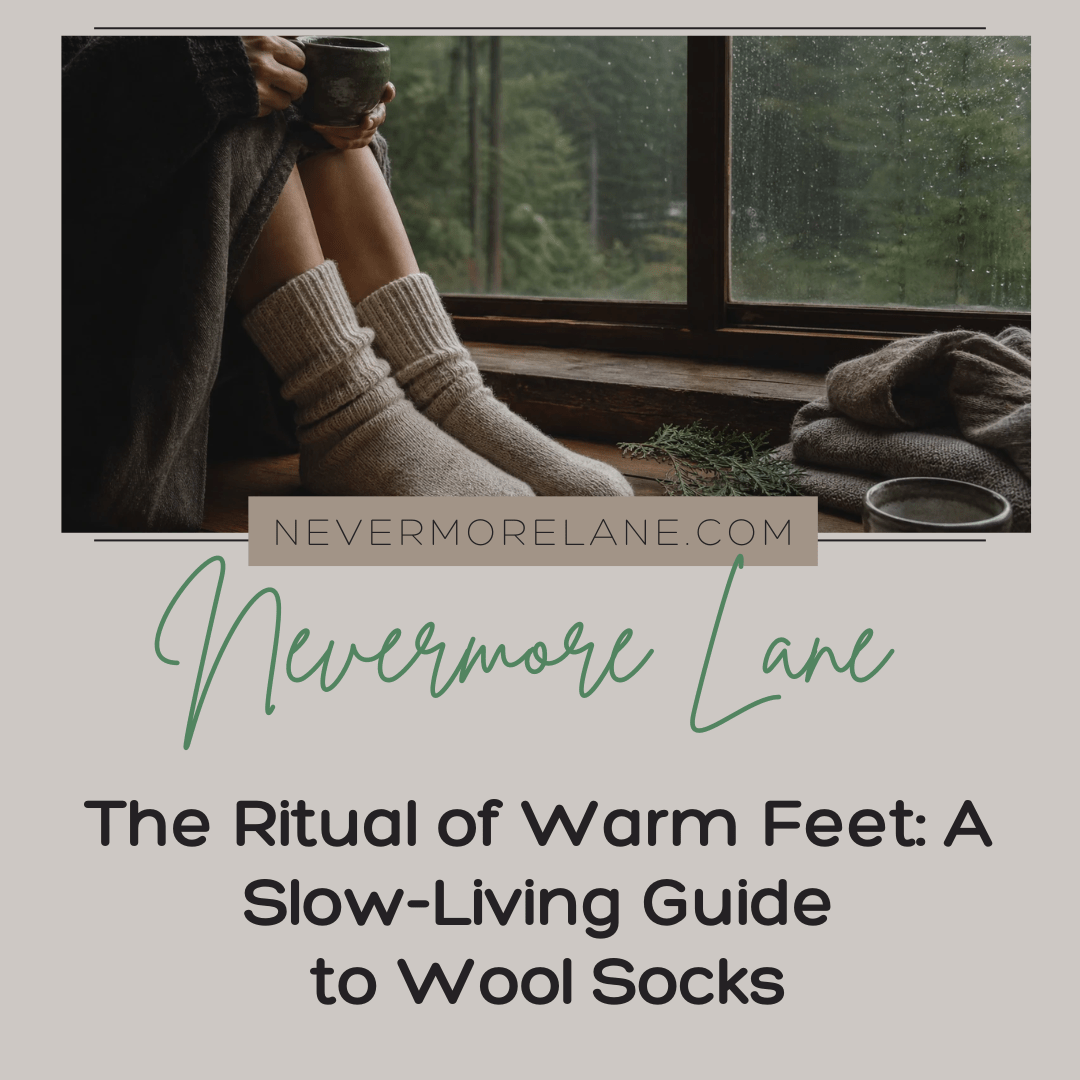
A quiet window, a warm cup, and soft wool can turn an ordinary pause into a ritual.
Begin at the Threshold
The doorway is a useful place to notice how we move through life. We cross it carrying groceries, work, weather, and sometimes more hurry than we intended. A small ritual at the threshold can help separate outside demands from the inner rhythm of home.
Hang the coat. Put the keys in one place. Change damp or tight footwear. Pull on a clean pair of soft socks before making tea or beginning dinner. None of these actions is dramatic, yet together they tell the nervous system that the pace may change now.
Warm feet are not an escape from responsibility. They are a foundation for meeting the next hour with a little more ease.
Why Wool Belongs in a Grounded Wardrobe
Wool carries the memory of landscape. Before it becomes yarn, it is a fiber shaped by an animal’s need for protection across weather and season. Spun and knitted, it retains qualities that make it useful close to the body: loft, softness when fine fibers are used, and an ability to manage moisture across changing temperatures.
Merino wool is especially common in everyday socks because it can feel less bulky than traditional rustic wool. It may be worn on a cool morning walk, inside boots during errands, or while reading near an open window. Blended with supportive fibers, it can also gain stretch, durability, and easier care.
The point is not to romanticize a material. It is to notice whether the material serves the life you have.
Choose the Pair That Fits Your Actual Life
Begin with the floor beneath your feet and the shoes by your door. If most days involve loafers or slim sneakers, choose a fine or medium knit that will not crowd the toe box. If you walk trails or spend time in colder rooms, targeted cushioning may be worth the extra thickness.
Crew height is a gentle all-rounder. It protects the ankle, works with many boots and shoes, and can be pulled over the edge of leggings or tucked beneath a trouser hem. Charcoal, oatmeal, moss, and deep brown settle easily into an earthy wardrobe.
Read the fiber list and care instructions. A collection of wool socks with different weights and activity profiles, such as MP Magic’s merino range, can help you compare which balance of wool, supportive yarns, ventilation, and cushioning matches daily wear, travel, or outdoor movement.
Three Small Rituals for Warm Feet
1. The morning grounding minute
Before looking at a screen, sit at the edge of the bed and pull on socks slowly. Notice the texture, the temperature of the room, and the pressure of both feet on the floor. Take three unforced breaths. The ritual lasts less than a minute, but it begins the day inside the body rather than inside a notification.
2. The returning-home change
Keep a small basket of clean wool socks near the entryway or bedroom. After a wet commute or long day, change into a fresh pair before moving to the next task. Let the action mark a boundary: outside has been carried in far enough.
3. The walking inventory
On a familiar walk, bring attention downward. Is the ground hard, soft, sloped, or uneven? Are the feet warm, cramped, or free? Clothing becomes part of awareness when we notice what it allows us to feel. Comfortable socks should support the walk without becoming the loudest sensation.
Care as Reciprocity
An object that offers daily comfort deserves a care practice that preserves it. Follow the maker’s label, especially the maximum wash temperature and drying method. Keep bleach and rough fasteners away from fine knits when instructed, and use a mesh bag if your laundry tends to swallow small things.
Allow pairs to dry fully before returning them to the drawer. Store them flat or loosely folded instead of stretching the cuff around the bundle. Rotate several pairs so no single one carries every cold day.
When a heel thins, consider repair before replacement. A simple darn may not be invisible, but that is part of its beauty. Repair records attention. It says that usefulness does not end at the first sign of wear.
Try the One-Drawer Experiment
Slow living is often less about adding beautiful objects than removing the friction created by too many indifferent ones. Empty the sock drawer and keep only the pairs that fit, feel good, and suit the shoes you actually wear.
Group them by purpose: daily, active, warmest, and repair. Make a short note of what is missing before buying anything new. Perhaps the real need is not five more novelty pairs, but two dependable wool crews in colors that work all week.
For one month, notice what you reach for. The pattern will reveal more than a trend report can.
A Softer Way Through the Day
There is a particular kindness in attending to the body where it meets the ground. Warm socks will not solve a crowded schedule or quiet every worry, but they can remove one small discomfort and create one small moment of care.
Pull them on before the house wakes. Change into them after the rain. Wear them on the path that leads back to yourself. A grounded life is built from gestures like these: ordinary, repeatable, and close enough to touch.