The Case for Slow Dinners: Setting Up an Outdoor Table You Actually Want to Linger At
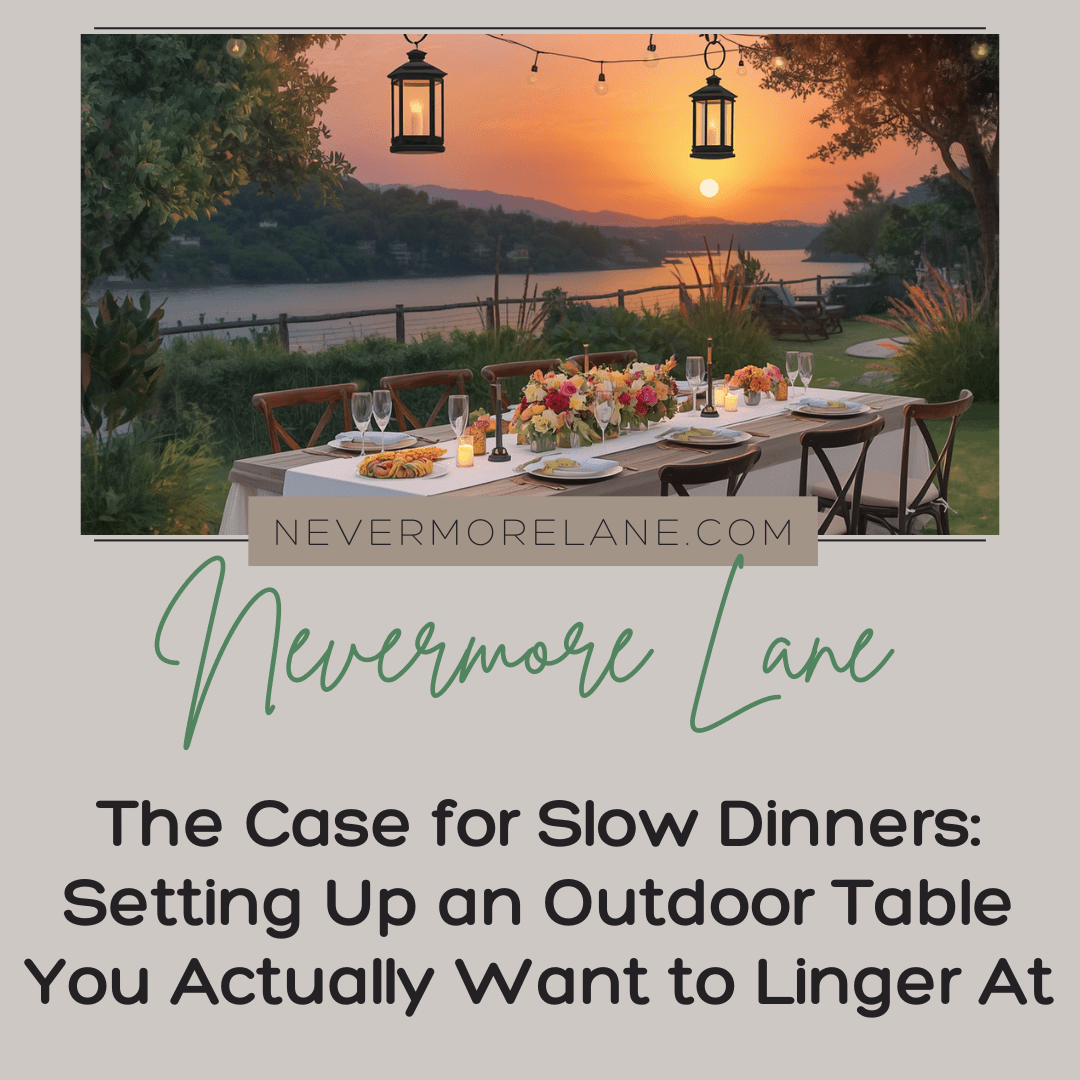
Most people plan to linger outside. They picture the long dinner, or maybe that second glass of wine. Conversation that keeps going after the plates are cleared. Then twenty minutes in, someone’s back is hurting, the table’s rocking on one leg, and everyone drifts back inside without quite deciding to. It’s not the food’s fault; it’s the furniture.
We love a nice, slow dinner here. I think really, just about everyone does. So let’s figure out how to squeeze more minutes of fun and connection out of our dining sets. Here are the key considerations:
The Chair Is Doing More Work Than You Think
A dining chair built for a quick lunch and one built for a two-hour dinner are not the same object, even if they look similar in a catalog photo. Seat height matters more than people expect, most dining chairs sit around 17 to 19 inches, and a couple inches off in either direction changes how long a guest wants to stay put. Back angle matters too. A chair upright enough for eating soup is often too upright for the part of the evening when nobody’s eating anymore, just talking. If you’ve ever noticed a table where people naturally stay an extra hour, check the chairs before you check anything else.
A Table That Doesn’t Wobble Buys You an Hour
Outdoor ground is rarely as level as it looks, and a table with even a slight wobble becomes a very persistent kind of background noise that quietly shortens a meal. Adjustable glides on the legs solve most of this on pavers or a deck. Material plays a role too. Aluminum tables stay cool and light enough to reposition without a production, while teak has enough weight to feel anchored even on grass. Neither is right or wrong, but it’s worth choosing on purpose rather than by whatever showed up first in a search.
Shade Changes on a Clock; Plan for the Whole Meal, Not Just the Start
The sun that felt pleasant when you sat down at six can be directly in someone’s eyes by seven-thirty, and that person will start looking for a reason to leave the table before they’ve consciously registered why. Most people picture shade as something they arrange once, at noon, and forget about. But the angle that actually matters is whatever it is during the hour you eat, not the hour you happened to be outside measuring for an umbrella.
An umbrella or pergola that covers the seating area through the full arc of a meal, not just the moment you set the table, is one of the least glamorous and most effective upgrades available. There’s also a transition window right at dusk that a lot of setups miss entirely, the ten or fifteen minutes where it’s too dark to see comfortably but too early to have turned any lights on, and that’s exactly when people start reaching for their phones instead of the conversation.
Evening light matters just as much once the sun’s gone. A few candles or a low string of warm-toned lights do more to keep a table feeling alive after dark than any amount of overhead lighting. Warm color temperature is worth being deliberate about here too, a cool white bulb undoes most of the work the candles were doing. None of it needs to be elaborate. It just needs to be there before the gap opens up, not after someone’s already reached for their phone.
The Small Rituals That Make People Stay
Real napkins instead of paper ones. A pitcher of water on the table instead of individual bottles. Somewhere nearby to move to once dinner’s technically over, so the evening has a second act instead of a hard stop. None of these cost much, and none of them require redesigning anything. They just signal, quietly, that the meal isn’t a task to get through.
None of this requires a renovation, just a setup built with the actual two-hour version of dinner in mind rather than the twenty-minute one. If you’re looking to put together a table built for that kind of evening, it’s worth browsing real patio dining sets – furniture designed for comfort first, not just weather resistance, rather than whatever’s stacked at the front of a big-box store this season.
Slow living outside isn’t really about slowing down on purpose. It’s about removing the small frictions that speed things up without anyone deciding to. Fix the chair, the wobble, and the shade, and the lingering tends to take care of itself.