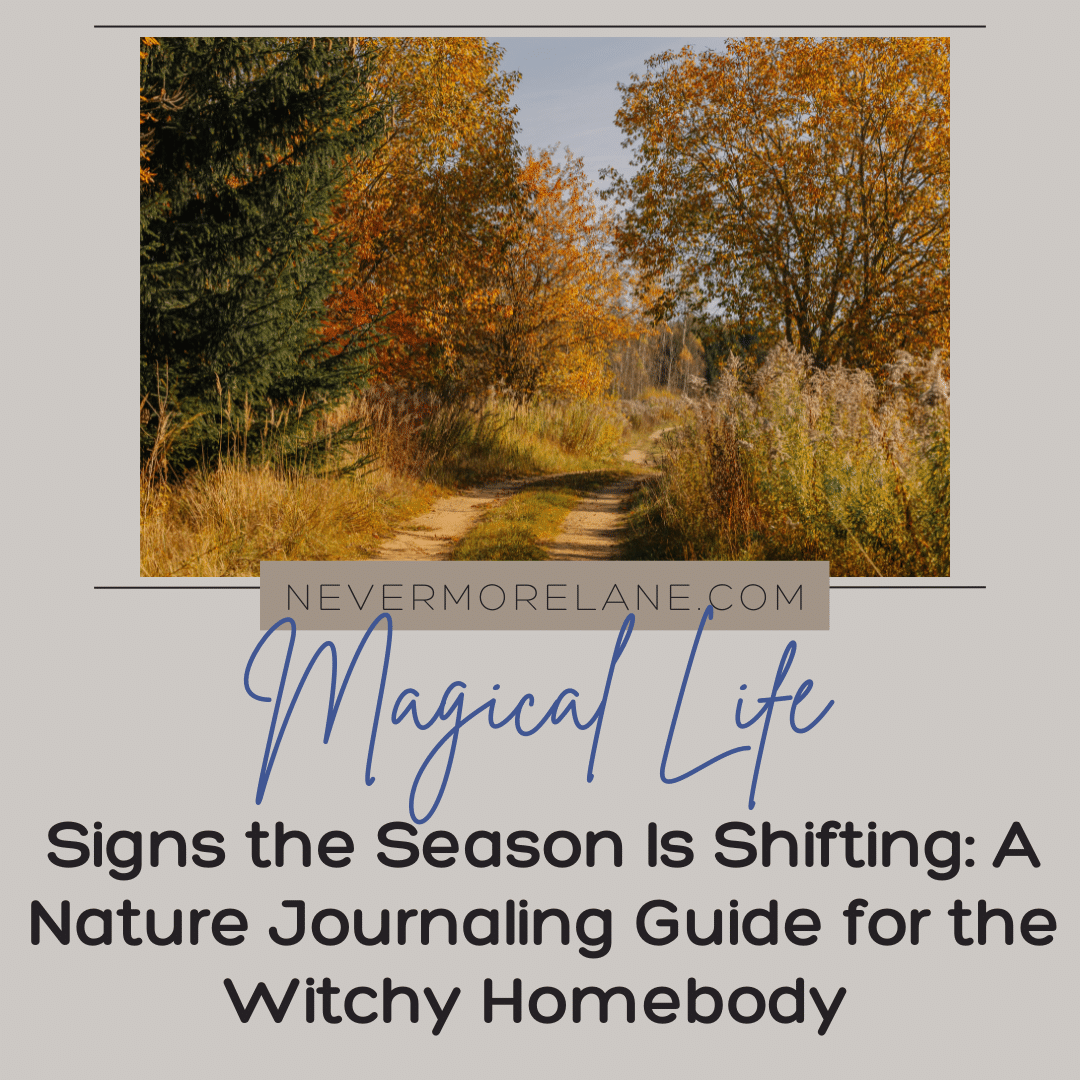
Signs the Season Is Shifting: A Nature Journaling Guide for the Witchy Homebody
I noticed it before I could name it. The light coming through my kitchen window at seven in the morning had gone thin and gold instead of bright and white, and my dog was suddenly wide awake before dawn, pacing the hallway like she had somewhere to be. Nothing dramatic happened. No calendar reminder popped up. But something in the air had quietly rearranged itself overnight, and my body knew it before my brain caught up.
That is the strange magic of seasonal transitions. They rarely announce themselves with fanfare. Instead, they whisper through small, easy to miss details, a slightly cooler breeze, a bird call that was not there last week, the way your tea suddenly tastes better than your iced coffee did in July. If you slow down enough to notice, these details become a kind of conversation with the natural world, one that has been happening long before any of us started tracking it in journals or planners.
This post is an invitation to have that conversation more intentionally. I am sharing a nature journaling prompt series built specifically around the signs of seasonal shift, changes in light, temperature, and animal behavior, and pairing each observation with a simple witchy attunement practice you can fold into your existing routine. No elaborate altar setup required. Just a notebook, a few quiet minutes outside, and a willingness to pay attention.
Tracking Light Changes for Seasonal Awareness
Light is the most reliable narrator of seasonal change, even though most of us barely register it consciously. The autumnal equinox marks the point when day and night sit in near perfect balance, and from there, darkness begins its slow takeover until the winter solstice. Scientists note that animals respond directly to these shifting light conditions, using them as cues for migration, mating, and feeding changes as they prepare for the colder months ahead. Your body is doing something similar, even if it is less obvious than a bird flying south.
Start a simple light log in your nature journal. Each morning and evening for one week, jot down the time, the color of the sky, and how the light feels on your skin or through a window. Is it sharp and clear, or soft and diffused? Does the sunset arrive noticeably earlier than it did last month? These small notes build a personal record of the season’s pace, one that is far more intimate than a printed almanac.
Once you have a few days of observations, try a short twilight ritual. Stand at a window or step outside as the light fades and simply watch. Witches have long treated dusk and dawn as liminal times, moments when the veil between ordinary awareness and deeper intuition feels thinner. You do not need incantations for this. Just watch the light change, breathe slowly, and let yourself feel the day closing. This practice trains your nervous system to recognize transition as something to notice rather than rush past, which is the heart of seasonal attunement.
Reading Temperature Shifts as Nature’s Signals
Temperature tells its own story, and it rarely moves in a straight line. One day feels like summer’s last gasp, and the next carries a chill that sends you searching for a sweater you forgot you owned. Rather than treating these swings as an inconvenience, a nature journal can help you track them as meaningful data about where the season actually stands, not just where the calendar says it should be.
Try a five senses temperature prompt. Step outside and write down what the air feels like on your skin, what it smells like, whether it carries a hint of woodsmoke or damp leaves, and what sounds travel differently in cooler air. Cold air tends to carry sound further and sharper, so you may notice you can hear a neighbor’s wind chimes or a dog barking blocks away in a way you could not during summer’s thick, humid air. These sensory details often reveal seasonal shift more accurately than a thermometer reading ever could.
For the witchy attunement piece, consider a temperature based grounding ritual. When you feel the first genuinely cold morning of the season, hold something cool in your hands, a stone, a glass of water, even the cold metal of a doorknob, and simply notice the sensation without judgment. This is a small act of presence that mirrors what many seasonal practices are built on, accepting the natural rhythm of warmth and cold rather than fighting it. Journal about what the cold makes you want to do differently, slow down, nest indoors, gather with people you love, and let that answer guide how you shape your days going forward.
Watching Animal Behavior for Seasonal Cues
Animals are some of the most honest seasonal reporters we have, and they rarely lie about what is coming. Squirrels burying acorns with unusual urgency, birds gathering in larger flocks before migration, or your own dog suddenly needing extra walks at odd hours are not random behaviors. They are direct responses to shifting light and temperature, and watching for them gives you a front row seat to seasonal change as it actually unfolds around you, not just in theory.
Create an animal behavior page in your journal and commit to filling it in over the next few weeks. Note which birds you see and whether their numbers seem to be growing or thinning. Watch for squirrels or chipmunks gathering food with more focus than usual. Pay attention to your own pets. Many dog owners notice their animals becoming more alert or active around the equinox, likely because dogs are highly sensitive to shifting light cycles and the increased activity of dawn and dusk hours as the crepuscular period lengthens. If you have a cat, watch for changes in sleep patterns or sudden bursts of energy as the light shifts.
This is where the witchy attunement piece becomes especially rich. Many nature based spiritual traditions treat animal sightings and behavior changes as small messages, not literal fortune telling, but gentle nudges to notice what is shifting in your own life alongside the natural world. If you spot an unusual number of birds gathering, ask yourself in your journal what you might be preparing to release or gather in your own life. If your pet seems restless, consider whether restlessness has been showing up in your own routine too. The animals are not delivering a secret message meant only for witches. They are simply mirrors, and journaling about what you notice in them often reveals what you needed to notice in yourself.
Bringing These Observations Into Your Own Seasonal Rhythm
Once you have spent a week or two tracking light, temperature, and animal behavior, you will likely notice a pattern emerging that feels distinctly yours. Maybe you are someone who feels the light shift first, sensitive to golden hour arriving earlier each evening. Maybe temperature speaks loudest to you, and a single cool morning rearranges your whole mood. Or maybe, like me, it is the animals who tip you off before anything else does. There is no wrong way to notice. The goal of this practice is not to catalog every possible sign, but to figure out which signals your body and intuition respond to most naturally.
Consider turning your favorite prompts into a repeating ritual you return to at every seasonal threshold, not just autumn. The same light log, sensory temperature check, and animal behavior page can be reused at the spring equinox, the summer solstice, and the winter solstide, giving you a full year of personal seasonal data. Over time, this becomes less about journaling and more about relationship building, a slow, ongoing conversation between you and the natural world that deepens with every season you track.
This kind of attunement does not require you to identify as a witch in any formal sense. It simply asks you to trust that paying attention matters, that small observations add up to real understanding, and that the earth has been offering us these signs long before any of us thought to write them down. Keep your journal close this week. The season is already speaking. You just have to slow down enough to listen.
If this kind of slow, seasonal noticing speaks to you, I would love for you to explore more of what Nevermore Lane has to offer. Wander through the rest of the blog for more cozy, witchy living posts, and if you want to keep the conversation going, come sit with me for coffee. I share behind the scenes musings, seasonal rituals, and the occasional bit of nonsense over there, and I would genuinely love your company.
Like what you read? Drop me a line – let’s chat over virtual coffee.
~ Chrystal
Photo by Elina Volkova: https://www.pexels.com/photo/serene-autumn-pathway-through-vibrant-foliage-29194952/