How to Choose an Engagement Ring That Fits Real Life
Key Takeaways
- Set a budget that supports your wider financial plans.
- Choose a setting and metal that suit everyday wear.
- Prioritize the details the wearer will notice most, such as shape, comfort, and sparkle.
- Use trends for inspiration, not as a substitute for personal taste.
- Review sizing, documentation, care, insurance, and return terms before buying.
An engagement ring should be beautiful, but it also needs to feel right on an ordinary Tuesday. The best choice reflects the wearer’s style, routine, comfort, and the couple’s financial priorities. There is no universal “right” carat weight, setting, metal, or price.
Start by looking at designs and stone options that genuinely fit the person who will wear them. Collections from the Gema&Co brand can illustrate how different shapes, settings, and center stones create distinct looks, even within a similar budget.
1. Start With a Comfortable Budget
Skip old spending formulas. A ring purchase should not force you to delay debt repayment, emergency savings, housing goals, or wedding plans. Set a total amount first, then divide it between the center stone, setting, taxes, possible resizing, and future maintenance.
A recent study on engagement ring purchases found that respondents who set a budget based on personal comfort reported greater confidence and less financial stress. That is a useful reminder that a meaningful ring does not need to come with an uncomfortable payment plan.
2. Let Daily Life Guide the Design
Consider what the wearer does with their hands most days. Someone who exercises, works in healthcare, uses tools, travels frequently, or wears gloves may appreciate a low-profile ring with smooth edges and a protected center stone. A taller setting can look dramatic, but it may catch on clothing or equipment more easily.
- Active routines: Consider a secure prong setting or a bezel setting.
- Hands-on jobs: Look for a design that is comfortable to remove when needed.
- Frequent travel: Keep documentation, photographs, and insurance details organized.
- Sensitive skin: Ask about the metal alloy before purchasing.
3. Choose the Setting Before Finalizing the Stone
The setting affects how high a ring sits, how much of the stone is visible, how well it is protected, and how the design feels against neighboring fingers.
Common Setting Styles
- Solitaire: A clean, classic setting that emphasizes one center stone.
- Halo: A border of smaller stones that adds detail around the center.
- Bezel: A metal rim that surrounds part or all of the stone for a streamlined look.
- Pavé: Small accent stones placed closely along the band.
- Three-stone or toi et moi: Designs that create visual balance or a more distinctive silhouette.
4. Compare Stone Shapes for Style and Wearability
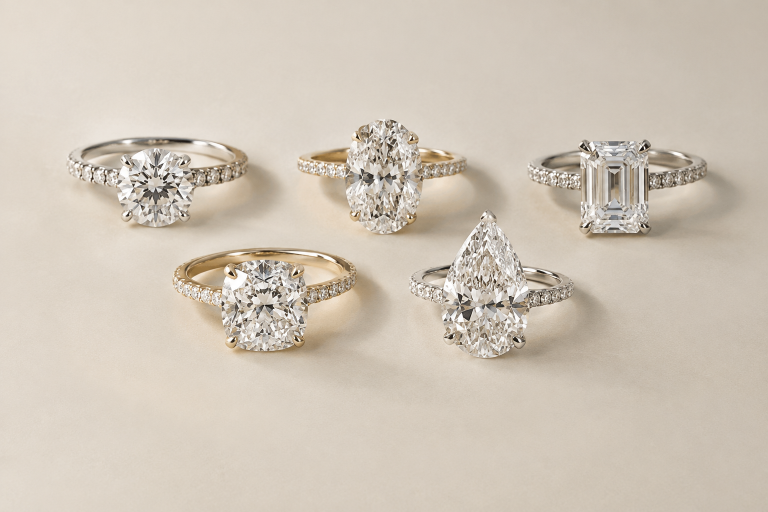
Shape often has the biggest impact on first impressions. Round stones suit many classic designs, while oval and marquise shapes can create a longer visual line on the finger. Emerald cuts emphasize clean geometry and may make inclusions easier to see. Cushion cuts have softer outlines, and pear shapes feel distinctive but benefit from thoughtful protection at the pointed end.
5. Consider Diamond, Lab-Grown Diamond, Moissanite, or Gemstone
Compare individual stones rather than assuming one category is always better. Natural and lab-grown diamonds share the same basic material, whereas moissanite and colored gemstones have distinct visual characteristics and care needs. Ask about origin, grading documentation when available, color, visible inclusions, durability, and the wearer’s preference for classic sparkle or a more individual look.
6. Use the Four Cs Without Overcomplicating Them
- Cut: How the stone interacts with light. For diamonds, cut quality strongly affects brightness and sparkle.
- Color: The amount of visible body color in a stone.
- Clarity: Internal or surface characteristics that may or may not be visible without magnification.
- Carat: A measure of weight, not an exact measure of visible size.
Trade-offs are normal. Choosing a slightly smaller stone or a grade that still looks appealing may allow for a better setting, a preferred metal, or a more comfortable overall budget.
7. Pick a Metal for Long-Term Wear
Yellow gold, white gold, rose gold, and platinum each create a different appearance. Match the metal to jewelry the wearer already wears often, while also considering upkeep. White gold may require periodic replating to maintain its bright finish, while platinum develops a surface patina over time. Confirm potential sensitivities and plan ahead for how the engagement ring will sit alongside a wedding band.
8. Treat Trends as Ideas, Not Rules
Personal details, distinctive stone shapes, warm metals, low-profile settings, and shared shopping are all useful starting points. However, a trend-led choice is not automatically a practical one. A tall, elaborate ring may photograph beautifully, while a simpler bezel design may be a better fit for someone who works with gloves or prefers minimal maintenance.
9. Decide How Much of a Surprise You Want
Choosing alone can be romantic, but shopping together can prevent costly guesswork. Look at the jewelry the person already wears, ask a trusted friend or family member for input, and discreetly confirm ring size. If preferences remain unclear, a temporary proposal ring can preserve the surprise while leaving the final design as a shared decision.
10. Check the Details Before Paying
- Confirm the stone type, shape, measurements, and any grading details.
- Ask whether resizing is available and whether it affects return eligibility.
- Read the return, exchange, warranty, and repair policies.
- Confirm production and delivery timing, especially for custom work.
- Request receipts, grading reports, and appraisals when applicable.
11. Plan for Care, Storage, and Insurance
Remove a ring when there is a meaningful risk of impact, harsh chemicals, or loss. Store it separately from other jewelry to reduce scratching, clean it according to the seller’s guidance, and arrange periodic inspections for prongs and small accent stones. Before committing to a final amount, consider how much to spend on an engagement ring in relation to your full financial picture, not just the proposal itself.
12. Common Mistakes to Avoid
- Borrowing more than you can comfortably repay.
- Buying only because a style is popular online.
- Ignoring the wearer’s existing jewelry preferences.
- Using the entire budget on the center stone.
- Skipping sizing, documentation, and policy details.
- Forgetting to plan for a future wedding band.
The Right Engagement Ring
The right engagement ring is not defined by outside pressure or a passing trend. It is a thoughtful balance of personal style, comfort, durability, meaning, and financial peace of mind. When those elements work together, the ring can feel just as right in daily life as it does on proposal day.