How Adjustable Sleep Positions Can Support Better Rest, Reading, And Nighttime Comfort
Key Takeaways
- Adjustable bases can elevate the head, legs, or both simultaneously.
- Small-angle changes often feel more natural than steep elevation changes.
- Positioning can support sleeping, reaading, watching television, and relaxing.
- A compatible, flexible mattress is essential for smooth movement and support.
- Quiet motors, memory settings, split controls, and simple remotes can improve daily use.
- An adjustable bed may improve comfort, but it does not replace medical care.
Sleep comfort is not always about finding one perfect mattress feel. For many people, it also comes down to position. An adjustable bed frame can raise the upper body, elevate the legs, or support both areas at once, giving sleepers more ways to settle in for the night or relax before bed.
The goal is not to sleep in the most dramatic position possible. Small, thoughtful adjustments can make reading easier, reduce the need for stacked pillows, and help a bed feel more useful throughout the day. The best setting is personal and depends on sleep style, body shape, mattress support, and individual comfort needs.
Why Sleep Positions Matter
Body position can influence how pressure is distributed across the shoulders, hips, lower back, and legs. It can also affect how supported the neck feels and how easy it is to shift or get out of bed. A flat surface works well for plenty of people, but it is not automatically the most comfortable choice for every activity.
For example, someone may prefer sleeping mostly flat but feel better with a modest incline while reading. Another person may enjoy lifting their legs for a short time after standing or walking all day. Comfort is individual, so it helps to treat adjustable settings as options to test rather than fixed rules.
How Adjustable Beds Work
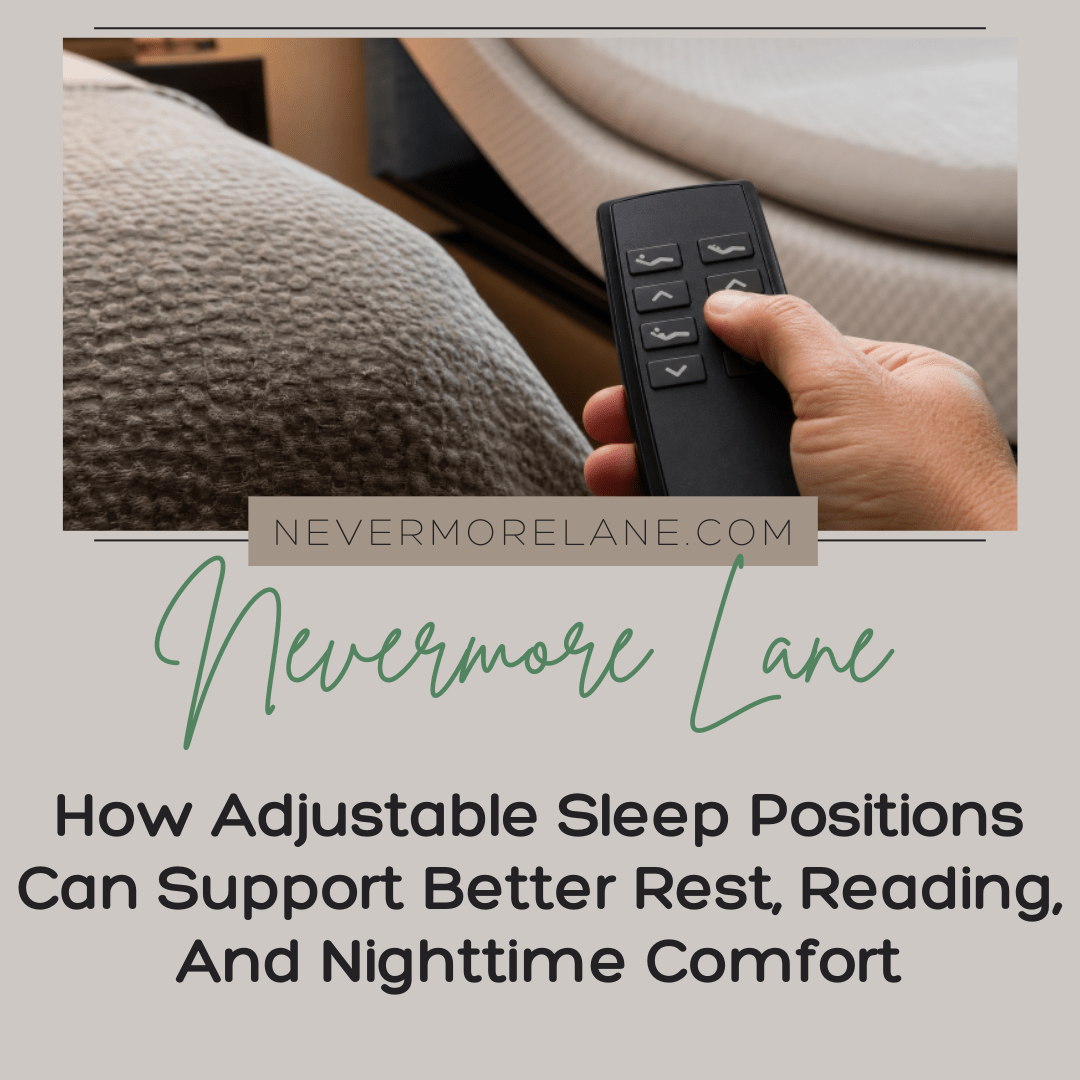
An adjustable bed is a powered base that changes the angle of a compatible mattress. Most models allow independent head and foot elevation, combined movement, and a one-touch flat position. Some also let users save preferred settings for sleep, reading, or lounging.
Couples can choose a standard base that moves as one unit or a split design that gives each person separate controls. Split options can be especially useful when one partner wants to sit up while the other remains flat. Before buying, make sure the base, mattress, fitted sheets, and any surrounding bed frame can work together without limiting movement.
Sleep Positions To Try First
Start gradually. A mild adjustment for several nights provides a better test than moving immediately to the highest setting. Pay attention to neck support, whether the body slides downward, and how the position feels when waking up.
Gentle Head Elevation
A slight head lift can feel comfortable for back sleepers who dislike being completely flat. It is usually easier to adapt to a gentle angle than a steep upright position. Keep the pillow low enough that it supports the neck without pushing the chin toward the chest.
Raised Legs
Elevating the lower body may feel relaxing after a long day. The knees should be supported in a natural bend rather than sharply folded. If the position creates strain behind the knees or in the hips, lower the foot section and try a smaller adjustment.
Zero-Gravity Style Position
Many bases include a preset that raises the upper body and legs together. This is often called a zero-gravity position, although the name and exact angles vary by model. Some people enjoy the lighter, less compressed feeling it creates when they are resting, reading, or easing into sleep.
Side-Sleeping Adjustments
Side sleepers often need a lower incline than back sleepers, along with a pillow that keeps the head level with the spine. Too much elevation can cause the torso to twist or slide. Shoulder and hip cushioning from the mattress remains just as important as the base position.
Comfort Beyond Sleep
Adjustable positioning can make a bed more practical long before lights-out. Raising the head section can create a supportive place for reading, watching television, using a tablet, or enjoying a quiet conversation without having to arrange a pile of pillows behind the back.
Features commonly included in adjustable bed testing include head and foot movement, split designs, under-bed lighting, charging ports, and vibration settings. Not every feature is necessary, but a memory preset can be genuinely useful when it returns the bed to a favorite reading or relaxing position with one button.
For couples, separate settings can make an ordinary evening simpler. One partner might raise their side to finish a chapter while the other stays flat and ready to sleep. That flexibility can be more valuable than a long list of extras.
Mattress Compatibility And Setup
A mattress must bend with the base while still supporting the body evenly. Foam, latex, and many flexible hybrid mattresses often work well, while very rigid or unusually thick mattresses may not move as smoothly. Always check the mattress manufacturer’s compatibility guidance before pairing it with a powered base.
- Confirm the mattress weight and thickness.
- Check the base’s weight capacity, including sleepers and bedding.
- Review warranty requirements for both the mattress and base.
- Leave room for cords, bedside access, and base movement.
- Use fitted sheets with enough pocket depth to stay secure without pulling tight.
Features That Make Daily Use Easier
Focus first on features that solve a real problem. Quiet motors can matter for light sleepers and couples who go to bed at different times. Large, clearly labeled remote buttons are often more useful than a complicated app, although app controls may be convenient for some households.
Memory presets save time, split controls let you adjust each side at different angles, and under-bed lighting can make nighttime trips easier without turning on a bright lamp. Massage functions provide vibration for relaxation, but they should not be confused with clinical massage therapy. A physical remote is still a smart backup, even when app controls are available.
Health Considerations And Realistic Limits
An adjustable base may make some people more comfortable when dealing with stiffness, occasional back discomfort, reflux symptoms, or snoring. However, improved comfort is not the same as treating a medical condition. Product evaluations such as adjustable bed reviews for older adults also emphasize practical factors like smooth movement, quiet operation, lighting, and mattress fit.
Loud snoring, gasping, pauses in breathing, severe daytime fatigue, persistent pain, circulation concerns, recent surgery, or serious mobility limitations deserve guidance from a qualified health professional. An adjustable setup can support a routine, but it should not delay appropriate care.
A Simple Shopping Checklist
- Identify the main goal: Sleep comfort, reading, leg elevation, easier access, or partner flexibility.
- Verify mattress fit: Confirm that the current mattress can bend properly.
- Measure the room: Account for power access, nightstands, and walking space.
- Try the controls: Look for clear buttons, useful presets, and a simple flat setting.
- Listen to the motor: Smooth, quiet movement matters in everyday use.
- Review coverage: Check warranties, delivery terms, setup services, and return policies.
- Set a full budget: Include delivery, accessories, and a replacement mattress if needed.
Nevermore Lane’s Final Thoughts
Adjustable sleep is about finding a position that feels supportive and easy to maintain, not chasing every available feature. A modest head lift, raised legs, or a saved reading setting may be enough to improve a nightly routine. Start slowly, prioritize mattress compatibility, and choose functions that make everyday comfort easier.