Higher Dose Semaglutide: Unlocking Deeper Weight Loss and Metabolic Healing
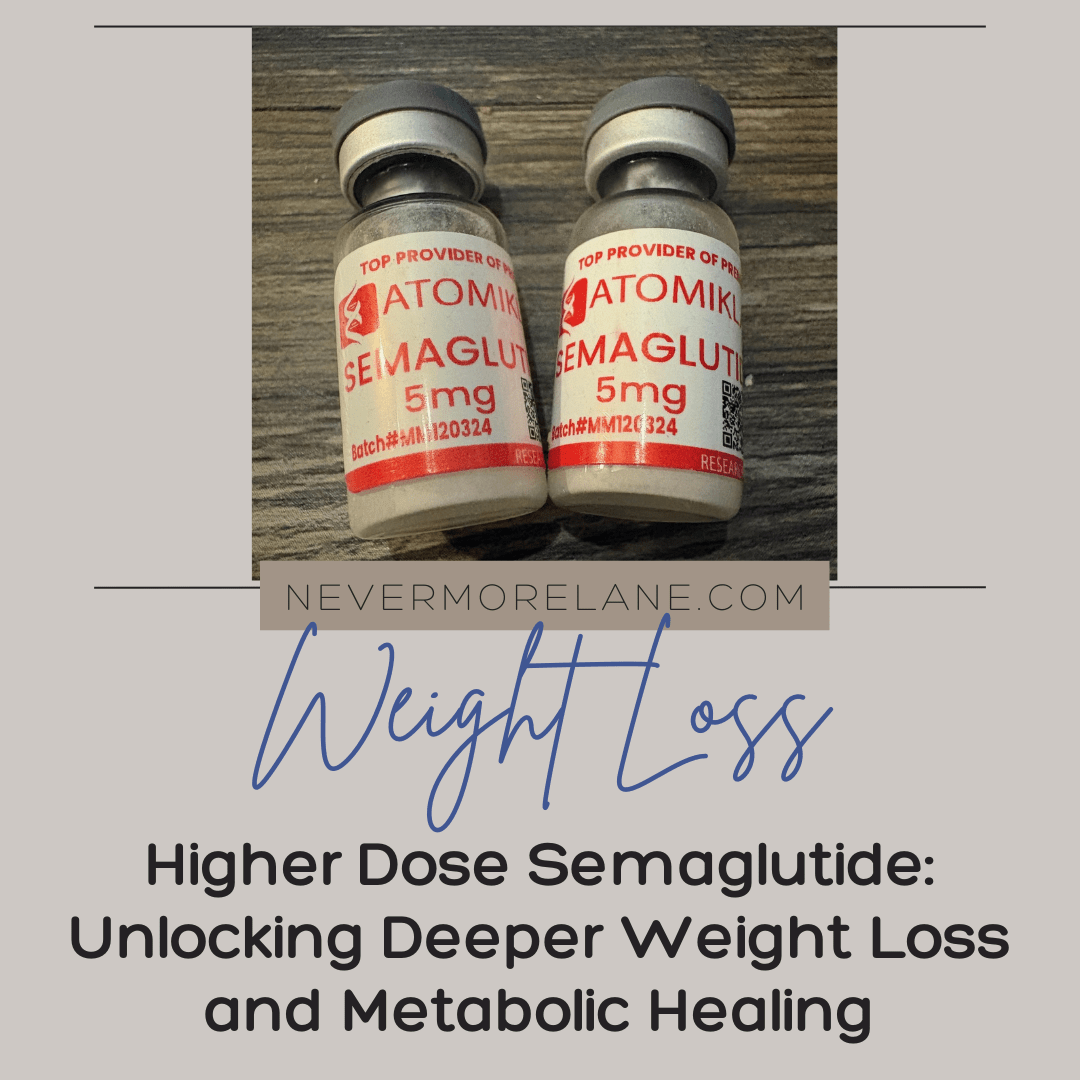
You started your weight loss journey with hope, perhaps trying semaglutide at the standard dose, watching the numbers on the scale shift slowly downward. But what if you could achieve more? What if there was a path to greater transformation that still honors your body’s need for safety and gentleness? Recent groundbreaking research from UT Southwestern Medical Center reveals that tripling the standard dose of semaglutide unlocks significantly greater weight loss and metabolic benefits without the increased risks you might expect.
The story of weight loss medications has always been one of careful balance between effectiveness and safety, between results and side effects, between hope and reality. For years, patients living with obesity have celebrated semaglutide as life changing, watching their bodies respond to the standard 2.4 milligram weekly dose with meaningful shifts in weight and health markers. Yet many still felt they hadn’t reached their destination, hadn’t achieved the transformation they envisioned for their wellness journey. The question lingered in medical research: could more be possible?
This is where science meets your personal wellness story. Two major clinical trials, spanning 11 countries and involving nearly 2,000 participants, have demonstrated that a 7.2 milligram dose of semaglutide provides substantially greater weight loss while maintaining a favorable safety profile. This isn’t just about numbers on a scale. It’s about blood pressure improvements, cholesterol reductions, better blood sugar control, and the profound metabolic healing that comes with significant, sustained weight loss. Whether you’re exploring semaglutide for the first time or wondering if your current dose could work harder for you, this research opens new possibilities for your health transformation.
Understanding Semaglutide’s Expanded Potential
The obesity epidemic touches nearly 1 billion people worldwide, creating ripple effects across physical health, emotional wellbeing, and quality of life. For those living with obesity, particularly when combined with Type 2 diabetes, the search for effective treatment options has often felt like navigating a maze with too few paths forward. Semaglutide, a medication in the glucagon like peptide 1 receptor agonist class, first received FDA approval in 2017 for managing Type 2 diabetes. Its effectiveness at helping patients lose weight quickly became apparent, leading to approval at a 2.4 milligram weekly dose for chronic weight management.
The science behind semaglutide’s effectiveness is elegant in its simplicity. This medication works by mimicking a natural hormone in your body that tells your brain you’ve eaten and feel satisfied. It slows the emptying of your stomach, reduces hunger signals, and helps regulate blood sugar levels. Think of it as a gentle whisper to your body’s metabolic systems, reminding them how to function in harmony again. For many patients, this has translated into meaningful weight loss, often in the range of 10 to 15 percent of their starting body weight. However, researchers at UT Southwestern recognized that while these results represented significant progress, some patients needed more robust intervention to reach their health goals.
Dr. Ildiko Lingvay, the lead researcher and Professor of Internal Medicine at UT Southwestern, understood that dose modeling research suggested patients might experience even greater benefits at higher doses without proportionally increased risks. This hypothesis led to the creation of two parallel clinical trials: STEP UP, which enrolled adults with obesity but without diabetes, and STEP UP Diabetes, which focused on adults with both obesity and Type 2 diabetes. Together, these studies tracked nearly 2,000 participants across 68 sites in eight countries, representing one of the most comprehensive examinations of higher dose semaglutide ever conducted. The 72 week duration gave researchers ample time to observe not just initial weight loss but sustained results and long term safety patterns.
The Research Revelation: Dramatic Results from Higher Dosing
The results from both trials exceeded expectations in ways that surprised even the research team. In the STEP UP trial, which enrolled 1,407 adults living with obesity but without diabetes, participants taking the 7.2 milligram dose achieved an average weight loss of 18.7 percent of their starting body weight. Compare this to the 15.6 percent average loss among those taking the standard 2.4 milligram dose, and just 3.9 percent among those receiving placebo. While a three percentage point difference might sound modest on paper, in practice it represents substantial additional weight loss that can translate into profound health improvements.
Even more striking, nearly one third of participants taking the higher dose lost 25 percent or more of their starting weight. Imagine carrying 200 pounds and losing 50 of them, feeling your joints move more freely, your energy levels rise, your confidence bloom. Only 15 percent of those on the standard dose achieved this magnitude of weight loss, and none of the placebo group reached it. The higher dose also proved more effective at helping participants achieve clinically meaningful weight loss thresholds. Those taking 7.2 milligrams were 1.8 times more likely to lose at least 20 percent of their body weight and 2.4 times more likely to lose at least 25 percent compared to the standard dose group.
The STEP UP Diabetes trial, which tracked 512 adults with both obesity and Type 2 diabetes, revealed similar patterns of enhanced effectiveness. Participants taking 7.2 milligrams lost an average of 13.2 percent of their body weight, compared to 10.4 percent for those on 2.4 milligrams and 3.9 percent for the placebo group. While the overall weight loss percentages were somewhat lower than in participants without diabetes, which aligns with typical patterns in obesity treatment research, the improvement over standard dosing remained consistent and meaningful. Beyond weight loss itself, the higher dose group experienced greater reductions in waist circumference, improvements in blood pressure, better cholesterol profiles, and enhanced blood sugar control compared to both the standard dose and placebo groups.
Safety Profile: Addressing the Elephant in the Room
When researchers propose tripling a medication dose, the immediate concern centers on safety and side effects. Would a higher dose create proportionally higher rates of adverse events? Would serious complications emerge? The answer, pleasantly surprising to the research team, was largely no. The frequency and severity of side effects did not increase in direct proportion to the dose escalation, and the higher dose maintained what researchers termed a favorable risk benefit profile.
Gastrointestinal symptoms represented the most common side effect across all groups, affecting about 70 percent of those taking 7.2 milligrams, 61 percent of those on 2.4 milligrams, and 43 percent of the placebo group. These symptoms typically included nausea, vomiting, diarrhea, and constipation. Importantly, most of these effects emerged during the initial dose escalation period, when participants gradually increased their weekly injection from a starting dose of 0.25 milligrams up to their target maintenance dose. As bodies adjusted to the medication over the first several weeks, these symptoms generally improved and often resolved completely. This pattern mirrors what has been observed in earlier semaglutide trials at standard doses.
The one side effect that showed a more pronounced increase at the higher dose was dysesthesia, which describes altered touch sensation or unusual skin sensations. About 20 percent of participants taking 7.2 milligrams experienced this compared to roughly 5 percent on the lower dose. While this represented a notable difference, dysesthesia typically remained mild and manageable for most participants. Serious adverse events did not occur at higher rates in the 7.2 milligram group, a critical finding that speaks to the medication’s safety even at this elevated dose. Dr. Lingvay noted that researchers were pleasantly surprised that the frequency of side effects was not proportionally higher at the tripled dose, reinforcing that this treatment option could be both safe and effective for patients needing more intensive intervention.
Metabolic Benefits Beyond the Scale
Weight loss represents just one piece of a much larger metabolic puzzle. The true measure of a treatment’s success extends beyond pounds lost to encompass the comprehensive improvements in health markers and quality of life that accompany that weight reduction. The STEP UP trials revealed that participants taking the higher semaglutide dose experienced improvements across multiple metabolic parameters, creating a cascade of health benefits that reached far beyond what the scale could measure.
Participants in the 7.2 milligram group saw greater reductions in waist circumference, a measurement that correlates strongly with visceral fat, the dangerous fat that accumulates around internal organs and drives metabolic dysfunction. Reducing this type of fat improves insulin sensitivity, decreases inflammation, and lowers the risk of cardiovascular disease and Type 2 diabetes. Blood pressure improvements in the higher dose group surpassed those seen with standard dosing, offering cardiovascular protection that could reduce the risk of heart attack, stroke, and other serious complications. Cholesterol profiles improved more dramatically as well, with favorable shifts in the ratios of protective versus harmful cholesterol that contribute to arterial health.
For participants with Type 2 diabetes, blood sugar control showed enhanced improvement at the higher dose. Better glucose regulation reduces the risk of diabetic complications affecting the eyes, kidneys, nerves, and cardiovascular system. Some participants were able to reduce or eliminate other diabetes medications while maintaining better blood sugar levels than before starting semaglutide. The quality of life improvements reported by participants extended beyond physical health markers into emotional and psychological well-being, with many describing increased energy, better mobility, improved self confidence, and a renewed sense of possibility in their lives. These holistic improvements underscore that effective obesity treatment creates transformation that touches every aspect of daily living.
The Path Forward: Clinical Implications and Personal Decisions
The publication of these findings in The Lancet Diabetes & Endocrinology represents a significant milestone in obesity medicine, but it also raises important questions about clinical implementation and patient selection. Not every person taking semaglutide needs or would benefit from a higher dose. The standard 2.4 milligram dose has proven remarkably effective for many patients, helping them achieve their weight loss and metabolic health goals with excellent tolerability. The higher dose option creates possibilities for those who haven’t reached their targets on standard dosing or who need more intensive intervention to address severe obesity and its complications.
Healthcare providers will need to carefully evaluate which patients might be appropriate candidates for higher dose semaglutide. Factors to consider include the patient’s response to standard dosing, their overall health status, weight loss goals, presence of obesity related complications, and tolerance of side effects at lower doses. For someone who has done well on 2.4 milligrams, achieving meaningful weight loss and metabolic improvements without troublesome side effects, there may be no compelling reason to increase the dose. However, for patients who plateau before reaching their goals, or who need more robust weight reduction to address serious health complications, the higher dose represents a valuable new option.
The research also highlights the importance of comprehensive lifestyle intervention alongside medication. All participants in both trials received regular counseling to support reduced calorie eating patterns and increased physical activity. Semaglutide, at any dose, works best as part of a holistic approach to weight management that includes mindful eating, regular movement, stress management, adequate sleep, and emotional support. Medication creates a foundation by reducing hunger and helping regulate metabolic function, but lasting transformation requires tending to all aspects of health and wellness. As this research moves from clinical trials into real world practice, ongoing monitoring will be essential to confirm that the safety and effectiveness observed in controlled studies translates to diverse patient populations in everyday clinical settings.
Embracing Transformation with Informed Choice
The revelation that tripling semaglutide’s dose enhances weight loss and metabolic benefits without proportionally increasing serious risks represents genuine progress in obesity medicine. For the nearly 1 billion people worldwide living with obesity, many of whom struggle with related health complications that diminish quality of life and longevity, expanded treatment options bring renewed hope. The STEP UP trials demonstrated that 7.2 milligrams of weekly semaglutide can help patients achieve weight loss averaging nearly 19 percent in those without diabetes and over 13 percent in those with diabetes, with nearly one third of participants without diabetes losing a quarter or more of their starting weight.
These results matter not because a number on a scale defines your worth, but because substantial, sustained weight loss in people with obesity creates measurable improvements in blood pressure, cholesterol, blood sugar control, joint health, cardiovascular function, and overall wellbeing. The metabolic healing that accompanies significant weight reduction reverberates through every system in your body, offering protection against serious complications and opening space for a more vibrant, energetic life. The favorable safety profile observed in these trials suggests that for carefully selected patients who need more intensive intervention, higher dose semaglutide represents a viable path forward.
Your wellness journey is deeply personal, shaped by your unique biology, history, goals, and circumstances. While this research expands the toolkit available for managing obesity, it doesn’t prescribe a one size fits all approach. Some people will thrive on standard dose semaglutide. Others may not need medication at all, finding success through lifestyle modifications alone. Still others might benefit from exploring the higher dose option under close medical supervision. The key lies in working with knowledgeable healthcare providers who view you as a whole person, not just a collection of symptoms or measurements, and who can help you navigate the options available to support your transformation. May this research serve as one more tool in your wellness toolbox, offering possibilities for the healing and vitality you deserve.
Continue Your Wellness Journey
The intersection of cutting edge research and personal transformation is where true magic happens. If this exploration of higher dose semaglutide and its potential for enhancing metabolic health has sparked your curiosity, I invite you to continue discovering the many paths to wellness here at Nevermore Lane.
Explore more posts about holistic health, intentional living, and the beautiful ways science and self care intertwine to support your journey. Whether you’re navigating weight management, exploring spiritual practices, or simply seeking inspiration for a more treasured life, there’s a seat at this table for you.
Join me for a virtual cup of coffee and let’s continue this conversation. Your transformation, your questions, and your unique story all deserve space and attention. Together, we can explore what wellness looks like when earth magic meets evidence based care, when ancient wisdom embraces modern science, and when your individual needs guide every step of the journey.
Like what you read? Drop me a line – let’s chat over virtual coffee.
~ Chrystal
NOTE: Not medical advice. Atomik Labs peptides are for research purposes only.