Best Time to See the Northern Lights in Finland
There’s something almost absurd about standing in minus twenty degrees, staring at an empty sky, waiting for something that may or may not show up. And yet millions of people do it every year. The aurora borealis has that kind of pull. It doesn’t ask for your comfort, it asks for your patience. Finland happens to be one of the best places on the planet to test that patience, and more often than not it rewards you for it.
But timing matters. A lot. Show up in July and you’ll get midnight sun instead. Show up during a cloudy spell in December and you’ll get nothing but darkness and regret. So let’s break down when – and where – to actually catch the lights dancing across the Finnish sky.
The Aurora Season in Finland
The northern lights are technically active year-round. The sun doesn’t stop throwing charged particles at Earth just because it’s summer. The problem is visibility. In Finnish Lapland, from late May through July, the sky barely gets dark. The famous midnight sun means the aurora could be going wild up there and you’d never see it through the bright sky.
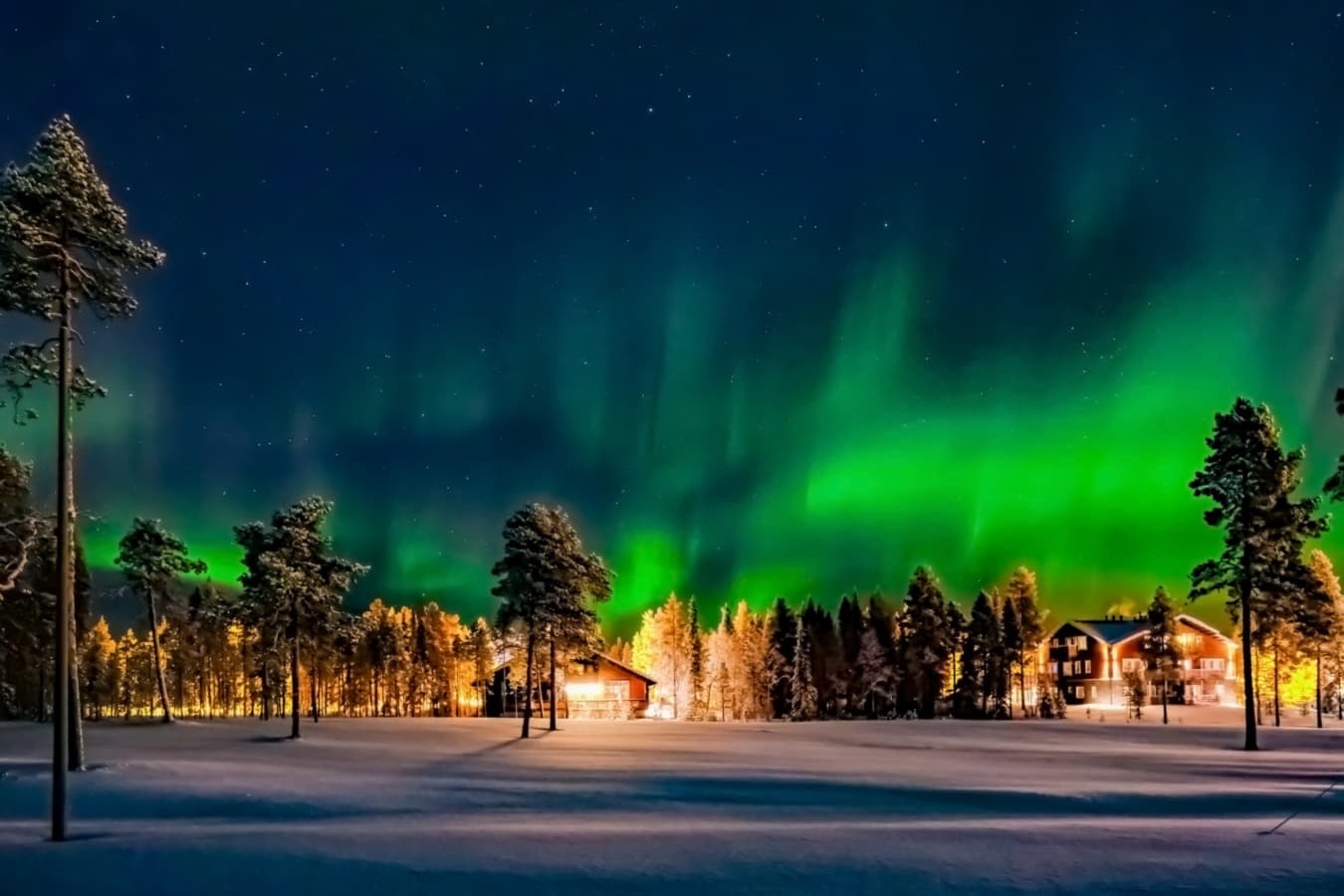
The real viewing window stretches from late August through early April. That’s a generous eight-month season, which is part of what makes Finland so appealing. But within that window, there are peaks and valleys worth understanding.
September and October bring the autumn equinox, and something about the geomagnetic geometry around equinoxes tends to increase aurora activity. The skies are often clearer than in deep winter, and temperatures hover around zero rather than plunging to extremes. It’s a sweet spot that many people overlook because they associate northern lights with snow-covered landscapes.
Then there’s the heart of winter; November through January. Days shrink to almost nothing in northern Finland. In Utsjoki, the sun doesn’t rise at all for nearly two months. That polar night, called kaamos in Finnish, gives you maximum darkness and therefore maximum opportunity. The trade-off? Cloud cover can be heavy, and temperatures regularly drop below minus twenty-five Celsius.
February and March arguably offer the best overall combination. Days start lengthening, skies tend to clear up more frequently, and geomagnetic activity remains strong. Plus there’s enough daylight to actually enjoy winter activities during the day before heading out for aurora hunting at night.
Where Exactly to Look – Top Spots for Aurora Hunting
Finland stretches surprisingly far from south to north. Helsinki sits at roughly 60 degrees latitude, while Utsjoki pushes past 70 degrees. That ten-degree difference changes everything when it comes to aurora frequency.
Utsjoki and Inari – The Far North
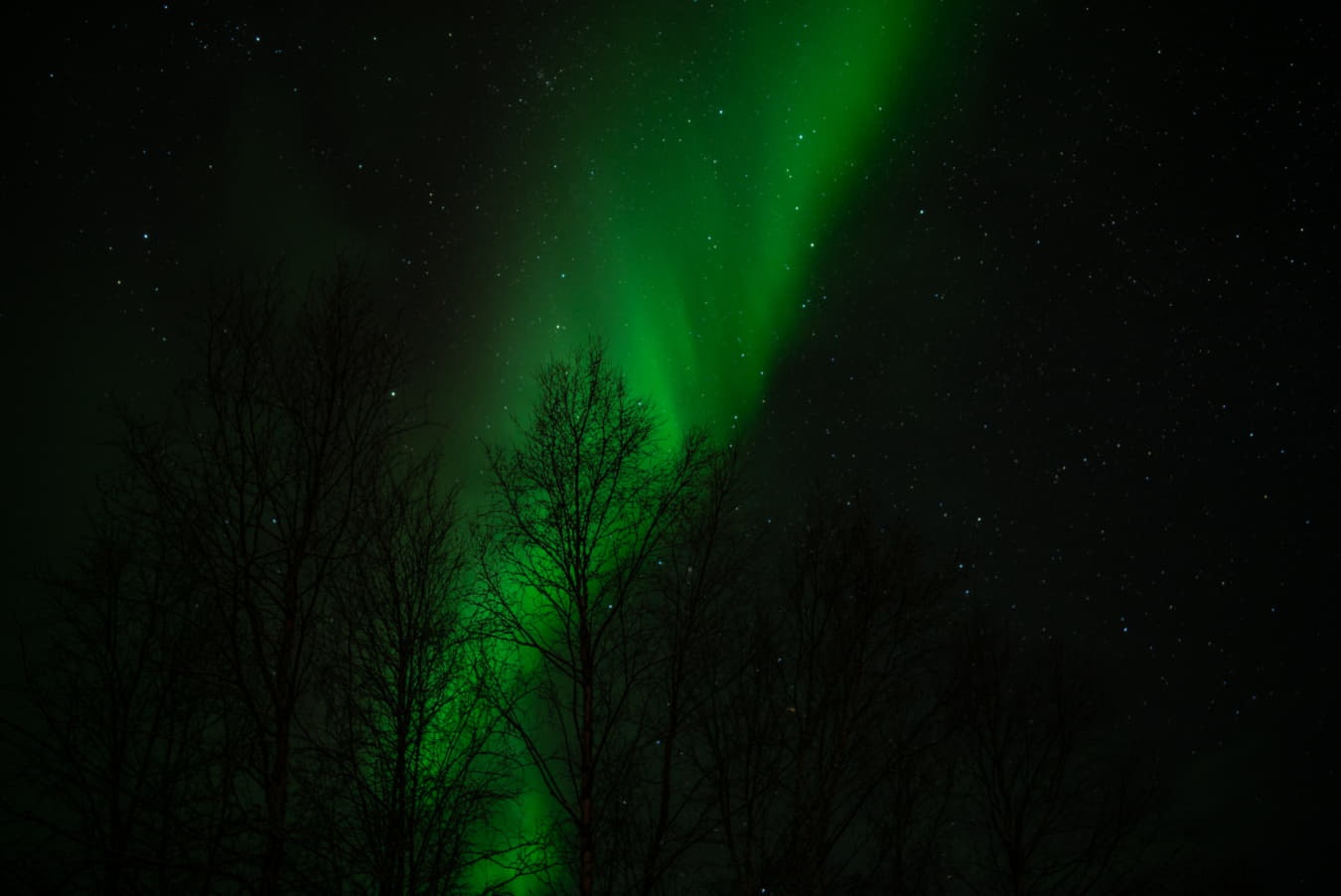
If statistics matter to you, head as far north as possible. In Utsjoki, the northernmost municipality in Finland, auroras appear on roughly 200 nights per year. Inari, slightly south sits on the shores of Finland’s third-largest lake, and the open water creates natural clearings in the sky. Both towns are small, quiet and wonderfully remote. Light pollution is essentially nonexistent.
The downside is accessibility. Getting there requires either a long drive or a connecting flight through Ivalo. But for serious aurora chasers, the extra effort pays off consistently.
Muonio and Kilpisjärvi – The Northwest Arm
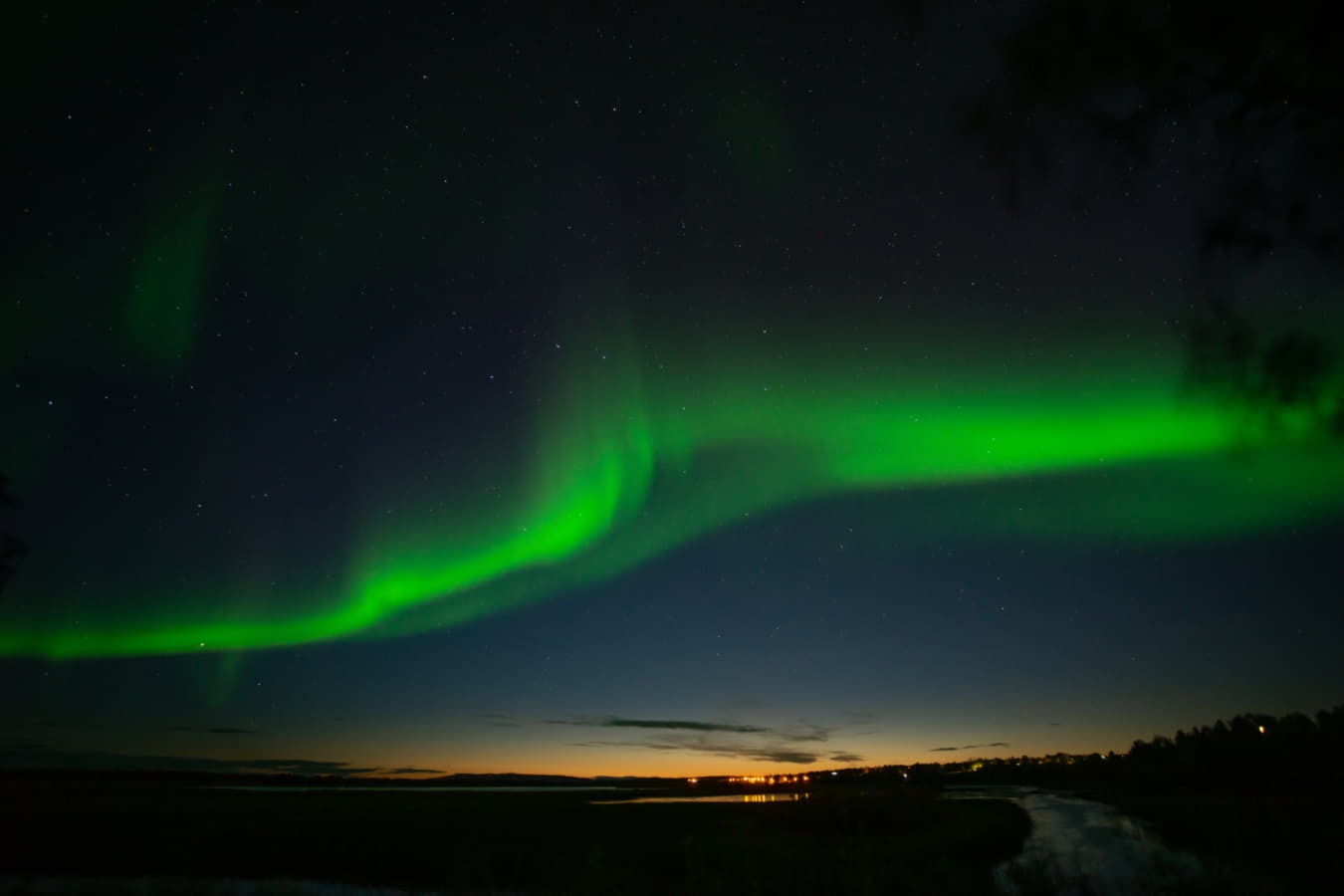
The northwest corner of Finland, stretching along the Swedish border, gets less attention than it deserves. Muonio has been home to aurora research for decades, and the Finnish Meteorological Institute operates monitoring equipment in the area. Kilpisjärvi pushes even further into the arm, surrounded by fells and wide-open terrain that gives you unobstructed views in every direction.
These locations tend to have slightly different weather patterns than the northeast, so when clouds cover Inari, Muonio might be clear and vice versa. Experienced chasers often pick their nightly destination based on real-time cloud forecasts.
Levi and Saariselkä – Comfortable Bases
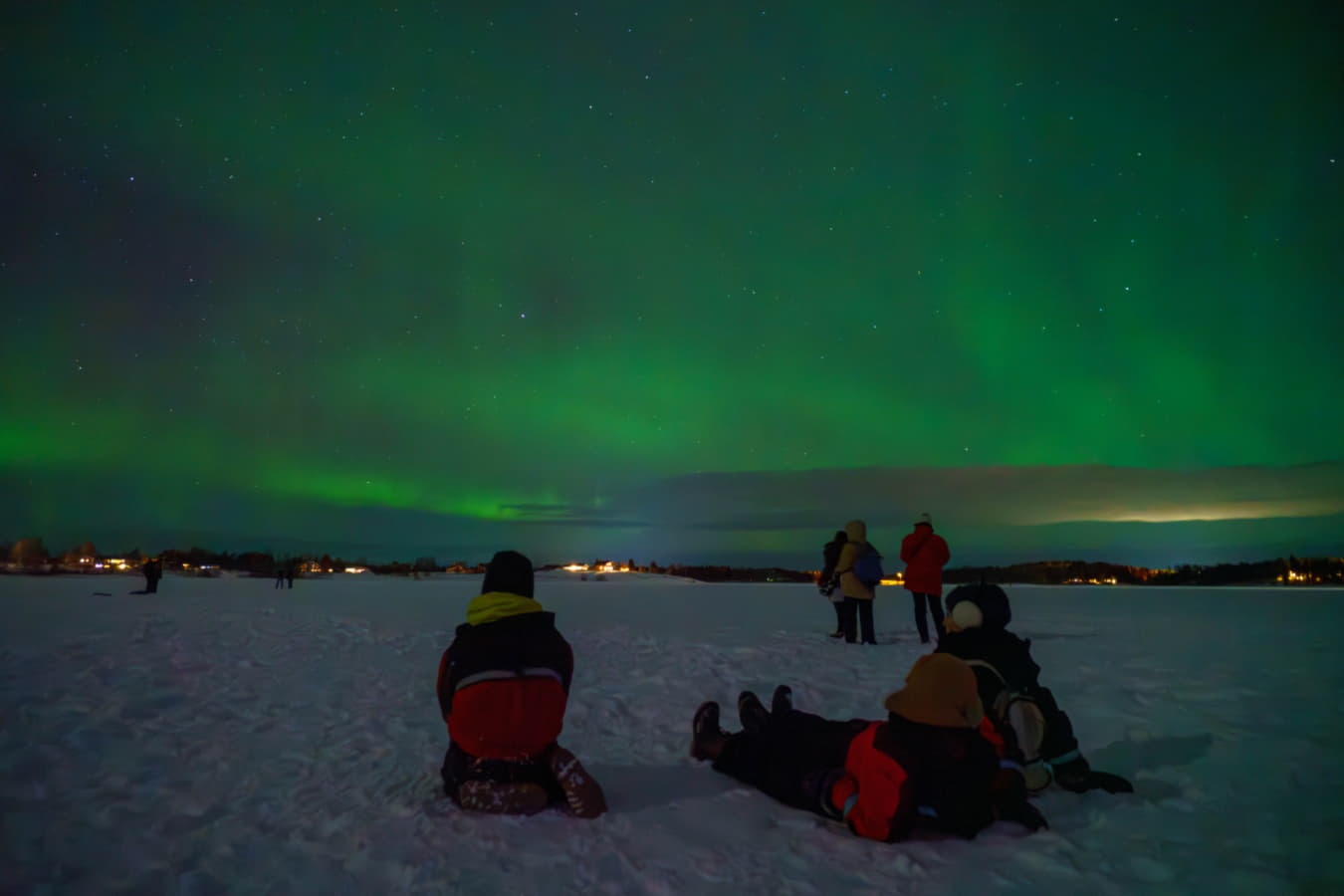
Not everyone wants to rough it in remote villages, and that’s completely fine. Levi is Finland’s largest ski resort, and Saariselkä sits at the edge of Urho Kekkonen National Park. Both offer solid tourist infrastructure – warm hotels, restaurants, guided tours – while still being far enough north for frequent aurora displays.
From either base, you can join guided snowmobile trips or hop into a minibus that chases clear skies. Some accommodations feature glass-roofed cabins or igloos specifically designed for watching the aurora from bed. It sounds gimmicky until you’re lying there at 2 AM watching green ribbons fold across the sky above you.
Rovaniemi – The Gateway to Lapland
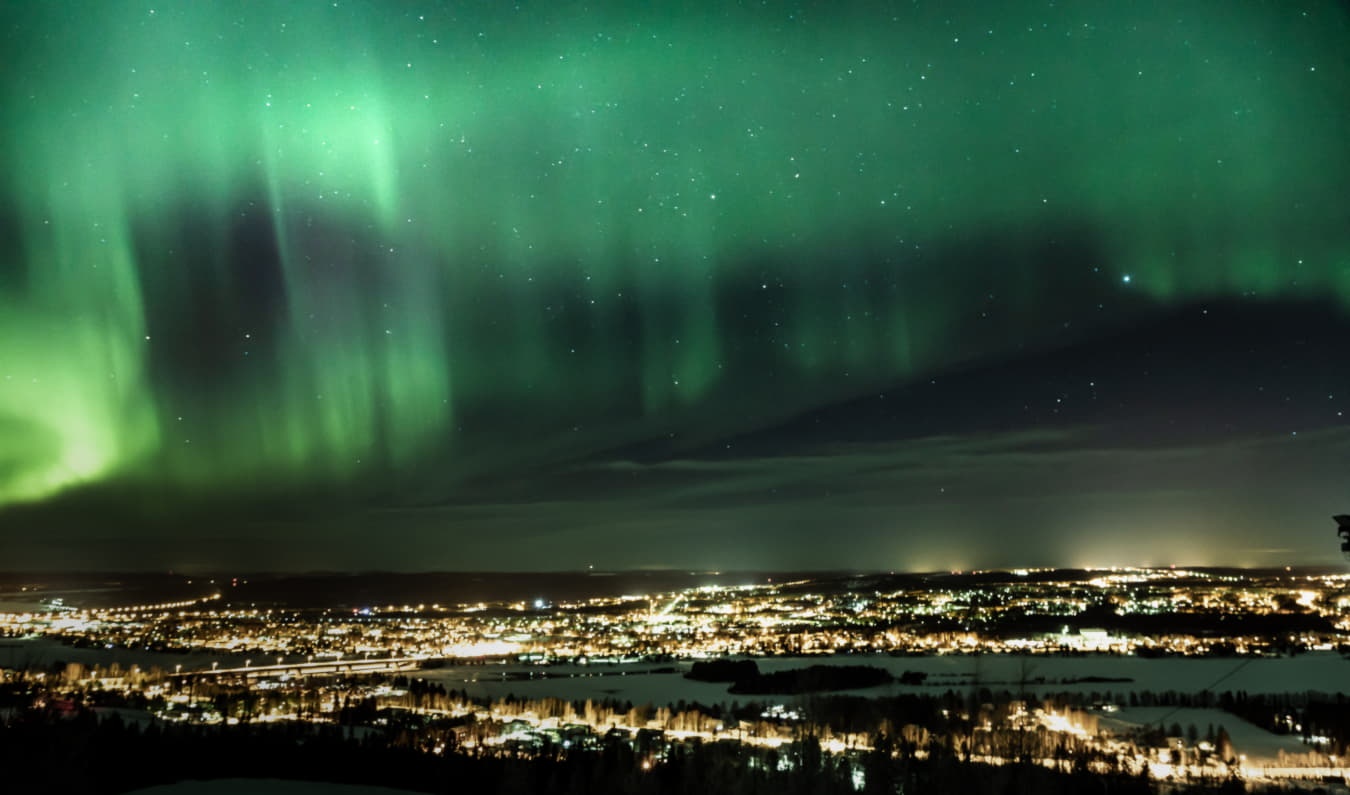
Rovaniemi sits right on the Arctic Circle, which makes it the southernmost point in Finland where aurora sightings are still reasonably common. It’s also the easiest Lapland destination to reach, with direct flights from Helsinki and several European cities. The city is best known as the “official hometown of Santa Claus” but between November and March, it transforms into a legitimate aurora-watching hub.
The key with Rovaniemi is getting away from the city lights. The town itself has enough glow to wash out fainter displays, so guided excursions that drive 20-30 minutes into the surrounding wilderness make a real difference. One option that stands out is the Northern Lights Tour with 100% Money Back Guarantee – which takes the financial sting out of an unlucky cloudy night. That kind of confidence from a tour operator usually means they know their spots and their weather patterns well.
Rovaniemi works particularly well for travelers who want to combine aurora hunting with other Lapland experiences – reindeer farms, husky safaris, snowshoeing through old-growth forest. The city functions as a comfortable home base without requiring expedition-level planning.
What Affects Your Chances
Knowing the season and location is half the battle. The other half comes down to factors that shift night by night, sometimes hour by hour.
- Solar activity – The sun operates on an approximately 11-year cycle. Solar maximum means more frequent and intense geomagnetic storms, which produce stronger auroras visible at lower latitudes. The current solar cycle peaked around 2024-2025, so the next few years remain excellent for viewing.
- Cloud cover – This is the single biggest spoiler. Finland’s Lapland has a continental-to-subarctic climate, and clouds can park themselves over an area for days. Checking forecasts from the Finnish Meteorological Institute the morning of your planned outing helps enormously.
- KP index – This measures geomagnetic disturbance on a 0-9 scale. For northern Lapland, even a KP of 1-2 can produce visible auroras. For Rovaniemi, a KP of 3 or higher improves odds significantly. Various free apps track this in real time.
- Moon phase – A full moon brightens the sky enough to dim faint auroras. New moon periods give the darkest skies. It’s not a dealbreaker but it’s worth checking when booking your trip dates.
- Light pollution – Even in Lapland, standing next to a gas station or hotel parking lot will hurt your viewing. Walk or drive a few hundred meters into darkness and the difference is dramatic.
Practical Tips That Actually Help
After enough nights spent outside in Finnish winter, certain lessons stick. Here are the ones that matter most:
- Dress in layers and prioritize your extremities. Two pairs of wool socks, proper mittens (not gloves), and a balaclava make the difference between lasting two hours and lasting twenty minutes.
- Bring a thermos of something hot. Coffee, tea, hot chocolate – it doesn’t matter. The warmth is psychological as much as physical.
- Set your camera up before your fingers go numb. Manual focus to infinity, ISO 1600-3200, shutter speed 8-15 seconds, widest aperture your lens allows. A tripod is non-negotiable.
- Don’t stare at your phone screen while waiting. It kills your night vision, and the aurora often starts as a faint glow that dark-adapted eyes catch first.
- Be prepared to stay out late. Peak activity often happens between 10 PM and 2 AM, but some of the best displays arrive without warning at 4 AM when most people have already gone to bed.
How Many Nights Should You Plan For
This is the question that separates hopeful travelers from realistic ones. A single night in Lapland gives you roughly a 50-60% chance of seeing auroras during peak season, assuming you’re in the right location. Stretch that to three nights and probability climbs past 80%. Five nights approaches near-certainty in places like Inari or Muonio.
The common mistake is flying to Lapland for one night, expecting a show, and leaving disappointed. Weather is unpredictable, and geomagnetic activity fluctuates. Building in buffer nights isn’t just smart – it turns a gamble into a near guarantee. Fill the non-aurora hours with winter activities and the trip stays rewarding even if the sky takes a night off.
The Emotional Part Nobody Warns You About
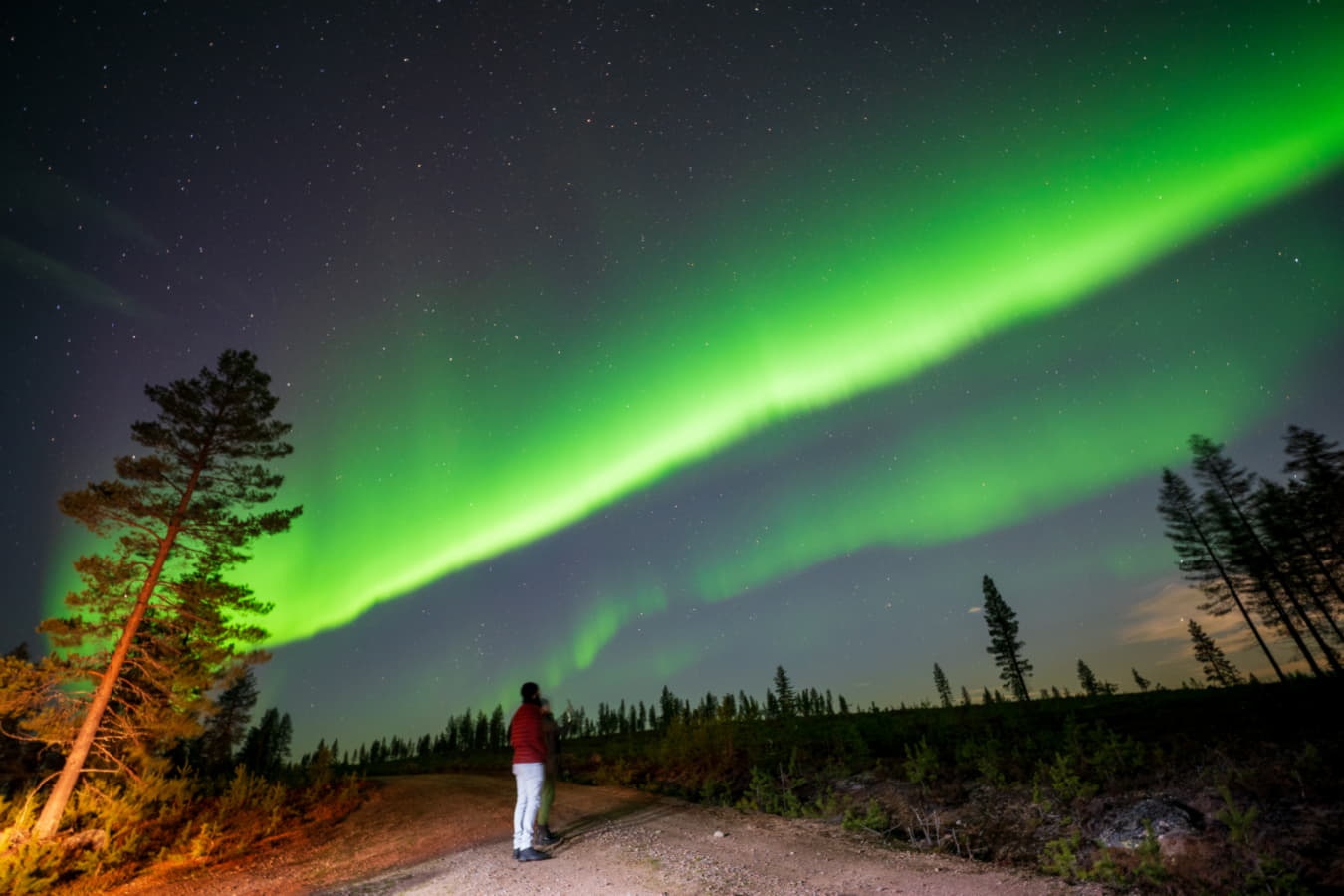
Guides and articles tend to focus on logistics – when to go, what to wear, which app to download. Fair enough. But there’s an emotional dimension to seeing the aurora that catches people off guard. The first time a green arc ignites across the sky, it doesn’t feel like a natural phenomenon. It feels like something that shouldn’t be real. The colors move and shift with a kind of silent intelligence, and for a few minutes your brain genuinely struggles to process what it’s seeing.
Some people cry. Some laugh. Most just stand there with their mouths slightly open, forgetting they were cold. It’s one of the few travel experiences that consistently exceeds expectations regardless of how many photos or videos someone has seen beforehand. No screen captures the depth, the movement or the scale of it.
Finland offers one of the most reliable and accessible stages for this spectacle. The infrastructure is solid, the wilderness is vast and the darkness in winter is profound. Whether you position yourself at the edge of the Arctic in Utsjoki or take a more comfortable approach from Rovaniemi, the lights are there – waiting for clear skies and a little patience from whoever shows up to watch.