A Practical Guide to Choosing Full-Arch Tooth Replacement
Key Takeaways
- Full-arch tooth replacement can help people with many missing, severely damaged, or failing teeth.
- Fixed and removable options have different benefits, cleaning needs, timelines, and costs.
- Temporary teeth on the day of surgery may be possible for some patients, but not for everyone.
- A complete plan should explain diagnostics, surgery, temporary teeth, final teeth, maintenance, and potential additional fees.
- Provider experience, communication, planning, and follow-up matter as much as the initial quoted price.
Replacing a full upper or lower row of teeth is a major decision involving health, comfort, appearance, daily routines, and finances. For people researching same-day full arch dental implants, New Smile Now provides information on All-on-4® full-arch treatment, including surgical planning and implant placement by oral surgeons serving Greensburg and Monroeville, Pennsylvania. It is a useful starting point for understanding one approach. However, an in-person evaluation is still necessary to determine whether immediate teeth, a staged plan, or another option fits your needs.
The right solution is not automatically the fastest, most advertised, or lowest-priced option. A well-considered choice accounts for the health of any remaining teeth, gum condition, bone availability, medical history, bite, lifestyle, and willingness to maintain the restoration over time.
Why People Consider Full-Arch Tooth Replacement
People often explore full-arch care after repeated repairs no longer feel practical. Common concerns include painful or loose teeth, difficulty chewing, broken teeth, dentures that move during meals or speech, and a loss of confidence when smiling. Full-arch treatment replaces a complete upper or lower row of teeth with a restoration supported by implants or designed to rest on the gums. The goal is broader than appearance. Comfort, speech, bite, cleaning access, and long-term maintenance all deserve attention.
How Full-Arch Options Compare
There is no universal best treatment. A consultation should include alternatives that preserve healthy, natural teeth whenever possible.
- Traditional dentures: These are removable and do not require implant surgery. They can be a practical choice for some patients, although fit and stability may change as the mouth changes.
- Implant-supported dentures: These removable appliances attach to implants for added retention and are taken out for cleaning.
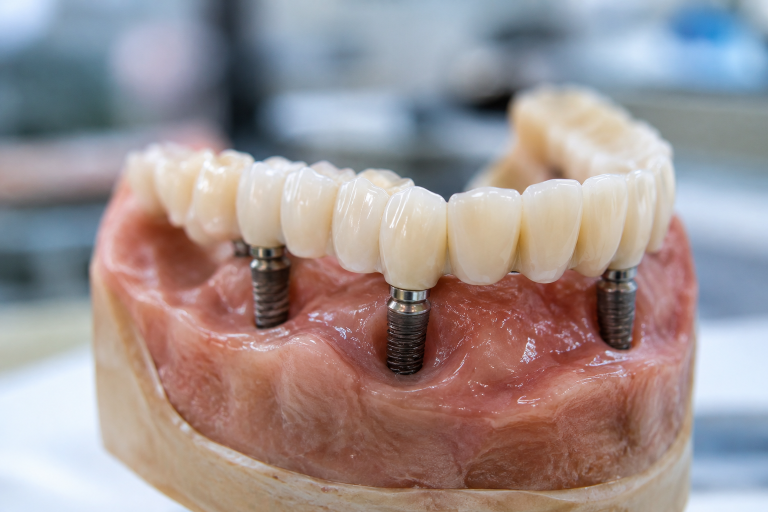
- Fixed full-arch restorations: These bridges remain attached to implants and are removed by a dental professional when service is needed.
- Individual implants or smaller bridges: These may be worth considering when several teeth can be retained or when replacement is needed in limited areas.
The American Dental Association explains that implants can support replacement teeth ranging from a single crown to bridges or dentures. Its overview of implant-supported replacement teeth also notes that treatment timing and healing needs can differ from person to person.
Who May Be a Candidate?
Only a clinical examination can establish candidacy. A provider may review the remaining teeth, gum health, signs of infection, jawbone quantity and quality, bite, and medical history. Tobacco use, uncontrolled health conditions, medications, teeth grinding, and sleep apnea treatment can affect planning or healing. Bone loss does not always preclude implant treatment, but it may alter the approach, necessitate additional procedures, or make a removable restoration more suitable.
What Happens During Treatment Planning?
Strong planning is a two-way conversation, not simply a sales presentation. The team may use photographs, X-rays, digital scans, or 3D imaging to evaluate anatomy and plan the replacement teeth before implant surgery.
- Health review: Discuss medical conditions, medications, allergies, smoking, and previous dental treatment.
- Diagnostic review: Identify infection, bone limitations, bite concerns, and teeth that may be saved.
- Restoration design: Plan tooth position, appearance, speech, bite, and access for home cleaning.
- Written treatment plan: Compare fixed, removable, staged, and alternative options with a clear timeline.
When Same-Day Teeth May Be Possible
“Same-day teeth” can mean a temporary restoration is attached on the day of surgery. It does not always mean the final restoration is delivered that day. Immediate temporary teeth may be considered when implants achieve appropriate stability and the patient’s anatomy and bite support that plan. Final teeth are often made after healing and follow-up assessments.
How to Compare Providers
Look beyond before-and-after photographs and package pricing. Ask who performs the surgery, who designs the final teeth, and how the surgical and restorative teams coordinate care. It is also reasonable to ask how frequently the team handles full-arch cases, whether digital planning is used, what follow-up is included, and how repairs or complications are managed. A provider should explain both the expected benefits and the limits of each proposed option in language you understand.
What to Ask About Cost
Prices vary because plans vary. The number of arches, extractions, bone procedures, sedation, temporary teeth, final materials, laboratory work, and maintenance can all affect the total. Request a written estimate and ask whether it includes the following:
- Consultations, scans, and diagnostic records.
- Extractions, infection treatment, surgery, and anesthesia.
- Temporary teeth and final restorations.
- Adjustments, professional maintenance, and expected follow-up visits.
- Repair policies and costs for future replacement of worn or damaged components.
Recovery and Daily Care
Recovery instructions are individualized. Follow the care team’s directions about food texture, medication, activity, hygiene, and return visits. Daily cleaning typically requires a toothbrush and tools selected for the restoration’s design, such as an interdental brush or water flosser. Report persistent pain, swelling, bleeding, looseness, or bite changes promptly.
Be candid about nighttime grinding and sleep apnea equipment. The American College of Prosthodontists has reported a case in which CPAP mask pressure was associated with complications during healing after immediate loading, underscoring the importance of patients disclosing sleep apnea treatment and following post-operative instructions for full-arch implant healing.
Questions to Bring to a Consultation
- Can any natural teeth be saved?
- Would a fixed or removable restoration better suit my health and daily routine?
- What do my scans show about bone, gums, and bite?
- Could temporary teeth on the day of surgery be appropriate in my case?
- What materials are planned for the temporary and final teeth?
- How will I clean the restoration at home?
- What happens if an implant does not heal as expected?
- Which services are included in the quoted fee?
A Clearer Way to Make the Decision
Full-arch tooth replacement is a significant health decision, but clear information makes it easier to compare choices. Seek a careful evaluation, a realistic timeline, a complete financial explanation, and a maintenance plan you can follow. The strongest decision is the one that fits your anatomy, health, goals, and long-term ability to care for the result.
Photo by Jean-Paul Wright: https://www.pexels.com/photo/woman-in-black-cardigan-smiling-8069910/