Walking Without a Destination: The Lost Art of the Wander
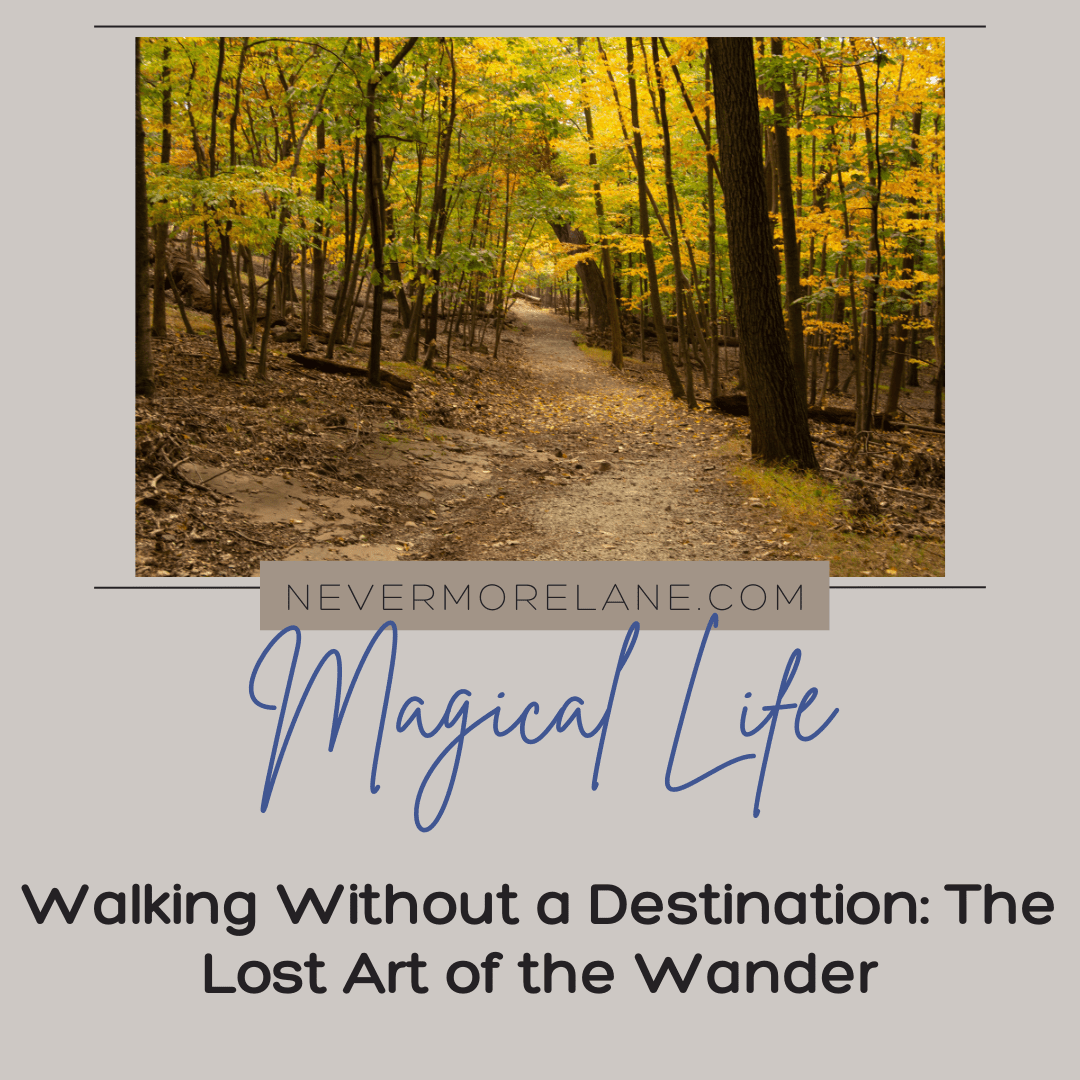
There is something quietly radical about stepping outside with nowhere particular to go. No errand to run. No route mapped out. No timer set on your phone. Just you, the air, and whatever the world decides to offer up along the way. I did exactly this last autumn, on a grey afternoon when the to-do list had grown too long to look at and the walls of my home felt like they were leaning in. I pulled on my coat, let the dog lead the way, and walked until the neighborhood I knew by heart started to feel like somewhere I had never been before.
That walk gave me nothing I could check off a list. It gave me everything else. A crow sitting very still on a fence post. The smell of someone’s wood smoke drifting through the cold. A patch of moss on a crumbling wall that was so deeply, insistently green it stopped me mid-step. I came home an hour later with muddy shoes, a quieter mind, and the strange, specific satisfaction of a person who has just remembered how to exist without an agenda. It felt like something I had been missing without knowing I missed it.
We live in a world that has made purposefulness into a virtue and wandering into a waste of time. Every walk must be a workout. Every outing must produce something. But there is an older, softer way of moving through the world, one that walkers and poets and dreamers have always known, and it asks very little of you. It only asks that you show up, leave the map behind, and let the wandering be enough.
Why Aimless Walking Is Good for Your Mind and Body
Modern life has a way of turning even rest into a performance. We track our steps, optimize our routes, and listen to productivity podcasts while we walk. All of that has its place, but it quietly crowds out something that the human mind genuinely needs: unstructured time to roam. Neuroscientists have described a state called the default mode network, a kind of mental hum that activates when we stop directing our attention and allow the mind to drift. Walking without a destination is one of the most natural ways to enter that state, and once you are in it, the brain begins doing its most interesting work.
This is the place where ideas connect. Where grief softens. Where the low, persistent anxiety of a busy week begins to unknot itself. It is not sleep and it is not meditation, though it shares qualities with both. It is more like giving your nervous system permission to exhale. The body moves, which helps, because movement processes what stillness sometimes cannot. But the movement is gentle and rhythmic, not demanding. Your attention floats rather than fixes, and something in you settles.
There is also a physical gentleness to wandering that serves the body well. Without a performance goal, you naturally adjust your pace to how you feel. You stop when something catches your eye. You double back down a street that looked interesting. You sit on a bench if you want to. This kind of intuitive, unhurried movement is deeply nourishing in a way that a timed walk or a tracked workout simply is not. The body, it turns out, already knows how to take care of itself when you stop managing it quite so hard.
How to Wander Well When You Have Forgotten How
Most of us are so conditioned to move with purpose that the first few minutes of a purposeless walk feel deeply uncomfortable. The brain starts offering suggestions. It reminds you of the grocery store two blocks over. It wonders if you should have a destination. It suggests you put your earbuds in. This restlessness is not a sign that wandering is wrong for you. It is a sign that you have been moving fast for a long time and slowing down takes practice.
Start small if you need to. Leave the house with only a loose intention, something like “I want to see the park” or “I’ll walk toward the water.” Then let yourself be pulled off that path the moment something else calls to you. A different street, a yard with an unusual tree, the sound of a dog barking two blocks away. Follow the tugs. This is how wandering begins, not in grand freedom but in small permissions, little decisions to turn left instead of right because left looked more interesting.
Leave your phone in your pocket if you can. Not because technology is the enemy, but because the habit of photographing and sharing interrupts the quality of attention that makes wandering so restorative. You can take one photo of the moss, the crow, the light through the leaves. But if the phone stays out, you are no longer wandering. You are curating. There is a difference, and your nervous system knows which one it is getting.
The History and Magic of Wandering as a Slow Living Practice
The French have a word for this: the flâneur, a figure who wanders city streets with no destination, absorbing the life of the place without participating in its productivity. The Romantics made a religion of the long walk. Wordsworth reportedly composed poems while walking the hills of the Lake District, not after, but during, mid-step and mid-thought. Thoreau built an entire philosophy around it. These were not idle people. They were people who understood that the wandering walk was not a break from meaningful work. It was meaningful work, done in motion.
There is also something genuinely magical about moving through the world without agenda, in the oldest sense of that word. When you are not rushing toward anything, you begin to notice what is actually there. The way light hits a puddle. The exact sound your shoes make on different surfaces. The small ecosystem of weeds growing in a sidewalk crack. The world does not change, but your relationship to it does. You stop being a person who is passing through and start being a person who is simply here, and there is a strange, quiet power in that distinction.
Slow living, at its heart, is not about doing less. It is about being present to what you are doing. The wander is one of its purest expressions, because it strips away every layer of performance and leaves only you and the world and the unhurried act of paying attention. That is not nothing. In a life that constantly asks you to produce, prove, and perform, choosing to walk without purpose is quietly, beautifully subversive.
Simple Ways to Bring More Wandering Into Your Everyday Life
You do not need open countryside or a free afternoon to wander. Some of the most restorative wanders happen in ten minutes, on a lunch break, around a single block, in the half hour before the rest of the household wakes up. The size of the wander matters far less than the quality of attention you bring to it. A ten-minute walk with a soft, curious gaze will do more for your mind than an hour walked while mentally composing emails.
Try building a wandering practice into the rhythm of your week rather than saving it for when you have time, because that time rarely arrives announced. A short wander on Tuesday morning. A longer one on Sunday before the week begins again. Some people find that certain times of day suit them better, and this is worth noticing. The hour before dusk has its own particular quality of light. Early mornings, especially in slow seasons, carry a stillness that midday never quite matches. Find your hour and protect it loosely, not as an obligation but as an offering to yourself.
If you journal, consider keeping a small record of what you notice on your wanders. Not an account of where you went, but of what caught your attention and why. Over time, this becomes a beautiful document of your inner weather, a record of what the world was offering and what you were ready to receive. The practice does not need to be elaborate. A sentence or two in whatever notebook is nearest. The crow on the fence post. The green of the moss. The wood smoke. The particular way a grey afternoon can feel, when you let it, like a gift.
Letting Yourself Be Lost Is How You Find Your Way Back
There is a kind of peace that only the wander can give you, and it cannot be scheduled or optimized or tracked. It lives in the gap between where you thought you were going and where you actually end up. It lives in the moment you realize you have turned down a street you do not recognize and you are not afraid, only curious. It lives in the slow return home, when the world feels slightly larger than it did when you left, and you feel slightly lighter than you have in days.
We spend so much of our lives trying to be somewhere else, somewhere more productive, more arrived, more certain. The wander asks you to be exactly where you are, without apology or agenda, for as long as you can manage it. That is a practice, a real one, and it is one of the gentlest forms of care you can offer yourself in a world that rarely slows down long enough to let you breathe.
So the next time you feel the walls leaning in, or the list growing too long to look at, pull on your coat. Let the dog choose the direction, or let the wind do it, or let your feet decide. Walk until something catches your eye. Then stop. Look at it for a long moment. Let yourself be exactly there. That is all the destination you need.
If this resonated with you, you might also love my posts on the art of slow mornings, analog journaling for the overwhelmed, and why I stopped optimizing my weekends. Browse the Nevermore Lane archives and stay as long as you like.
And if you want more quiet, intentional living in your inbox, come join me for coffee. I share reflections, gentle prompts, and the kind of slow-living conversation that feels like a long exhale. I would love to have you there.
Like what you read? Drop me a line – let’s chat over virtual coffee.
~ Chrystal