Traveling for Treatment: Why Southern California is a Top Destination for Healing
There is a particular kind of tiredness that no amount of sleep seems to touch. It settles in your chest and follows you from room to room, and after a while you stop noticing it because it has simply become the weather of your life. I have watched people I love carry that weight for years, telling themselves that this season would be the one where things finally shifted, that next month they would feel more like themselves. Healing, it turns out, rarely arrives on a schedule. Sometimes it does not arrive at all until we are brave enough to change something big, and one of the bravest things a person can do is leave the place where they got sick in order to find the place where they can get well.
That is what traveling for treatment really is. It is not running away. It is choosing, deliberately and tenderly, to give yourself a fresh backdrop for hard and holy work. And of all the places people choose to do that work, Southern California keeps coming up again and again, almost like the coast itself is whispering an invitation.
DISCLAIMER: This is a personal and informational piece written from the heart, not medical advice. If you or someone you love is struggling with a mental health or substance misuse condition, please reach out to a licensed professional. You can also call or text the 988 Suicide & Crisis Lifeline, or call SAMHSA’s free, confidential National Helpline at 1-800-662-HELP (4357), any hour of any day.
Why the Place You Heal in Matters More Than We Admit
We do not talk enough about the geography of getting better. When someone decides to pursue recovery, whether from addiction, burnout, a mental health crisis, or simply a long stretch of not coping the way they wish they were, most of the conversation centers on the program, the therapy, the clinical details. All of that matters enormously. But the setting matters too, in ways that are quiet and cumulative and easy to overlook.
Think about how your own body responds to a place. The way a grey, cramped room makes your shoulders climb toward your ears. The open sky and salt air seem to loosen something in your jaw before your mind has even caught up. Staying home to heal can feel practical, but home is also where the old patterns live. The same kitchen, the same route to work, the same phone full of the same names.
Sometimes the most compassionate thing you can do for the version of yourself you are trying to become is to step out of the rooms that knew the version you are trying to leave behind.
There is real wisdom in this. Choosing a setting that supports rest and reflection is not indulgence; it is part of the work, the same way rest itself becomes a form of self-care rather than something we earn only after the hard part is done. A change of place can interrupt a story you have been telling yourself for too long, and in that small pause, something new can begin.
What Makes Southern California Feel Different
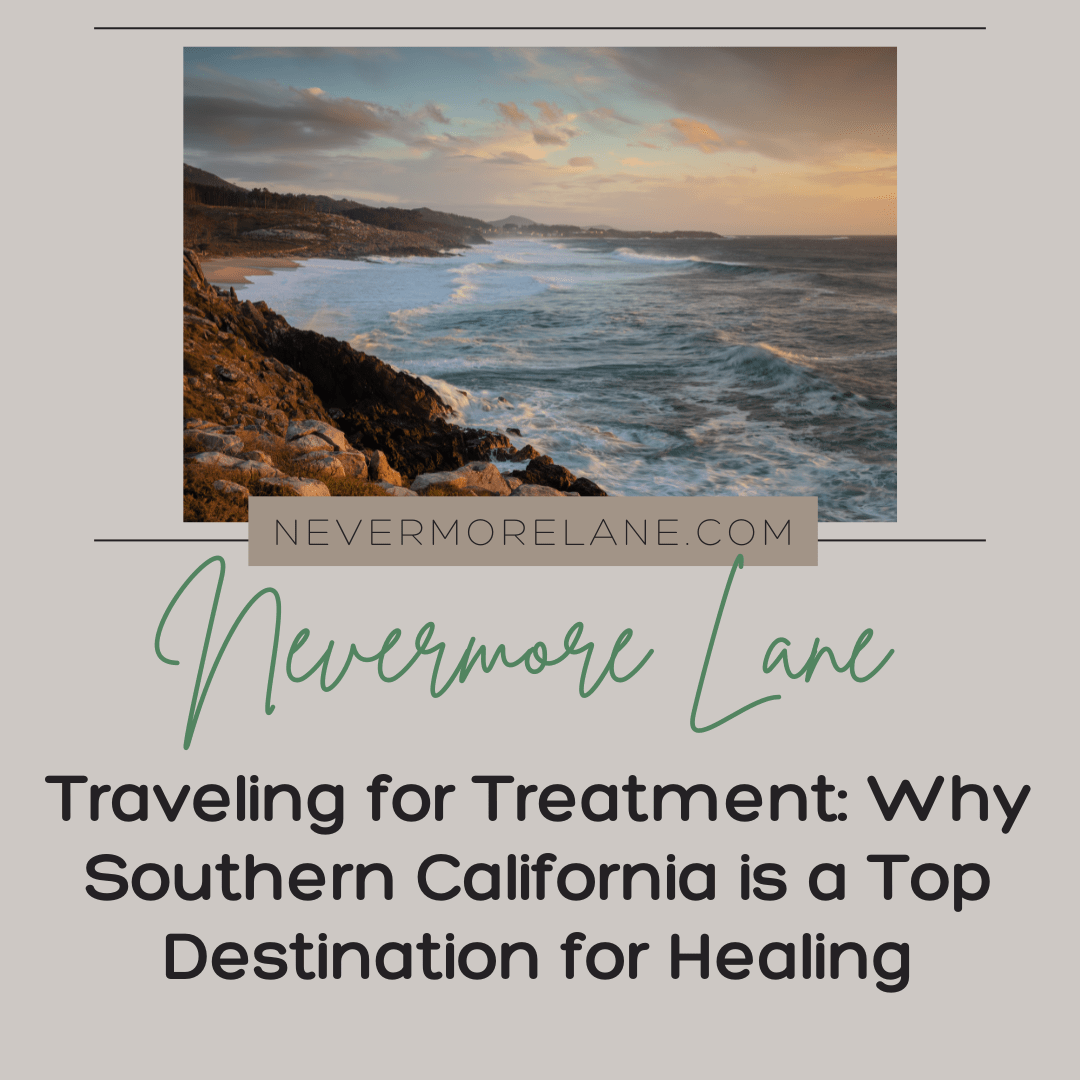
If you have ever driven down the Pacific Coast Highway with the windows down, you already understand part of the answer. Southern California has a way of meeting people where they are. The climate is famously gentle, with long stretches of mild, sunny days that make it easier to spend time outdoors, to walk in the morning, to feel sunlight on skin that has not seen much of it in a while. That is not a small thing. Light and movement and time in nature are woven through nearly every evidence-based approach to recovery, and this is a region where those things are available almost year-round.
But the weather is only the surface of it. What truly sets the area apart is the depth and variety of care that has grown up here over the decades. Southern California has one of the most established recovery communities in the country, which means a person seeking help can find everything from highly clinical, medically supervised programs to gentler, holistic settings that fold in nutrition, movement, mindfulness, and connection to the natural world. For anyone who has felt boxed in by a one-size-fits-all approach, having genuine options is its own kind of relief. It is a reminder that personalized care matters in a wellness journey, because no two people arrive carrying exactly the same story.
There is also the simple, restorative pull of the landscape. Mountains within an hour of the shore. Quiet canyons and desert stillness are a short drive from the ocean. Whole afternoons that ask nothing of you but to notice how beautiful the world still is. If you want to understand the spirit of the region beyond its clinics and programs, you can explore the wider area and its rhythms and feel for yourself why so many people describe arriving here as the first deep breath they have taken in a long while.
You can browse the broader range of programs and recovery settings across the region through resources like treatment options throughout Southern California, which can be a helpful starting point when you are trying to understand what is actually out there.
The Quiet Appeal of Orange County
Within Southern California, Orange County has earned a particular reputation as a place to heal. Tucked between Los Angeles and San Diego, it offers something a little softer than the sprawl of the big cities, a stretch of coastline dotted with calm beach towns, walkable harbors, and a slower, more residential feel that many people find soothing during such a vulnerable time.
Part of the draw is practical. The county is home to a dense concentration of treatment providers, recovery residences, and aftercare resources, which means continuity of care is often easier to arrange. Part of it is harder to put into words. There is a gentleness to the place, a sense that life can be both beautiful and unhurried, and for someone learning to imagine a future worth staying well for, that matters. If you are exploring what is available in this specific corner of the state, you can look at treatment resources in Orange County to get a clearer sense of the landscape.
None of this is to say that a pretty backdrop does the healing for you. It does not. The work is still the work, and it is still hard. But a setting that feels safe and lovely can hold you while you do it, the way a good friend sits beside you without needing to fix anything.
Healing as a Whole-Person Endeavor
One of the things I have come to believe is that real recovery is never only about removing a problem. It is about building a life so full and grounded that the old coping mechanisms lose their grip. The federal agency that oversees behavioral health in this country, SAMHSA, defines recovery beautifully as a process of change through which people improve their health and wellness, live self-directed lives, and reach toward their full potential. I love that framing, because it refuses to reduce a human being to their hardest chapter.
This is where a place like Southern California, with its emphasis on integrative and holistic approaches, can be such fertile ground. Healing here often looks like more than appointments and clinical milestones. It looks like learning to be still without panicking. It looks like rediscovering that you have a body that wants to move and breathe and be cared for. So much of lasting wellness comes back to the unglamorous, foundational practices we tend to skip, the kind of self-care that nurtures the mind, body, and spirit all at once rather than treating them as separate problems to be solved.
For many people, treatment is also where they finally find language for the anxiety that has been driving so much of their behavior. It can be freeing to learn how common that struggle is and to let go of the myths about anxiety that keep us stuck. And it is in these slower, more reflective settings that people often begin navigating life’s storms through mindfulness and self-care, building tools they will carry home long after the program ends.
How to Choose Well, With Your Eyes Open
Here is the part I want you to read slowly, because this is where love and caution have to hold hands. The recovery field is full of genuinely wonderful, ethical providers doing life-changing work. It also contains some that are not, and a region as popular for treatment as Southern California will always attract both. Choosing where to go is one of the most consequential decisions you or your family may ever make, so it deserves more scrutiny than booking a hotel.
A few things are worth verifying before you commit. Ask whether a facility is licensed by the state of California and whether it holds independent accreditation from a respected nonprofit body such as The Joint Commission or CARF International. Ask whether the treatments they offer are evidence-based, meaning they are supported by actual research rather than marketing language. You can ground yourself in what good care looks like through trustworthy, noncommercial sources like the National Institute on Drug Abuse and the National Institute on Alcohol Abuse and Alcoholism, both part of the National Institutes of Health.
The single most reliable starting point I can point you to is the government’s own free treatment locator, FindTreatment.gov, run by SAMHSA. It lets you search licensed facilities by location and filter by the kind of care you need, with no sales pitch attached. Use it. Cross-reference what any program tells you against what these independent sources say. A reputable provider will welcome your questions and never pressure you to decide today.
Be a little wary of anything that sounds too perfect. Recovery is not a luxury vacation, even when it happens somewhere beautiful, and any program promising a guaranteed cure or a quick, effortless fix is telling you something important about itself. Trust the places that are honest about how hard the work is and how much support you will need afterward.
The Part That Comes After
Treatment is a beginning, not an ending, and I think that is the piece people underestimate most. The weeks or months spent in a program are precious, but the life you build afterward is where recovery is truly won or lost. This is why the strongest treatment experiences pour so much energy into aftercare and connection, helping people line up ongoing therapy, community, and support before they ever head home.
Connection, in particular, does extraordinary work. Isolation feeds nearly every condition that brings people to treatment, and one of the most healing discoveries is that you are not the only one who has ever felt this way. That is the quiet magic of the role support groups play in emotional healing, the relief of sitting in a room, real or virtual, where you do not have to explain yourself. For those who do not need or want residential care, outpatient mental health services can offer that same continuity while you stay rooted in daily life.
If you are someone supporting a loved one through all of this, please tend to yourself too. You cannot pour from an empty cup, and stepping away now and then for a solo self-care getaway or even an afternoon of quiet is not selfish. It is what keeps you strong enough to keep showing up.
A Gentle Word Before You Go
If you have read this far, something in you is probably already reaching toward change, for yourself or for someone you love. Hold onto that. The fact that healing feels far away does not mean it is out of reach. It only means you have not arrived yet, and not arriving yet is a very different thing from never getting there.
Southern California will still be there, with its long light and its open coastline and its deep well of care, ready whenever the moment is right. But you do not have to travel anywhere to take the first step. You can take it from your couch, today, with a single phone call. Help is genuinely available, and it is free, and you are so much more deserving of it than the hardest voice in your head wants you to believe.
So whether your path leads to a quiet program by the Pacific or simply to a conversation you have been putting off, I am rooting for you. The life on the other side of this is real. Be gentle with yourself on the way there.
Help Available Right Now
- 988 Suicide & Crisis Lifeline — call or text 988, 24/7, free and confidential.
- SAMHSA National Helpline — 1-800-662-HELP (4357), free, confidential, 24/7/365 treatment referral and information, in English and Spanish.
- FindTreatment.gov — the government’s free, anonymous locator for licensed treatment facilities.
About the Author
Negin Rezaei is a behavioral health advocate and communications specialist focused on connecting individuals and families with trusted resources for healing. She works at the intersection of digital media and wellness, amplifying compassionate, evidence-based care options and ensuring that life-changing recovery information reaches those who need it most.
According to Negin, being in the right environment is an important part of the healing process. Her digital outreach and advocacy work is designed to help destigmatize mental health and point people in the right direction to get the help they deserve to start over.
Sources & Further Reading
- Substance Abuse and Mental Health Services Administration (SAMHSA) — National Helpline and FindTreatment.gov
- National Institute on Drug Abuse (NIDA), National Institutes of Health — nida.nih.gov
- National Institute on Alcohol Abuse and Alcoholism (NIAAA), National Institutes of Health — niaaa.nih.gov
- The Joint Commission — jointcommission.org
- CARF International — carf.org
Disclaimer: This article is for general informational and educational purposes only and does not constitute medical, psychological, or professional advice. Always seek the guidance of a qualified health provider with any questions you may have regarding a medical or mental health condition. If you are in crisis, call or text 988 immediately.