The Slow Living Writing Desk: How to Curate a Space That Inspires You
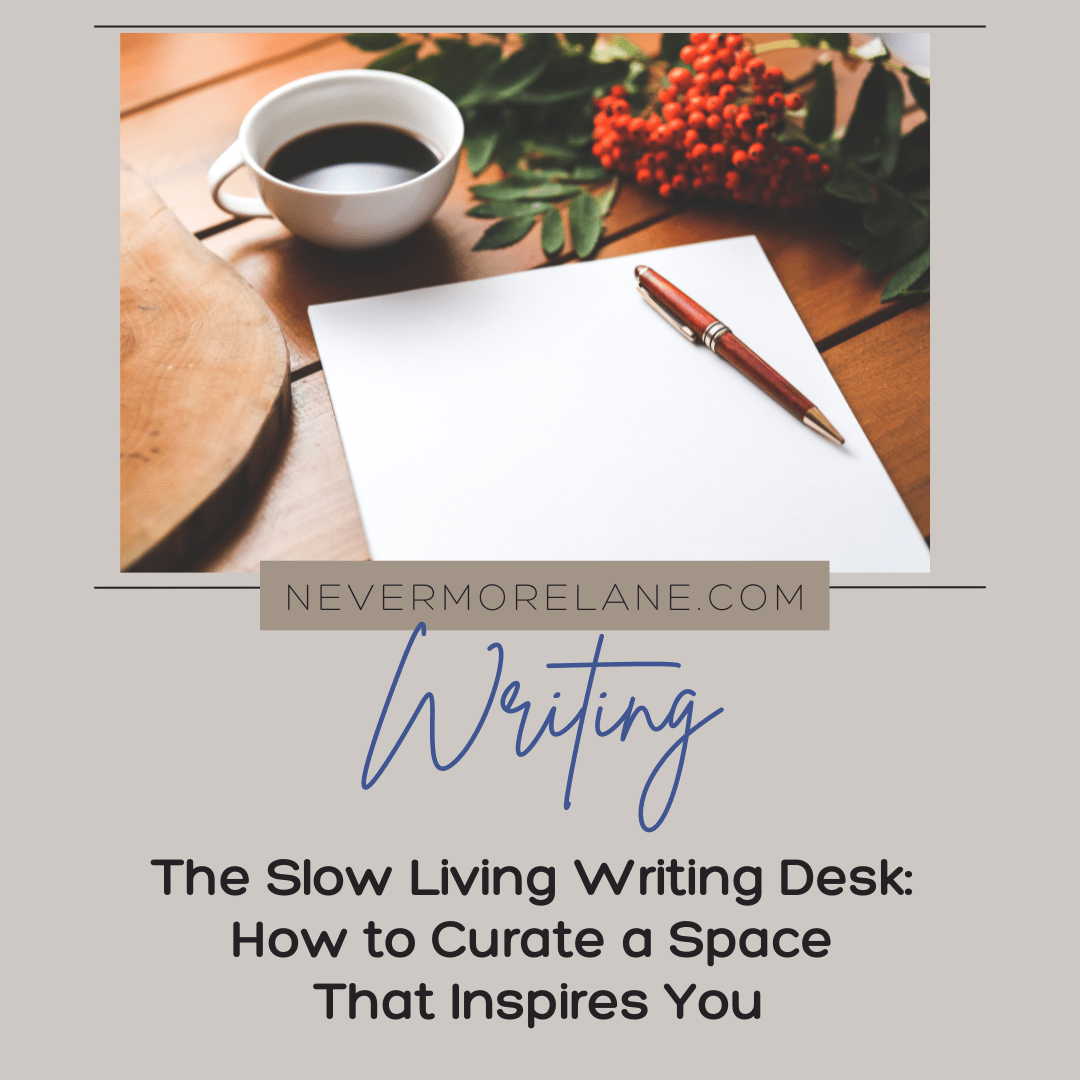
There is a particular kind of quiet that settles over a well-loved writing desk. Not the silence of emptiness, but the hush of a space that knows what it is for. A place where a fountain pen rests beside a half-burned candle, where a favorite stone anchors a stack of Field Notes, where morning light falls just so across an open journal. If you have ever felt that pull toward a more intentional creative life, it often begins right here, at the surface where your hands meet the page.
I have been thinking a lot lately about the spaces we build for ourselves. Not just the aesthetics, though beauty matters deeply when you practice slow living. But the feeling of a space. Whether it calls you back. Whether it holds you gently when the words are slow in coming.
A slow living writing desk is not about perfection. It is about curation, intention, and the quiet magic of surrounding yourself with things that mean something.
Why Your Writing Desk Is a Ritual Space
In slow living philosophy, the spaces we inhabit shape the quality of our attention. A cluttered, chaotic desk does not just look messy, it scatters the mind before you have written a single sentence. But a desk built with care becomes something more than furniture. It becomes an altar to the creative life you are tending.
Think of it the way you might think of a morning ritual. The specific mug, the particular tea, the window you always face. These small consistencies are not trivial. They are the architecture of a practice. Your writing desk works the same way. When you sit down at a space that has been thoughtfully arranged, your nervous system begins to settle. The mind understands that this is the place where something meaningful happens.
This is especially true for those of us drawn to earth magic and intentional living. We already understand that objects carry energy, that space holds memory, that the physical world is not separate from the inner one. Your writing desk can embody that knowledge. It can be a place where the practical and the sacred meet without contradiction.
The Elements of a Curated Writing Desk
Building a slow living writing desk does not require spending money or starting over. It requires looking at what you already have and choosing more carefully. Begin with surface clarity. Everything on your desk should earn its place, either because it serves a function or because it feeds something in you when you look at it. A beautiful ink bottle does both. A pile of unopened mail does neither.
Consider texture and material. Wood, stone, cloth, and leather all carry a warmth that plastic and metal often cannot. A small linen pouch holding spare nibs, a wooden pen tray, a river stone you picked up on a walk because it felt right, these details speak a quiet language. They remind you that you are a person rooted in the physical world, even when the work itself lives in language.
Lighting deserves more thought than most people give it. Natural light is the gold standard, but a warm-toned lamp positioned to fall on your writing hand without casting shadow can transform the experience entirely. Candlelight, when time allows, adds something harder to name. A quality of presence. An invitation to slow down before you have even uncapped your pen.
Finally, think about what lives at eye level. A small plant. A postcard from a place you love. A card pulled from a favorite oracle deck and propped where you will see it each morning. These are not distractions. They are anchors. They remind you who you are and what you are doing here.
Analog Tools That Honor the Practice
There is something in the choice to write by hand, or at least to include handwriting in your creative process, that aligns naturally with slow living values. The fountain pen slows you down in the best possible way. You choose your ink. You feel the nib drag across paper. There is a physicality to it that typing cannot replicate.
A dedicated notebook for your desk is different from a notebook you carry. It can be larger, more considered. A place for morning pages, for idea captures, for the rambling that precedes clarity. Field Notes fit beautifully in a pocket, but a wider, more generous journal spread open on the desk invites a different kind of thinking. Let both have their place.
Stamps, wax seals, a jar of pressed flowers, a bottle of favorite ink with a label you love looking at. None of this is precious or pretentious. It is the practice of surrounding your creative work with things that honor it. When the desk itself feels like a sanctuary, you will find yourself returning to it more readily, and staying longer when you arrive.
Tending the Space as Part of the Practice
A slow living writing desk is not a one-time arrangement. It is a living space that needs tending, just as a garden does. A brief clearing at the end of each writing session, wiping the surface, capping pens, returning objects to their places, is itself a ritual act. It closes the creative session and prepares the space for the next one.
Seasonality belongs here too. Swap in a small pine bough in winter, dried lavender in summer, a cluster of acorns in autumn. Let your desk reflect the world outside your window. This is one of the quieter pleasures of the slow living path: the recognition that time moves through everything, including your creative spaces, and that this movement is something to celebrate rather than resist.
Once or twice a year, take everything off the desk entirely. Hold each object. Ask yourself if it still belongs. Release what no longer serves and make room for what is calling to you now. This kind of tending keeps the space from becoming stagnant and keeps your relationship with your creative practice honest and alive.
A slow living writing desk is an act of self-knowledge as much as anything else. It tells you, and anyone who sees it, what you value, what you return to, and what feeds the particular kind of person you are becoming. It does not have to be elaborate. It does not have to look like anyone else’s.
It only has to be yours.
If this resonated with you, I would love for you to wander through more of what we tend here at Nevermore Lane. Pour yourself something warm and join me for coffee among the posts. There is always more to explore at the slow, sweet intersection of earth magic and a treasured life.
Like what you read? Drop me a line – let’s chat over virtual coffee.
~ Chrystal
DISCLOSURE
Nevermore Lane participates in the Amazon Services LLC Associates Program, Magic Link, Google Adsense, and other affiliate & advertising programs designed to provide a means for sites to earn advertising fees by advertising and linking to merchants.
This post contains affiliate links. That means we earn a few cents if you click the link and make a sale. (Thank you, by the way!)