The Quiet Rebellion of Choosing a Slower Life
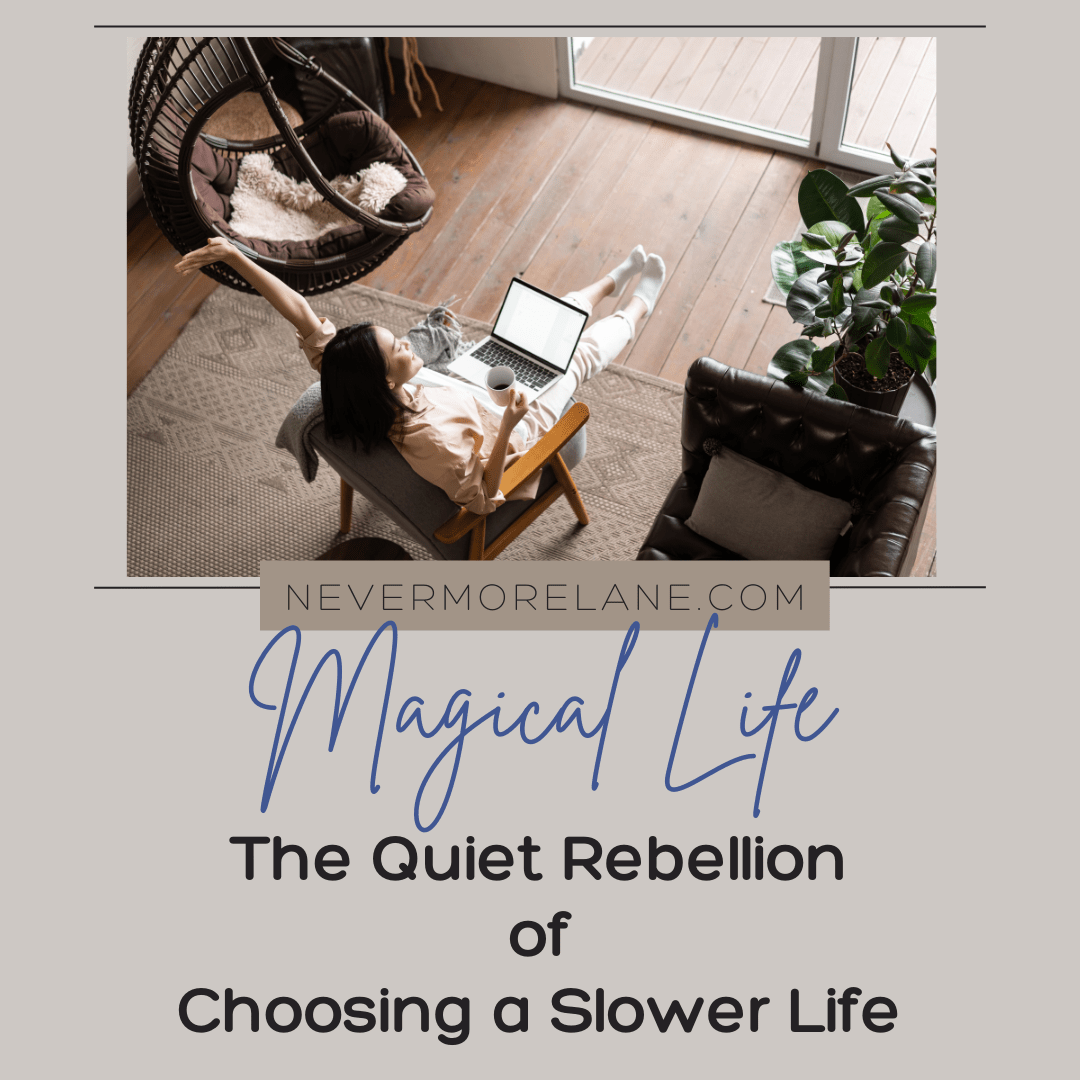
There is a moment that happens to almost everyone at some point. You are in the middle of a perfectly ordinary Tuesday, moving fast through a to-do list that never seems to shrink, checking your phone before your feet even hit the floor, and somewhere between the third notification and the second cup of coffee you did not actually taste, a quiet voice inside you asks: Is this really it? That question is not a crisis. It is an invitation.
That voice has been speaking to a growing number of people who are quietly, deliberately, and sometimes defiantly choosing to step off the treadmill of hustle culture and reclaim something older and gentler. They are not dropping out of life. They are dropping into it. They are choosing less noise and more meaning, less productivity theater and more genuine presence. They are, in the most radical and beautiful way, choosing a slower life.
And here is what I want you to know: that choice is available to you, right now, exactly as you are. You do not need a farmhouse in the countryside or a complete life overhaul. You do not need to quit your job or disappear from the world. What you need is a shift in perspective, a willingness to push back against a culture that has convinced us that being busy is the same as being alive. Slow living is not a trend. It is a rebellion. And it might be the most powerful thing you do this year.
Why So Many People Are Quietly Walking Away from Hustle Culture
For decades, the dominant cultural script told us that more was always better. More productivity, more achievement, more optimization, more output. We built our identities around our calendars and our accomplishments, and we wore our exhaustion like a badge of honor. If you were not overwhelmed, you were not trying hard enough. The world rewarded speed and punished stillness, and most of us fell in line without ever questioning whether the race was worth running.
But something has shifted. The last several years have brought a collective reckoning, a moment when millions of people simultaneously looked up from their overscheduled lives and realized they were tired in a way that sleep could not fix. Burnt out, overstimulated, and increasingly disconnected from the things that actually made them feel alive, people began looking for another way. Not a shortcut or a hack, but a genuine alternative rooted in presence, simplicity, and intentional living.
The slow living movement grew from that hunger. It draws on threads from many places: the Danish concept of hygge, the Japanese philosophy of wabi-sabi, the Italian tradition of la dolce vita, the long heritage of homesteaders, herbalists, and earth-centered communities who always knew that the rhythm of nature was a better guide than a productivity app. What unites all of these threads is the belief that a life well-lived is not a life crammed full but a life deeply felt. Walking away from hustle culture is not giving up. It is waking up.
There is also something quietly subversive about it. In a society that profits from your restlessness, from your belief that you are not enough and do not have enough, choosing contentment is a revolutionary act. Choosing to sit with your morning tea instead of scrolling, choosing to walk slowly and notice things, choosing to say no to busyness for its own sake, these small choices accumulate into a life that looks and feels radically different. It takes courage. It takes intention. And it is absolutely worth it.
The Real Meaning of Slow Living (It Is Not About Doing Less)
One of the most persistent misconceptions about slow living is that it means being lazy, unambitious, or checked out. Nothing could be further from the truth. Slow living is not about doing less for the sake of it. It is about doing things with more care, more attention, and more genuine investment. It is about choosing quality over quantity in every area of your life, from how you spend your hours to how you tend your relationships to what you allow into your home and your mind.
Think about the difference between eating a meal you cooked yourself with ingredients you chose, sitting at a table with people you love, tasting every bite, and eating lunch at your desk while answering emails. Both involved consuming food. Only one involved actually being present for a meal. Slow living asks you to bring that quality of presence to as many moments as possible, not because you have endless time, but because presence is a practice you can cultivate anywhere, at any pace.
It also means getting honest about what actually matters to you. Hustle culture asks you to pursue everything at once. Slow living asks you to decide. What do you want your daily life to feel like? What sensory experiences light you up? What rhythms sustain you? For me, it is the scratch of a fountain pen on good paper, the smell of something simmering on the stove, the way afternoon light falls across a stack of books I am genuinely excited to read. Slow living is built from details like these, gathered intentionally and protected fiercely.
When you begin to understand slow living this way, it stops feeling like a sacrifice and starts feeling like a gift you are giving yourself. You are not giving up ambition. You are redirecting it toward a life that actually reflects who you are and what you value, rather than one built to impress people you barely know.
How Slow Living Reconnects You with Earth Magic and Everyday Wonder
There is a reason that slow living and earth-centered spirituality so often walk hand in hand. When you stop racing through your days, you begin to notice things you missed before. The way the light changes with the seasons. The particular quality of silence on a cold morning. The small, persistent magic of seeds becoming food, of tides, of the way animals know things we have forgotten. Slowness is what opens the door to wonder, and wonder is the beginning of every magical life.
Earth magic, at its heart, is attention. It is the practice of being present enough to recognize that the world is alive and in conversation with you constantly. You cannot hear that conversation when you are moving at the speed of a news feed. But when you slow down, when you sit by a window and actually watch the birds rather than glancing at them, when you go outside and put your hands in soil or your face in the wind, the world begins to speak again. It was always speaking. You just needed to be still enough to listen.
This is why so many of the practices that anchor a slow life also double as spiritual practice. Tending herbs on a windowsill. Keeping a handwritten journal by candlelight. Marking the turning of the seasons with small rituals and intentional meals. Brewing tea with attention and gratitude. These are not frivolous. They are the threads that weave a life together, that create the texture of meaning we so desperately crave and so rarely allow ourselves. Slow living does not just reduce stress. It restores your relationship with the sacred in the everyday.
When you choose a slower life, you are also choosing to remember something ancient. You are saying, quietly but clearly, that you believe the present moment is worth inhabiting. That the world outside your window is worth watching. That your own inner life is worth tending. That is a kind of magic all its own.
Practical Ways to Start Choosing a Slower Life Right Now
The most common question I hear when people discover slow living is some version of: this sounds beautiful, but how do I actually start? The answer is both simpler and more profound than most people expect. You start exactly where you are. You do not need to wait for a quieter season or a bigger home or a different life. You start with one small choice, made deliberately, and you let that choice be the beginning.
Begin with your mornings. Before you reach for your phone, before the noise of the world floods in, give yourself five minutes of quiet. Sit with your coffee or your tea and just be present with it. Notice the warmth of the mug, the smell, the way the steam rises. This sounds too simple to matter. It is not. A morning that begins in stillness sets a different tone for the entire day, and that tone compounds over time into something that genuinely transforms your life.
Look for the places where you can replace rushing with ritual. The walk you take while staring at your phone could become a genuine encounter with the world around you if you leave the phone in your pocket. The dinner you eat in front of a screen could become a meal you actually taste and enjoy. The books piling up on your nightstand could become a real reading practice if you gave yourself permission to read slowly and often, without guilt about pace or productivity. Slow living is built from these small conversions, one at a time.
Also give yourself permission to protect your time and energy with more intention. Every yes to something busy is a no to something slow. You do not have to fill every evening and every weekend. White space in your schedule is not waste. It is the breathing room that allows everything else to be more alive. Start saying yes to less and see what grows in the silence.
Embracing the Quiet Rebellion as a Way of Coming Home to Yourself
At the deepest level, choosing a slower life is not really about lifestyle at all. It is about identity. It is about deciding who you are when you are not performing productivity for the world. It is about getting quiet enough to hear what you actually want, what actually brings you joy, what you would choose if you were not trying to keep up with anyone. That kind of self-knowledge is rare and precious, and it almost always requires stillness to find.
A slow life is not a perfect life. There will still be hard seasons, busy weeks, and days that do not feel magical or intentional at all. What changes is not the absence of difficulty but your relationship to it. When slowness becomes your baseline, when you have built a life with enough quiet and enough beauty to sustain you, the hard days feel different. They are held inside something larger and more nourishing. You have roots.
This is what I want for you and what I have been slowly, imperfectly building for myself. A life that feels like home. A life where the days have texture and flavor, where there is always a candle to light and a book to reach for and a window to look out of, where the pace is human and the magic is real and the ordinary moments are treated as the gifts they actually are. That life is available. You do not have to earn it or wait for it. You can begin building it today, with one quiet, rebellious choice.
Begin Your Slower Life One Small Choice at a Time
Choosing a slower life is not a single dramatic decision. It is a thousand small ones, made over and over again, in the direction of presence, simplicity, and meaning. It is choosing the handwritten letter over the quick text, the walk in the evening air over another hour of scrolling, the candle and the book over the constant noise. It is showing up for your own life with the same care and attention you would bring to something you truly love, because that is exactly what your life is.
If any part of this resonated with you, I would love for you to wander around a little more here at Nevermore Lane. There are stories and guides on slow living, earth magic, analog life, and building a home that feels genuinely like yours waiting for you to discover them. Every post is an invitation to come a little closer to the life you are actually longing for.
And if you would like to sit down together, pull up a chair and join me for coffee. I share slow living inspiration, book recommendations, and little moments of everyday magic with a community of people who are also finding their way back to something quieter and more beautiful. I would love to have you there.
This is not about perfection. It is about intention. And it starts right now.
Like what you read? Drop me a line – let’s chat over virtual coffee.
~ Chrystal