Limestone vs. Porcelain for Bathrooms: Long-Term Cost, Durability, and ROI
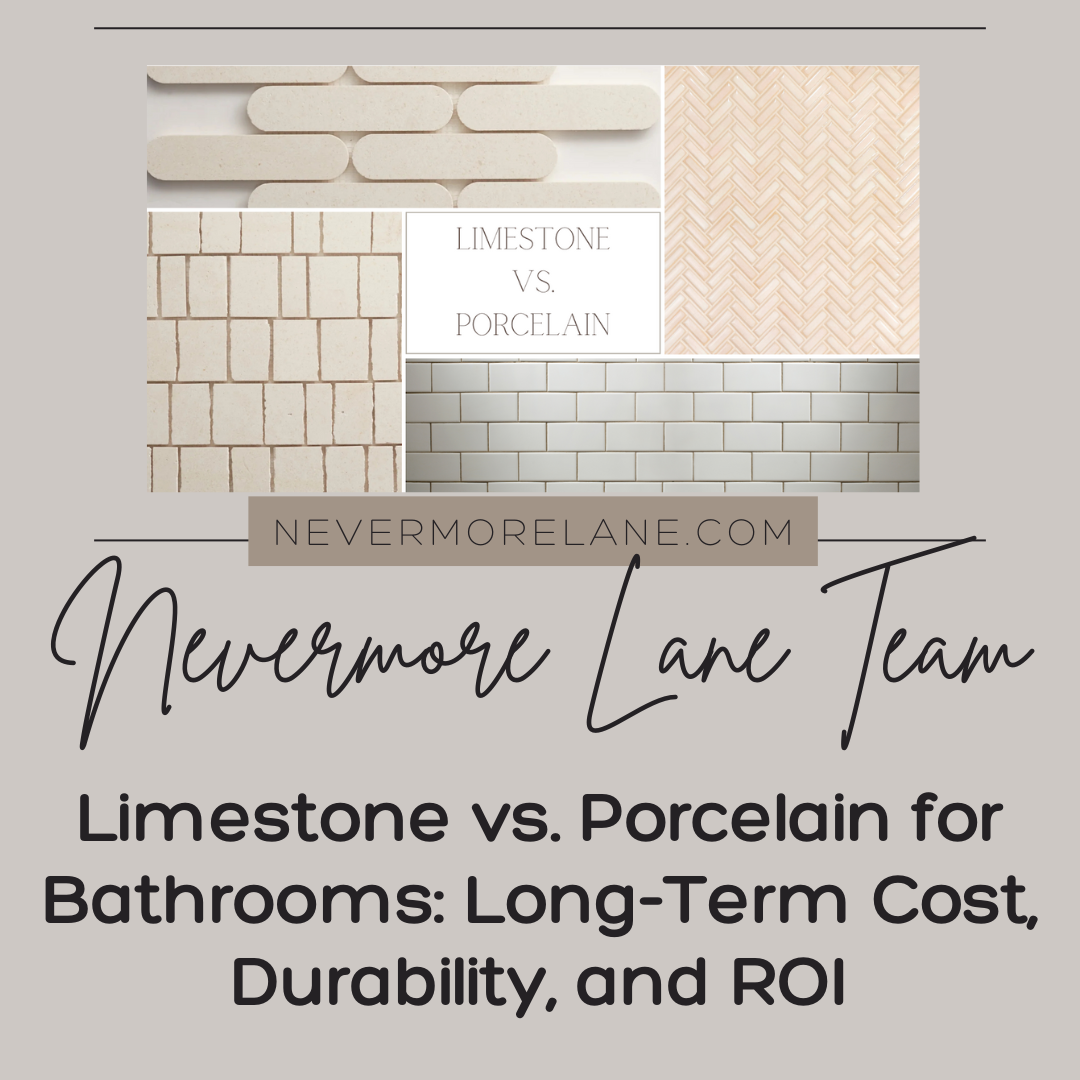
Choosing the right surface material for wet areas: showers, bathroom floors, and kitchen backsplashes, is one of the most critical decisions in a design or renovation project. It’s a choice that pits timeless, natural beauty against the pinnacle of modern material engineering.
At the heart of this decision are two prime contenders: Limestone and Porcelain.
This comparison moves beyond initial aesthetics and sticker price to deliver a real-world analysis of long-term durability and true life-cycle cost, especially in environments defined by constant moisture.
The Fundamental Differences Between the Materials
To understand long-term performance, we must first look at how these materials are made, as their origins dictate their reaction to water, chemicals, and everyday wear.
- The Organic Beginnings of Limestone
Limestone is a natural sedimentary rock, composed primarily of calcium carbonate. Formed over millions of years from marine fossil fragments, it possesses an organic beauty with subtle, unique veining, color variations, and natural texture.
- Composition: Primarily Calcium Carbonate (CaCO3).
- Porosity: Naturally high. As a softer stone (scoring 3-4 on the Mohs hardness scale), it readily absorbs water, oils, and other liquids.
- Aesthetic: Unmatched natural elegance that often develops a desirable “patina” (aged look) over time.
- The Engineered Strength of Porcelain
Porcelain is a man-made masterpiece. Fired at over $1200°C$, it is incredibly dense with a water absorption rate of less than $0.5\%$. This engineered density is why many homeowners consider porcelain an intelligent investment in materials and fixtures that can withstand daily wear.
- Composition: Highly refined clays and minerals.
- Porosity: Exceptionally low. Its density is its key feature, with a water absorption rate typically less than 0.5% (the standard definition of porcelain tile).
- Aesthetic: Consistent, precise, and can be manufactured to perfectly mimic any natural stone (including limestone and marble) without the natural inconsistencies.
Durability in Wet Areas: How They Handle Constant Moisture
In a shower or a constantly wet commercial bathroom, the material’s ability to resist water penetration, chemical etching, and daily wear is paramount.
This is where the core composition differences impact real-world performance.
- Limestone’s Constant Need to Resist Moisture and Etching
Limestone’s inherent porosity is its greatest vulnerability in wet environments.
- Water penetration and staining: Even when sealed, limestone will eventually absorb moisture. In a shower, this leads to mineral deposits, soap scum, and the potential for mold and mildew growth if the sealant fails. Spills from acidic products: shampoo, citrus cleaners, vinegar, will etch the calcium carbonate, creating visible dull spots almost instantly.
- Sealing is essential for long-term survival: Limestone must be sealed upon installation with a high-quality, penetrating sealer, and this process must be repeated periodically. In high-use, wet areas like a shower, this resealing is often required every 6 to 12 months. Neglecting the seal will result in permanent staining and deterioration.
- Physical wear and tear: Due to its relative softness, limestone is prone to scratching and chipping from dropped objects or abrasive cleaning tools. While it develops a patina, premature wear in a high-splash zone can quickly degrade its clean, initial appearance.
- Porcelain Performs as an Impervious Surface
Porcelain is engineered specifically to overcome the vulnerabilities of natural stone, making it the superior material for demanding wet environments.
- Water and stain resistance: With a near-zero absorption rate, porcelain is virtually impervious to water. This prevents the primary causes of deterioration in wet areas: water damage, mold, and mildew within the material body. It resists stains from almost all common household liquids and chemicals.
- Chemical resistance: Unlike limestone, the dense, ceramic structure of porcelain is unaffected by common acidic or alkaline cleaners. This dramatically simplifies maintenance and reduces the risk of long-term surface damage.
- Exceptional durability and longevity: Porcelain’s hardness (around 7 on the Mohs scale) makes it extremely resistant to scratching, chipping, and wear. A quality porcelain installation, even in a busy environment, can last 50+ years with minimal visible wear.
The True Cost of Ownership: A Life-Cycle Cost Analysis
The “sticker price” at the tile shop is only the first chapter. According to our guide on prioritizing home projects that matter most, choosing materials based on long-term functional value rather than just upfront cost is key to a successful renovation.
The Life-Cycle Cost (LCC) which includes installation, ongoing maintenance, and potential repair-provides the true financial picture over a 10- or 20-year period.
Initial costs for material and installation
| Metric | Limestone (Mid-Grade) | Porcelain (Mid-Grade) | Summary of the initial costs |
| Material Cost (per sq. ft.) | $10 – $20+ | $8 – $18 | Limestone material is often comparable or higher. |
| Installation Cost (per sq. ft.) | $10 – $20+ | $8 – $15 | Limestone installation is usually more expensive due to necessary pre-sealing, fragile cutting, and the need for greater expertise. |
| Total Initial Installed Cost | $20 – $40+ | $16 – $33 | Porcelain generally offers a lower upfront installed cost. |
Long-term costs for maintenance and repair (10-year projection)
This is where the financial difference between the two materials becomes most apparent.
- Limestone’s Life-Cycle Costs
The primary recurring cost is professional sealing and the risk of needing restoration.
- Sealing: For a high-moisture area (e.g., 100 sq. ft. shower), professional re-sealing is needed annually or biennially.
- Cost Projection: $200 – $500 every 1-2 years. Over 10 years, this is a $2,000 to $5,000+ maintenance expense.
- Refinishing/Etch Repair: If the stone is etched by acidic cleaners or heavily stained, it may require professional honing or resurfacing.
Cost Projection: $500 – $1,000 every 5-10 years. - Total 10-Year Maintenance Estimate: $3,000 – $6,000+ on top of the initial investment.
- Porcelain’s Life-Cycle Costs
Porcelain maintenance is virtually zero beyond standard cleaning and, optionally, sealing the grout lines.
- Sealing: The tile itself requires no sealing. High-quality epoxy grout may be sealed once every 3-5 years, or not at all.
Cost Projection: $100 – $300 for 10 years of professional grout sealing, or DIY for minimal cost.
- Repair/Refinishing: Porcelain does not etch or stain and requires no resurfacing. Damage is typically limited to a cracked tile, which is individually replaceable, or grout failure.
- Total 10-Year Maintenance Estimate: $100 – $500.
The 10-year Life-Cycle Cost analysis consistently shows that Porcelain offers a significantly lower total cost of ownership, often completely offsetting a potentially slightly higher initial cost through massive long-term savings in maintenance.
Porcelain’s Life-Cycle Costs Practical Insights and Installation Details
In advising on high-end construction and refurbishment, the choice often comes down to prioritizing one core value.
Aesthetic Value and the Developing Patina
For the homeowner or designer whose priority is unrivaled natural beauty and the distinct, soft feel of real stone, limestone is the only choice. It offers quiet luxury.
A note of experience: A well-maintained limestone bathroom signals premium quality. However, it requires a strict commitment to its specific care regimen, using only pH-neutral cleaners and immediate cleanup of any spills.
We often recommend it for master baths or powder rooms where chemical exposure is controlled, rather than high-use shared family bathrooms.
For designers who specify limestone regularly, material selection goes beyond color alone. Cut style, finish, and sourcing consistency matter just as much as visual tone, especially in wet-area applications where density and surface treatment can influence long-term performance.
This is why many architects gravitate toward curated limestone collections, where stones are pre-vetted for interior suitability, finish uniformity, and responsible quarrying, reducing variability while preserving the organic character that makes limestone so desirable.
When paired with correct sealing protocols and professional installation, these thoughtfully selected stones allow limestone to perform as intended while delivering its signature softness and patina.
Functionality and Hygiene Performance
For the space demanding maximum durability, minimal upkeep, and superior hygienic properties, porcelain is the clear winner.
- Slip resistance: Both materials are available with slip-resistant finishes. For a shower pan, look for textured or matte-finish porcelain with a high Coefficient of Friction (COF) rating.
- Consistency: Porcelain offers a uniform installation. The color and pattern will not fade or change with exposure to UV light or water, ensuring the installed look lasts decades.
- Hygiene: The non-porous nature of porcelain actively inhibits the growth of mold and mildew on its surface, making it an excellent, low-maintenance choice for health-conscious design.
Installation Considerations for Both Materials
Porcelain’s rigidity and density make it challenging to cut, requiring specialized diamond blades and professional expertise.
However, its consistent dimensions simplify the laying process. Limestone, while softer to cut, often requires careful selection, pre-sealing, and meticulous handling to avoid chipping.
Improper installation, regardless of material, is the single greatest cause of failure in wet areas. Always verify your installer’s experience with the chosen material in a high-moisture environment.
Balancing Long-Term Value With Design Preference
The question of limestone vs. porcelain in wet areas is a choice between a high-maintenance, evolving natural material and a low-maintenance, ultra-durable engineered one.
For the user, prioritizing the lowest life-cycle cost and maximum functionality in areas subjected to constant water and chemical exposure (such as a shower enclosure or a high-traffic family bathroom), high-quality.
Porcelain is the most prudent, cost-effective, and practical investment. Its negligible water absorption and extreme durability translate directly into decades of minimal maintenance cost and superior longevity.
However, for the design that places irreplaceable natural elegance and patina above all else, and where the owner is willing to commit to the rigorous, specialized maintenance schedule (including regular re-sealing and strictly pH-neutral cleaning), Limestone will deliver a unique, luxurious finish that porcelain cannot fully replicate.
The Verdict: ROI vs. Romance
- Choose Porcelain if: You want a “set it and forget it” lifestyle. It offers a significantly higher ROI because of its durability and low maintenance costs. It’s perfect for high-traffic family homes and rental properties.
- Choose Limestone if: You are a design purist. If the soft feel of natural stone underfoot and that “quiet luxury” look are non-negotiables, and you don’t mind the ritual of sealing and specialized care; nothing else compares.
Expert Tip: Regardless of your choice, a successful wet-area installation depends on the foundation. Always refer to TCNA standards for tile installation to ensure your moisture barrier is handled by a pro.
Choose Materials Your Future Self Will Thank You For
Limestone and porcelain serve different priorities in bathroom applications. Limestone wins on natural beauty and luxury appeal that increases perceived home value. Porcelain wins on durability, maintenance ease, and long-term cost savings. Neither choice is universally superior. The right material depends on budget realities, maintenance willingness, and whether resale value or personal enjoyment matters more.
The long-term cost comparison reveals surprising truths. Limestone costs more initially and requires ongoing sealing expenses every one to three years. Damage from etching or staining may require professional restoration. Porcelain costs less upfront and needs virtually no maintenance beyond regular cleaning. Over twenty years, total cost of ownership often favors porcelain despite limestone’s prestigious reputation.
Bathroom materials live hard lives through constant moisture exposure, cleaning products, and daily use. The surfaces chosen now will either age gracefully or show every year through staining, etching, and wear. Knowledge about long-term performance protects against beautiful installations that become maintenance nightmares or budget choices that prove costly through premature replacement. Sometimes the wisest investment involves choosing materials that serve you well long after the renovation excitement fades into daily reality.
| Images Credit | All images are custom curated by writer for the publication using Canva pro – copyright free |





Great comparison of limestone and porcelain for bathrooms! Planning a renovation around holidays can be tricky, so I use a calendar to schedule work when I have time off. Thanks for the helpful info!