How to Start a Journaling Practice When You Don’t Know What to Write
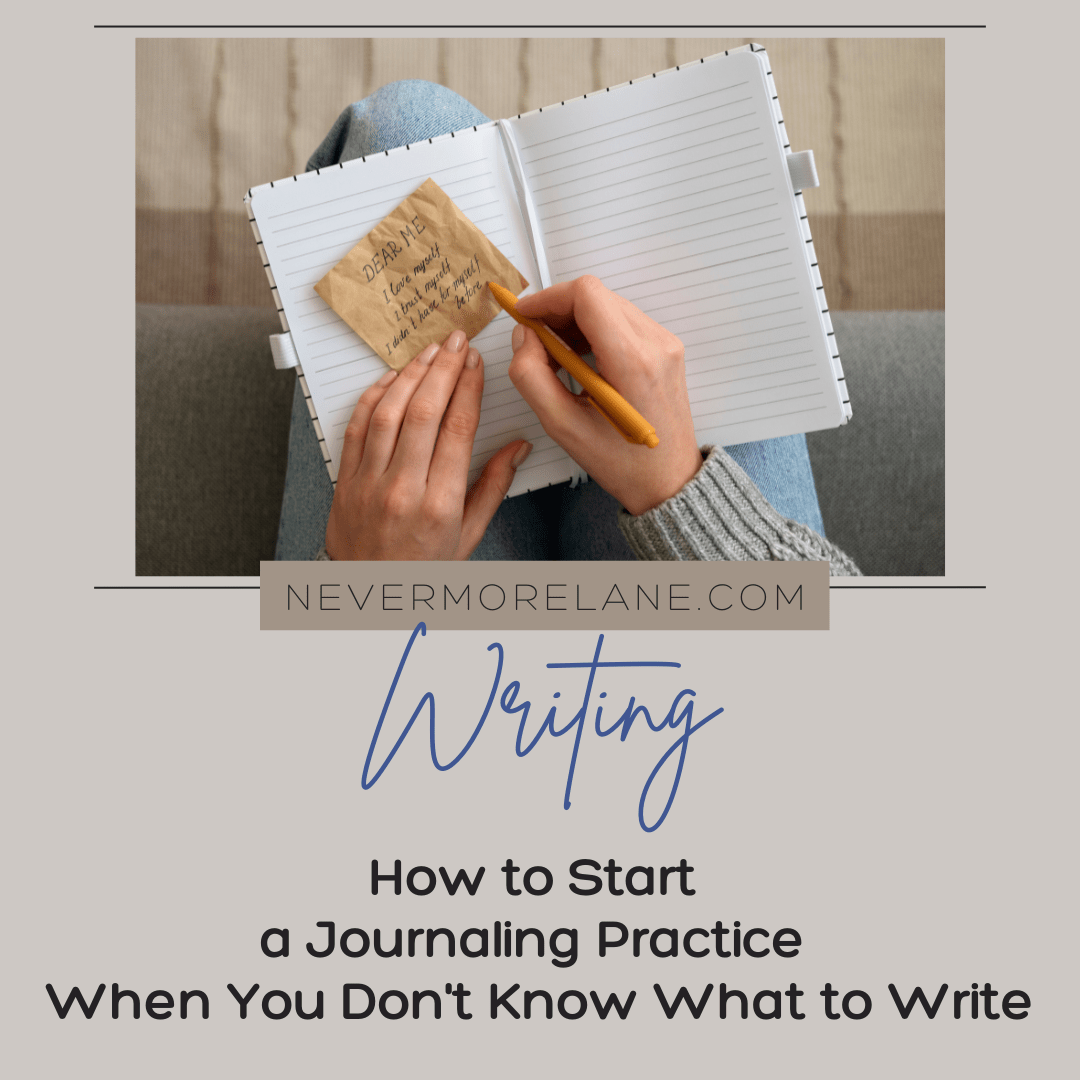
There is a blank page waiting for you somewhere. Maybe it is tucked inside a beautiful journal you bought months ago, still pristine, still untouched, because every time you sit down to write in it, the words simply refuse to come. You stare at the paper. The paper stares back. And then you quietly close the cover and tell yourself you will try again tomorrow.
You are not alone in this. So many people who are drawn to slow living, to intentional rituals, to a life lived with more presence and purpose, feel the pull of a journaling practice. They sense that something meaningful lives on the other side of the page. But the starting is hard. The blank page feels like a test you were never given the questions for, and the pressure to write something profound makes even a simple sentence feel impossible.
Here at Nevermore Lane, we believe journaling is not about performing depth. It is not about crafting beautiful prose or recording your thoughts in a way that would impress anyone else. A journaling practice is a living ritual, one that grows with you, shifts with the seasons, and asks nothing more than your honest presence. If you have been waiting for permission to begin imperfectly, consider this yours.
Why the Blank Page Feels So Overwhelming for New Journalers
The fear of the blank page is not really about the page at all. It is about expectation. Many people carry a quiet belief that journaling requires something special, a particularly emotional day, a profound realization, a life event worth documenting. When ordinary Tuesday arrives with its mundane errands and leftover soup, it does not feel like material. And so the journal stays closed.
There is also the lingering ghost of school writing assignments, that old feeling that whatever you put on paper will somehow be evaluated. Even journaling in private can trigger this response, the internal critic who reads over your shoulder and finds your observations too simple, too small, too obvious. This is one of the most common reasons people abandon a journaling practice before it ever has a chance to take root.
What helps is shifting the entire frame. Journaling is not performance. It is not memoir writing, and it is not therapy homework, although it can absolutely hold space for healing. At its most elemental, journaling is just the act of paying attention and then recording what you noticed. That is it. Once you release the idea that your entries need to be significant, the blank page loses most of its power over you.
How to Set Up a Simple Journaling Ritual That You Will Actually Keep
The most sustainable journaling practices are the ones that feel like something you want to do rather than something you should do. That distinction matters more than any productivity advice about habits or streaks. When you design your ritual around what genuinely calls to you, it becomes magnetic rather than obligatory.
Start by choosing your tools with care. This does not mean you need to spend a great deal of money, but it does mean you should feel something when you pick up your pen and open your journal. A smooth-writing pen and a journal with pages that do not bleed through can transform the tactile experience of writing entirely. If you love fountain pens, let yourself use them here. If you prefer a soft pencil or a ballpoint from a cup on your desk, that works too. The point is to make the physical act of writing feel like a small pleasure.
Next, anchor your journaling to an existing moment in your day rather than trying to carve out entirely new time. Morning coffee is a natural companion. So is the quiet after dinner, or the soft window between putting on pajamas and turning off the light. You do not need an hour. Even ten minutes of unhurried writing, done consistently, will build something meaningful over time. Give the ritual a place and a time, and your mind will begin to expect it.
Simple Journaling Prompts to Use When You Have Nothing to Say
The most generous thing you can give yourself when you sit down to write is a starting point. Prompts are not training wheels. Even experienced journalers return to them regularly because they crack open angles of reflection that free writing might skip right past. Think of a prompt not as a constraint but as a door.
Some of the most grounding prompts are deceptively simple. What did I notice today? What am I carrying into this evening that I would like to set down? What did my body feel like when I woke up this morning? These questions ask nothing of your eloquence. They ask only for your attention, directed inward. The answers do not need to be long. Three sentences of genuine noticing will do more for your inner life than three paragraphs of forced reflection.
For those who are drawn to the magical and the seasonal, earth-based prompts can be particularly nourishing. What phase is the moon in, and what does that feel like in my body? What is the quality of the light today, and how does it affect my mood? What is one thing in my immediate space that I am grateful for right now? These prompts root your journaling in the present moment and in the rhythms of the natural world, which is exactly the kind of grounding that slow living is built on.
What to Write When Your Journal Becomes a Feelings Dumping Ground
Every journaling practice goes through phases, and one of the most common is the season when the journal becomes a place to pour out everything that feels heavy. Frustration, worry, circular thinking, the mental replay of difficult conversations. This is not wrong. Processing on the page is genuinely useful, and there is real value in externalizing what is spinning in your head. But when every entry feels like a complaint log, it can drain your desire to show up.
The solution is not to forbid difficult feelings from the page. It is to add other kinds of writing alongside them. Try what some writers call a “three good things” close, where you end each entry by naming three things that were true and good about the day, no matter how small. Not because you are bypassing the hard stuff but because you are giving your attention permission to rest somewhere softer before you close the journal.
You can also experiment with what might be called anchor entries. These are short, consistent check-ins that follow a loose structure: one thing on my mind, one thing I noticed today, one thing I am looking forward to. Having a light framework prevents the entry from spiraling while still leaving room for honesty. Over time, you will find your own rhythm, and the entries that once felt forced will start to feel like coming home.
The Seasons of a Journaling Practice and How to Return After a Break
No journaling practice is a straight line. There will be weeks, sometimes months, when the journal goes untouched. Life accelerates, the ritual slips, and then you pick up the journal and feel a vague guilt about the gap in the pages. This is the moment when most people quietly decide they are just not a journaling person and close the cover for good.
But the journaling practice does not require continuity to be real. It requires only return. When you come back after a break, you do not owe the journal an explanation or an apology. You do not need to recap what you missed. You can simply begin with today. What is true right now, in this moment, in this body, in this season of your life? That is always enough.
Think of your journaling practice the way you might think of any living ritual, like tending a garden or keeping a tarot practice. There are seasons of abundance and seasons of fallow ground. Both are part of the cycle. The gardener who steps away for a winter and returns in spring to begin again is not a failed gardener. She is someone who understands that rest is part of the rhythm. Your journal will be there when you come back. It always is.
Begin Where You Are, Not Where You Think You Should Be
The perfect journal entry does not exist. The perfect time to start does not exist either. What exists is this moment, this page, and the simple truth of wherever you happen to be today. That is the only material you need.
If you have been waiting until you have something important to say, you can stop waiting now. Begin with the soup you had for lunch. Begin with the quality of the afternoon light. Begin with one thing that made you feel something, anything, today. The act of writing it down is the entire point. The meaning comes later, built slowly, entry by entry, like sediment that eventually becomes something solid enough to stand on.
If you want more slow living inspiration, journaling ideas, and gentle magic for your everyday life, you are warmly invited to explore more posts here at Nevermore Lane. And if you would like to pull up a chair and spend some unhurried time together, come join me for coffee. There is always a cup waiting.
Like what you read? Drop me a line – let’s chat over virtual coffee.
~ Chrystal