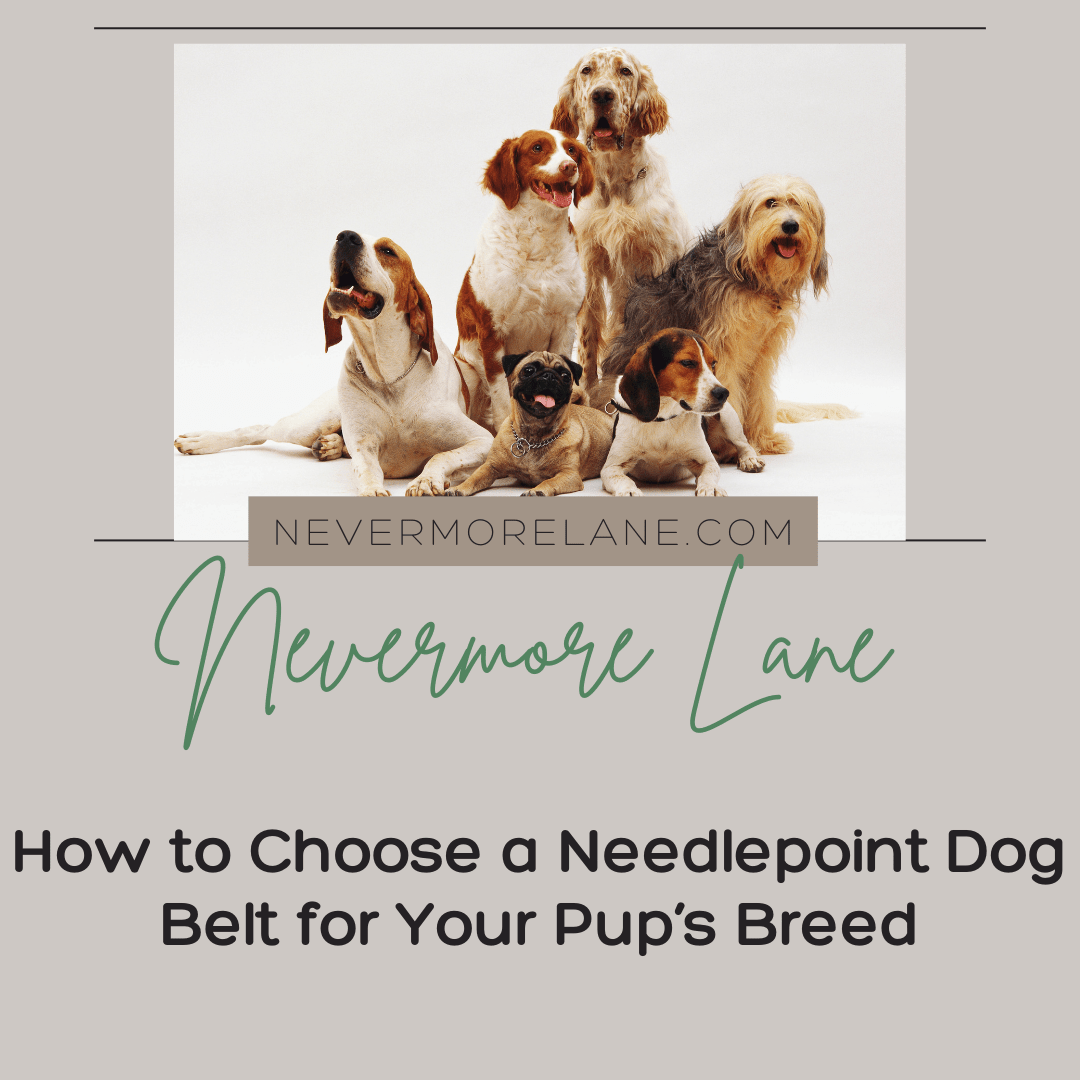
How to Choose a Needlepoint Dog Belt for Your Pup’s Breed
You know that person — the one who has a dog-shaped keychain, a dog-print phone case, a car decal shaped like their dog’s silhouette, and somehow still finds room for one more piece of dog-themed flair. If that person is you, or if you’re shopping for someone exactly like that, there’s a good chance a plain leather belt just isn’t going to cut it anymore. You want something that says, “Yes, I really am that person” the second someone notices it, and a needlepoint belt stitched with your dog’s actual breed does exactly that.
The tricky part isn’t deciding whether you want one. It’s figuring out how to pick a design that actually looks like your dog, wears well with the rest of your closet, and doesn’t feel like a costume prop. That’s what we’re breaking down here.
Start With the Breed, Not the Trend
It’s tempting to grab whatever dog design looks cutest in the product photos, but the belts that age best are the ones chosen because they actually match the dog at home. A Golden Retriever belt on someone who owns a Golden Retriever reads as personal. The same belt on someone who owns a Chihuahua reads as a little confusing, even if the stitching itself is beautiful.
This matters more than people expect, because dog ownership in the U.S. genuinely does cluster around a handful of favorite breeds. According to the American Kennel Club’s most recent registration rankings, the French Bulldog has held the No. 1 spot for four years running, with Labrador Retrievers and other longtime favorites still filling out the top of the list. That popularity is exactly why breed-specific needlepoint designs exist in the first place, pattern makers build around the dogs people actually own, not obscure ones nobody’s asking for. So before anything else, start with what’s actually curled up on your living room floor.
Think About Color the Same Way You’d Think About a Portrait
Needlepoint belts work in blocks of repeating color and texture, which means the background shade matters almost as much as the dog design itself. A dark Labrador shows up beautifully against a lighter background like tan or cream, where the contrast lets the stitching detail actually read from a few feet away. A lighter-coated dog, on the other hand, tends to pop more against navy, hunter green, or another deep tone.
If you’re not sure which direction to go, look at what’s already sitting in your closet. Belts get worn with a wide range of outfits over the years, so a background color that plays nicely with khakis, jeans, and the occasional sport coat will get more actual wear than one that only works with a single outfit.
Check the Details That Make a Needlepoint Belt Last
This is usually the point where people start comparing options online, and it’s worth slowing down here, because not every “embroidered” dog belt is made the same way. A lot of what’s sold as embroidery is actually printed onto fabric webbing, which looks fine in a photo but fades and cracks within a season of regular wear. True needlepoint is different — it’s stitched by hand, one thread at a time, onto canvas, which is what gives it that raised, textured look instead of a flat printed surface.
If you’re browsing a needlepoint belt pattern built around a specific dog breed, this is the moment to check how it’s actually constructed, not just what it looks like in the thumbnail. Good Threads, for example, stitches its belt designs by hand on mono canvas and finishes them with full-grain leather and solid brass hardware, which is the kind of construction that’s built to survive years of actual daily wear rather than a single season on a hook. That detail is easy to skip past when you’re scrolling through cute dog patterns, but it’s the difference between a belt you wear for a decade and one you’re replacing next year.
Match the Design to How You Actually Dress
Some dog-breed patterns are subtle, a small repeating silhouette that reads more like a classic pattern than an obvious dog motif. Others are bold and unmistakable, meant to be a conversation starter. Neither approach is wrong, but it’s worth being honest about which one fits your actual day-to-day style before you commit.
If you tend to dress more classic or understated, look for a design where the dog motif repeats in a smaller, more spaced-out pattern, so it reads as texture from a distance rather than a full illustration. If you’re the type who wants people to notice and ask about it, a larger, more detailed dog design will do exactly that job. There’s no wrong answer here — it just helps to know which one you’re actually going to reach for on a Tuesday morning versus which one looked good in a photo.
Don’t Forget the Size and Fit
A stunning pattern loses its impact fast if the belt itself doesn’t fit right. Needlepoint belts typically run slightly differently than a standard leather belt because of the canvas backing, so it’s worth checking the sizing guidance before ordering rather than assuming your usual size will translate directly. Most sizing guides recommend adding a couple of inches to your regular pants size, and when you’re stuck between two sizes, sizing up tends to be the safer call, since a belt that’s slightly too big is a quick fix while one that’s too small isn’t wearable at all.
It’s also worth thinking about how the belt will actually be worn. A belt meant for everyday use benefits from a design that holds up visually whether it’s tucked under a jacket or fully on display, while a belt bought specifically to make a statement can lean into a bolder, more visible pattern without worrying as much about subtlety.
Our Final Thoughts
Picking the right needlepoint dog belt really comes down to matching three things: the breed design to the dog you actually have, the background color to what you already wear, and the construction quality to how long you actually want the belt to last.
Skip any of those three and you end up with something that looks great in a photo but doesn’t quite work in real life. Get all three right, though, and you end up with an accessory that does something most belts never manage, it tells a small, unmistakable story about the dog waiting for you at home, every single time someone notices it.