Dishes You Absolutely Must Try In Southeast Asia
Southeast Asian cuisine is one of the most varied and technically sophisticated food traditions on the planet, built across centuries of trade routes, cultural exchange, and an extraordinary regional pantry of ingredients that grows, ferments, and blooms in ways found nowhere else. To travel through Thailand, Vietnam, Indonesia, Malaysia, the Philippines, or their neighbors with any real attention to food is to encounter a culinary landscape so layered and alive that a single trip across one country barely scratches the surface of what is actually there.
One of the most exciting aspects of travelling to South East Asia is the quality of the food. It has some of the most interesting tastes and ingredients found anywhere in the world. What makes the food of this region so enduringly compelling to travelers is not just the flavor profiles, though the balance of sweet, sour, salty, spicy, and umami achieved in a single bowl of Vietnamese pho or a plate of Indonesian rendang represents a kind of harmony that takes years to learn and a lifetime to master. It is the way food functions culturally across Southeast Asia, as the organizing principle of daily life, the center of every gathering, and the most direct expression of a place’s particular history and geography. Eating well here means eating attentively, and attentive eating means following the food to where it actually lives rather than where it has been adapted for outside expectations.
Street stalls, night markets, and family-run shops without menus serve some of the most extraordinary cooking in the world, and the dishes worth seeking out are almost never the ones that have traveled the furthest from their origins. The meals that stay with travelers long after they have returned home are the ones eaten closest to where they were made, in the conditions and context that shaped every ingredient and every technique involved in bringing them together.
But which dishes should you prioritize if you’re only going for one or two weeks? Here’s our advice.
Pho
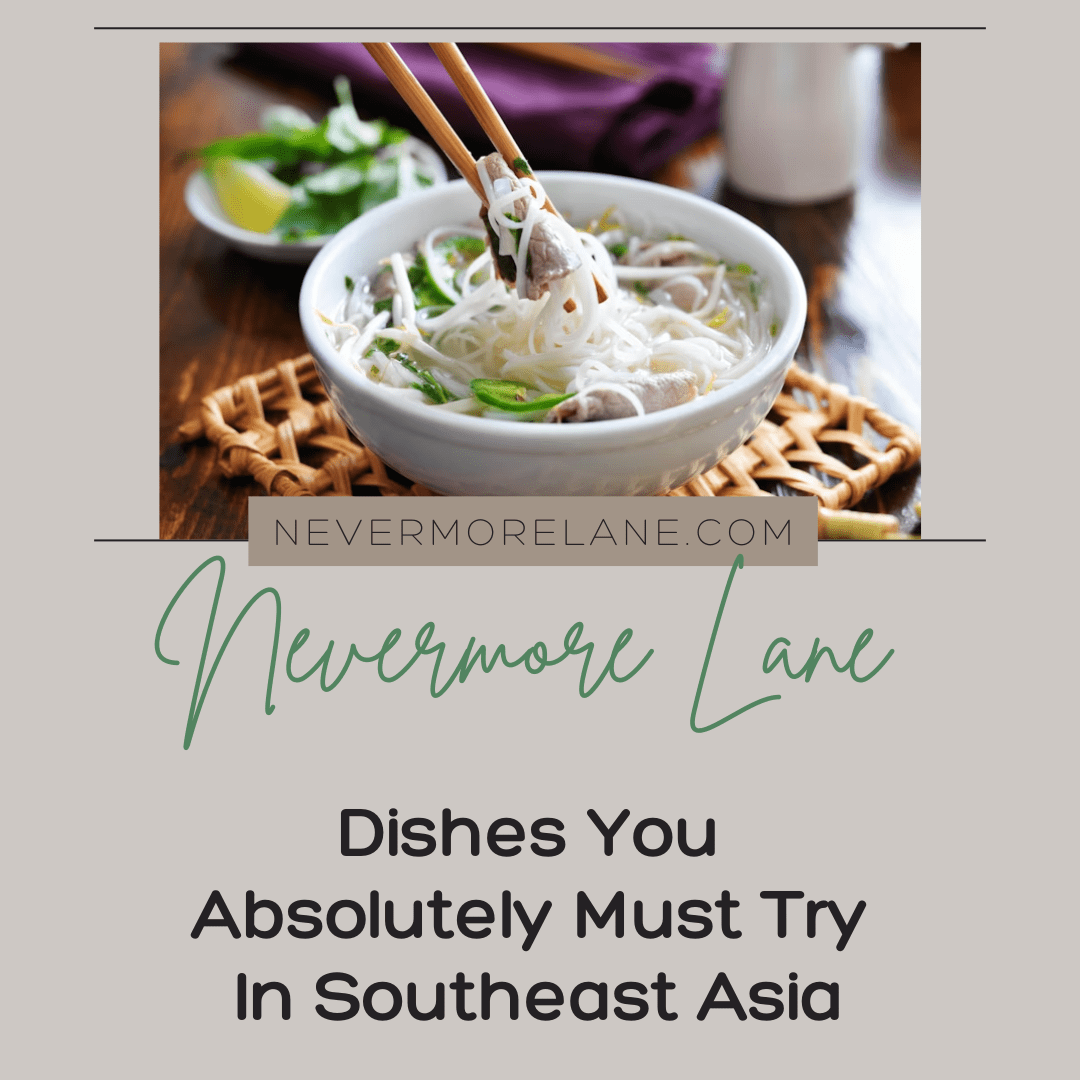
Pho is Vietnam’s national dish. It essentially comprises a fragrant noodle soup made of rice noodles, a chicken broth topped with herbs, bean sprouts, chili, lime, and thinly sliced meat. Sometimes it’s also served with green vegetables in their own section of the bowl. It’s warm, delicate, and one of the most incredible tastes of Southeast Asia.
Pad thai
If you’re heading to one of the luxury restaurants in Samui, then make sure you try pad Thai. It consists of stir-fried rice noodles with shrimp, egg, bean sprouts, peanuts, tamarind sauce, and lime. The combination of flavors is similar to what you might find from Thai street food vendors, but you’re best going to a proper restaurant with kitchen staff who can prepare it traditionally.
Tom Yum Goong
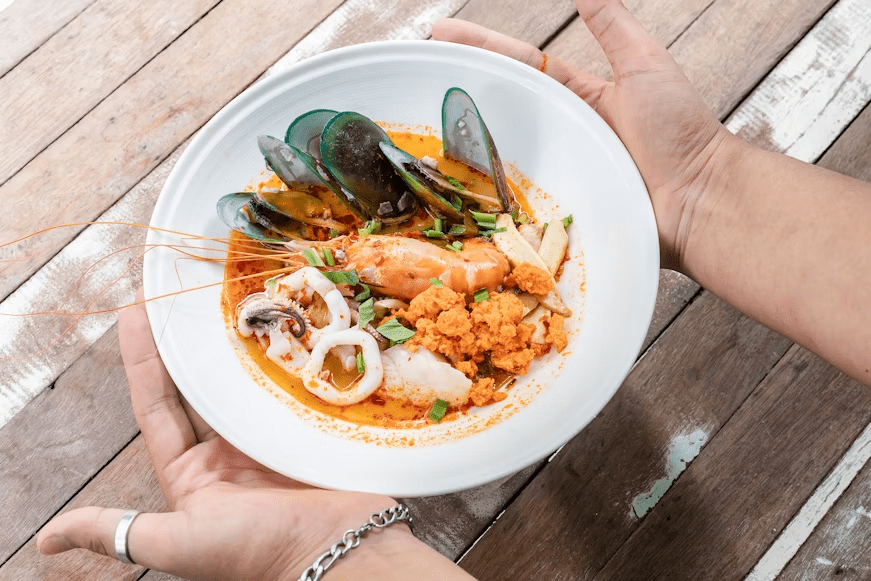
Tom Yum Goong is another dish you might want to try in Thailand. It’s light and refreshing and exploding with flavor. The main components are:
- Hot and sour sauce
- Shrimp
- Lemongrass
- Kefir
- Galangal
- Chilli
- Lime
- Fresh herbs
There’s no heaviness, so after you’ve eaten this dish, you often feel ready for renewed activity.
Nasi Lemak
Nasi lemak is Malaysia’s national dish. It is a combination of fried anchovies, sambal (a type of spicy chilli paste), peanuts, cucumber, and a boiled egg served with rice. Often you’ll find it wrapped in a banana leaf for an authentic touch. This is the best option because all of the flavours combine compared to the deconstructed constructed versions you sometimes find in restaurants.
Laksa
Laksa is another one of Malaysia’s famous dishes. It’s essentially a spicy coconut noodle soup featuring rice noodles, shrimp, cockles, tofu puffs, and rice broth. It’s served in an attractive bowl with drizzled spicy oil and lime wedges. You can find this dish in most restaurants, so don’t be afraid to look around.
Rendang
If you’re looking for something richer and denser, then you might want to try rendang. This Indonesian dish involves slow cooking beef until the rich spice paste and coconut milk have mostly evaporated, leaving tender meat in an intense glaze. The flavors of this dish are incredible. Everything has been boiled down to perfection. And as you would expect from Southeast Asia, the primary notes are chili, lemongrass, and galangal.
Adobo
Finally, if you are planning a visit to the Philippines, you need to try out adobo. This is a meat dish, usually made of chicken or pork that’s braised in a garlic soy sauce, bay leaf and vinegar sauce and served with jasmine rice. You can find this dish at various restaurants in the major cities or it can be made locally as part of street food or even by people you meet. It’s tangy and savory and comforting and perfect after a long flight.
The Dishes That Define Southeast Asian Food Culture
Any honest accounting of must-try dishes in Southeast Asia has to begin with an acknowledgment that the category is almost impossibly large, and that every choice made here reflects a particular set of priorities rather than an objective ranking. With that said, certain dishes have earned their reputation not through tourism exposure but through the depth of craft and cultural significance they represent within their home traditions.
Vietnam’s pho is the dish most travelers encounter first and underestimate most completely until they taste a version made with broth that has been simmering for the better part of a day, perfumed with charred ginger and star anise and finished with herbs so fresh they are still fragrant from the morning market. Thailand’s som tum, a green papaya salad pounded to order in a clay mortar, demonstrates how texture, temperature, and the full spectrum of flavor can be achieved with ingredients that are raw, uncooked, and assembled in minutes by someone who has been making the same dish since childhood. Malaysia’s nasi lemak, rice cooked in coconut milk and pandan leaf and served with sambal, crispy anchovies, roasted peanuts, and a hard-boiled egg, is a breakfast that redefines what a morning meal is capable of being.
Indonesia’s beef rendang, a slow-cooked dry curry that concentrates weeks worth of flavor into every fiber of the meat, and the Philippines’ sinigang, a sour tamarind broth filled with vegetables and protein that is simultaneously humble and deeply satisfying, round out a region where every country has dishes of equivalent complexity and reward waiting for anyone willing to look past the familiar and eat the way the locals actually do. The most memorable food experiences in Southeast Asia are rarely planned. They are stumbled into, eaten standing up, and thought about for years afterward.