Why Simplicity Is Winning in Fine Jewelry
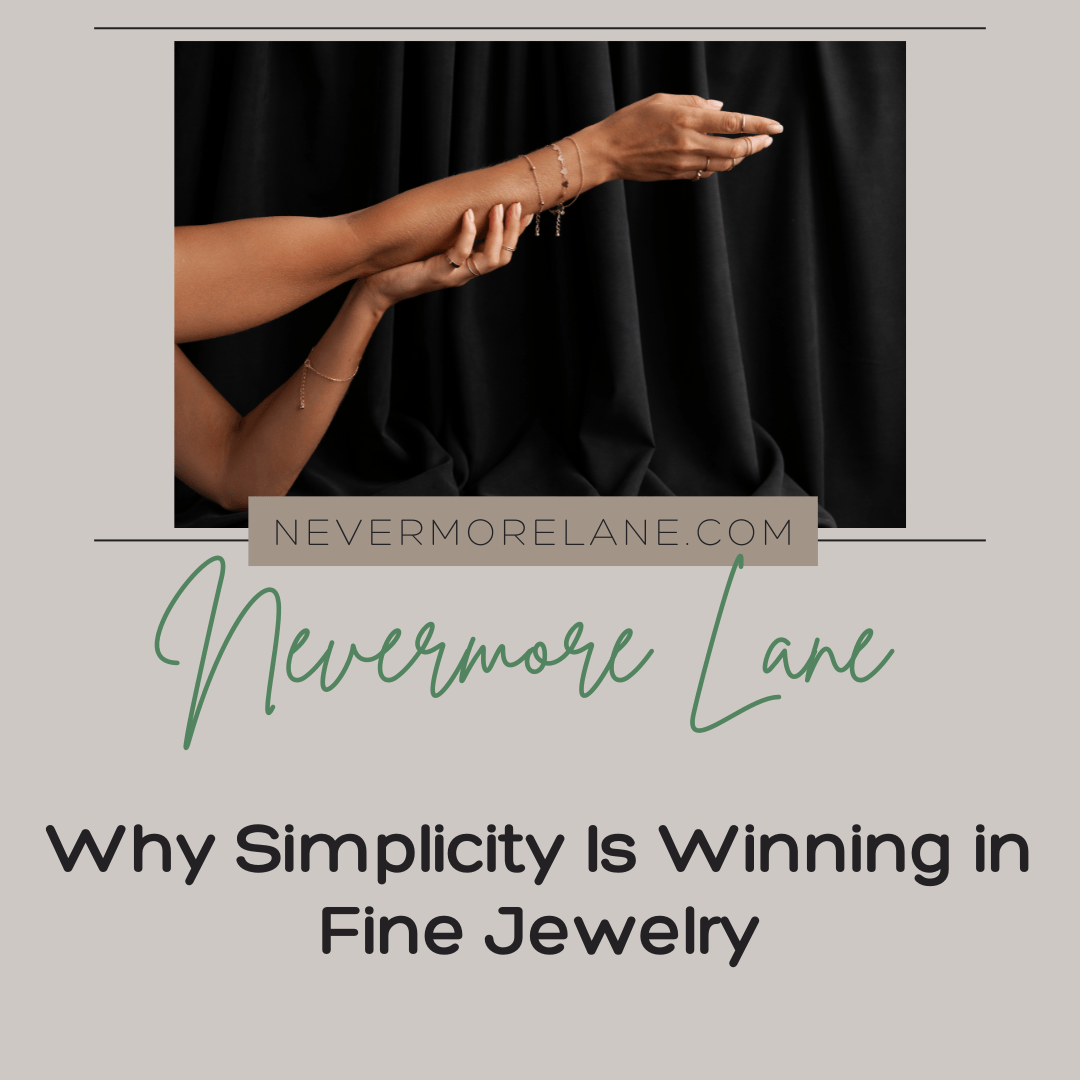
There was a time when fine jewelry competed for attention through spectacle alone. Larger stones, heavier settings, louder statements. Yet something rather interesting has happened over the past few years: restraint has become the new expression of confidence. Buyers are no longer asking only, “How impressive is this piece?” but increasingly, “Will I still love this ten years from now?”
When Design Speaks for Itself
Simplicity, it seems, is not austerity. It is clarity.
Minimalist engagement rings, for instance, are quietly redefining what modern luxury looks like. Instead of ornate halos and elaborate clusters, many couples are choosing clean solitaires or delicate bands that allow the diamond itself to speak. Why? Because a well-cut stone set with intention does not require theatrical framing. It carries its own authority. And when one considers daily wear, comfort, and longevity, the appeal of a refined, uncluttered design becomes rather obvious.
The same shift is visible in diamond bracelets and diamond necklaces. Buyers are asking practical yet meaningful questions: Can this be worn every day? Will it complement rather than dominate? Does it feel like an heirloom in the making? These are not trivial considerations. They reflect a generation of consumers who value permanence over novelty and craftsmanship over excess.
Jewelry That Lives With You
There is also, quite frankly, a lifestyle dimension to all of this. Modern wardrobes are more versatile. A single diamond bracelet must transition from a morning meeting to an evening dinner without appearing misplaced. A minimalist diamond necklace must layer effortlessly or stand alone with quiet confidence. jewelry is expected to integrate into one’s life, not interrupt it. This is where simplicity proves its strength. It allows for repetition, and repetition is what transforms an object into a personal signature.
One might ask: Does simpler design mean less luxury? On the contrary. True luxury has always resided in proportion, material, and execution. A perfectly balanced engagement ring with a high-quality diamond and thoughtful setting often requires more precision than an ornate alternative. Clean lines leave no room for error. Every detail is visible. Every choice is deliberate.
What Today’s Buyers Actually Want
Brands that understand this philosophy are resonating strongly with today’s buyers. Consider the growing interest in collections that prioritise timeless diamond jewelry—pieces that feel appropriate now and decades hence. The emphasis is on durability, ethical sourcing, and understated elegance. Buyers want to know: Where was this made? Will it endure daily wear? Can it become part of my story rather than a passing trend? These are the questions shaping purchasing decisions in the fine jewelry space.
There is, too, an emotional component. Simplicity often feels more intimate. A minimal engagement ring does not compete with the wearer; it accompanies them. A subtle diamond bracelet becomes part of one’s daily rhythm, quietly marking milestones and memories. jewelry in this context is not merely decorative. It is relational. It holds meaning precisely because it is worn often and lived in fully.
This broader movement towards intentional purchasing is evident across luxury sectors, but it feels particularly pronounced in jewelry. Perhaps because jewelry is so closely tied to identity and memory. When one chooses a piece intended to last decades—or even generations—flashiness loses its appeal. Integrity takes precedence.
The Questions Worth Asking
So what should a buyer look for when exploring minimalist fine jewelry? The questions are refreshingly straightforward. Is the diamond of good quality? Is the setting secure and comfortable? Will this design feel relevant across changing fashions? Does it align with my personal style rather than a passing trend? Answering these questions tends to guide one towards pieces that endure.
Diamond necklaces with clean, versatile designs are a prime example. A single pendant, thoughtfully proportioned, can be worn alone for understated elegance or layered for a more contemporary look. Likewise, a refined diamond bracelet can become a daily companion rather than an occasional accessory. The beauty of simplicity lies in its adaptability. It allows the wearer, rather than the object, to remain the focal point.
A New Philosophy of Ownership
For those exploring options, it is worth considering collections that emphasise timeless craftsmanship and wearable design. A well-curated selection of engagement rings, diamond bracelets, and diamond necklaces can reveal how restraint enhances rather than diminishes impact. One might browse a reputable jeweller’s official website to observe how modern simplicity is interpreted across different pieces and price points.
Ultimately, the rise of simplicity in fine jewelry reflects a cultural shift. Buyers are not abandoning luxury; they are redefining it. They seek pieces that integrate seamlessly into daily life while retaining a sense of occasion. They value materials that endure and designs that remain relevant. And they are increasingly drawn to jewelry that feels personal rather than performative.
In this light, simplicity is not merely a design trend. It is a philosophy of ownership. To choose a minimalist engagement ring or a clean diamond bracelet is to prioritise longevity, meaning, and versatility. It is to invest in something that will be worn, lived in, and perhaps one day passed on.
And perhaps that is the most compelling question of all: When the moment has passed and the years have accumulated, will this piece still feel like part of me?
If the answer is yes, then simplicity has already won.