Turning Your Outdoor Area into a Go-To Spot for Everyday Downtime
Most outdoor spaces don’t get used for one simple reason. They don’t feel worth stepping into on a random Tuesday. Everything looks fine, maybe even polished, though something about it feels slightly inconvenient. You step outside, and within seconds your brain starts scanning for friction. Nowhere to sit comfortably, nowhere to place your drink, the ground feels off, and the lighting feels harsh later in the day. This tiny hesitation sends you right back inside, and that’s how spaces lose their purpose.
A real go-to spot doesn’t wait for plans. It pulls you in without asking. You step out for a quick breather and suddenly ten minutes pass without you noticing. This kind of space feels natural, like it belongs to your daily routine. No setup, no thinking, no adjusting anything. It just works.
Building a Soft, Inviting Ground
Let’s get straight to it. If the ground feels wrong, the space never fully works. People don’t sit on rough patches. They don’t relax on uneven surfaces. They don’t walk around barefoot if something feels scratchy or inconsistent. You can have great furniture sitting there, though the moment your feet hit that ground, the experience is already off. Now flip that scenario. You step out, and the surface feels smooth, even, soft enough to sit down without thinking twice.
Getting that right takes a bit of intention. Throwing down random grass patches won’t cut it. A smarter move leans into options like sod services with water conservation, sustainability, and efficiency prioritized so the surface actually holds up without turning into a constant task. Healthy sod establishes quickly, helps reduce soil erosion, and supports a more uniform look across the entire space. A yard that stays consistent without needing constant attention feels reliable. And this reliability is what builds habit. You stop questioning the space. You just use it.
Designing a “No-Reason-Needed” Sitting Zone
A lot of outdoor seating looks like it belongs in a catalog, not in real life. Everything lined up, perfectly spaced, slightly too clean. It looks nice, though it doesn’t invite you in. You don’t want to adjust anything, so you just don’t sit. A proper downtime zone should feel like it doesn’t care how you use it. Sit sideways, stretch out, stay for two minutes, stay for an hour. No rules.
Here’s a quick reality check. Walk outside with nothing in your hands. No phone, no book, no plan. Does any spot immediately pull you to sit down? If not, something’s missing. Maybe the angle feels off. Maybe the seating feels too stiff. Maybe it’s facing nothing interesting. A good setup catches you without effort. Slight angle toward greenery or open sky, a seat that feels easy to drop into, spacing that doesn’t force interaction.
Building a Low-Effort Snack or Drink Corner
Small annoyance, big impact. You finally get comfortable outside, then realize there’s nowhere to put your drink. Or you want something small to eat and suddenly you’re walking back inside, breaking the whole moment. That back-and-forth kills the flow every single time. It shortens how long you stay without you even realizing it.
Fixing that doesn’t require a full setup. Just a simple, intentional surface. A side table, a ledge, even a tucked-away spot that holds essentials. Now picture stepping outside with a drink and not thinking about it again. You set it down, lean back, and stay. That’s the shift. Add a few go-to items nearby, and the space starts working with you instead of against you.
Using Layered Greenery Instead of Flat Landscaping
Flat landscaping is easy to ignore. Everything sits at one level, your eyes move across it quickly, and nothing really holds your attention. It feels neat, though it doesn’t feel interesting. Layered greenery changes the entire vibe: different heights, different textures, a bit of unpredictability. Now your eyes slow down. You actually take in the space instead of scanning past it.
There’s a subtle effect here that most people don’t notice right away. Layering creates a sense of comfort without closing things off. A slightly taller plant behind a chair gives a quiet sense of backing. Lower greenery near your feet softens the space without crowding it. Add something a little less structured at the edges and the space starts feeling lived in.
Adding Subtle Outdoor Lighting
Lighting can easily ruin a good setup if it feels too sharp or staged. Bright white lights blasting across the space instantly kill that relaxed vibe. Nobody wants to sit under something that feels like a parking lot. Good outdoor lighting should feel like it’s just there. Soft, warm, almost unnoticeable at first. It should let the space exist after sunset without turning it into a spotlight situation. Think of it like background mood rather than a feature.
Now picture the difference. One setup has a single harsh light overhead. The other has low, warm lighting tucked along edges, maybe a soft glow near seating, maybe a gentle highlight around plants. Your body reacts differently. You lean back instead of squinting. You stay longer because the space feels calm instead of exposed.
Using Subtle Color Choices That Don’t Try Too Hard
Color has a weird way of either calming a space down or making it feel restless. Loud, overly bold combinations might look exciting at first glance, though they don’t hold up for everyday use. You sit there for a while and something feels off, like the space is trying too hard to impress you. A downtime spot should do the opposite. It should settle you without you even noticing it happening.
Neutral tones, soft greens, earthy shades, anything that doesn’t shout for attention tends to work better here. Picture sitting outside with colors that just sit quietly in the background. Nothing pulling your focus, nothing distracting your eyes. You relax faster because your surroundings aren’t demanding energy from you.
Adding One Unexpected Comfort Element
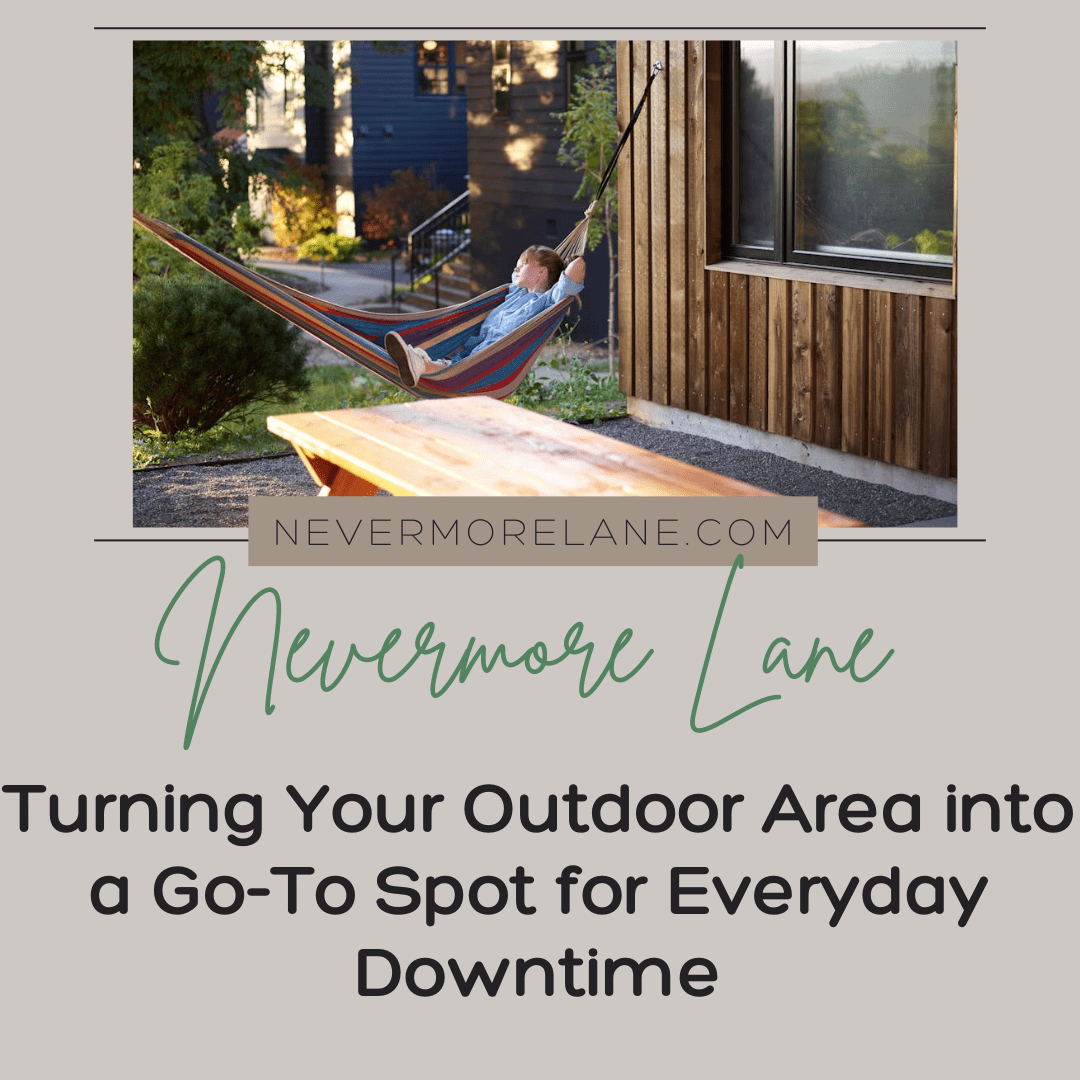
Every space needs that one thing that breaks the pattern. Something that shifts how you use the area without turning it into a full redesign. A hammock, a swing chair, or even oversized floor cushions. Something that makes you pause for a second and think, “yeah, I could just stay here for a bit.” That one piece changes behavior more than a full furniture set ever could.
Imagine walking into the space and seeing a hammock slightly off to the side. You weren’t planning to lie down, though now the option is right there. That’s the kind of pull you want. It introduces a different way to relax without forcing it. Suddenly, the space isn’t just for sitting upright. It’s for stretching out, slowing down, letting time pass without constantly checking it.
A go-to outdoor spot can be created by removing friction, adding comfort in the right places, and letting the space feel natural to use at any moment. Once everything clicks, stepping outside stops being a decision. It just happens.
Photo: Source