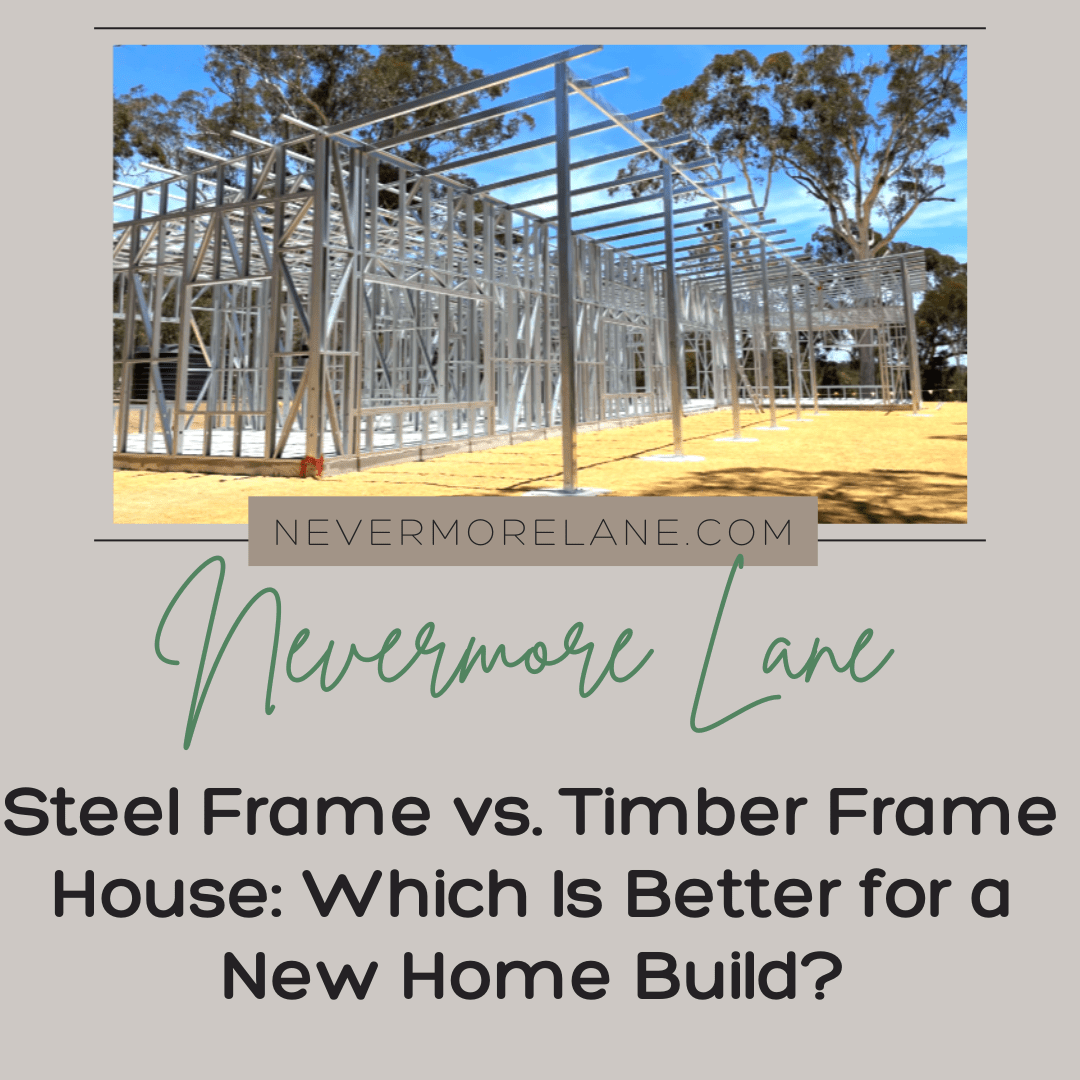
Steel Frame vs. Timber Frame House: Which Is Better for a New Home Build?
Choosing how to frame your home is one of those decisions that sounds technical on the surface but actually touches everything — how long your build takes, what it costs over time, how the structure holds up in 20 years, and whether you’re lying awake worrying about termites. Most people don’t think about framing until they’re already deep into the planning process, and by then the options can feel overwhelming.
The steel vs. timber debate has been running for decades in residential construction, and the honest answer is that neither material is universally better. What matters is which one suits your site, your climate, your budget, and your long-term plans. Here’s how the two actually compare when you break it down practically.
1. Structural Strength and Long-Term Stability
Steel doesn’t warp. It doesn’t shrink, twist, or move with moisture the way timber can — and in climates with significant temperature swings or humidity, that distinction matters more than most builders will tell you upfront. Timber, particularly in its earlier years, is susceptible to movement as it acclimates to its environment. That can affect door frames, window alignments, and internal finishes in ways that show up well after the build is complete.
According to the team at Steel Frames WA, one of the most consistent pieces of feedback they receive from builders is that steel framing delivers a level of dimensional accuracy that simply isn’t achievable with timber at scale. They’ve been manufacturing and supplying steel frames across Western Australia for decades, and precision during installation is one of the clearest practical advantages their clients report.
That said, timber has its own structural merits. It performs well under compression, it’s been used in residential construction for centuries, and in many standard builds it’s entirely adequate. The gap between the two materials shows up most clearly in larger spans, irregular site conditions, or builds where long-term dimensional stability is a priority.
2. Termite and Pest Resistance
This one isn’t close. Steel is completely immune to termites, borers, and the various other pests that cost Australian homeowners billions of dollars in structural damage every year. Timber — even treated timber — requires ongoing vigilance. Treatment wears off. Termite barriers need inspection and maintenance. And in high-risk zones, the cost of protection adds up over the life of the building.
According to the Australian Institute of Building Surveyors, termite damage is among the leading causes of structural deterioration in residential properties across the country, particularly in warmer and more humid regions. For anyone building in Queensland, Western Australia, or the Northern Territory, this factor alone shifts the calculus considerably.
Steel frames eliminate that ongoing liability entirely. There’s nothing for termites to eat. No treatment schedule to maintain. No inspections driven by the fear that something has gotten in undetected.
3. Fire Performance
Both materials have a role to play here, but they behave differently under extreme heat. Steel is non-combustible — it won’t catch fire or contribute to flame spread the way timber can. That’s a meaningful advantage in bushfire-prone areas, where BAL (Bushfire Attack Level) ratings directly influence what materials you’re permitted or required to use.
Timber, particularly engineered timber products, has improved significantly in terms of fire-resistant treatments and construction methods. But non-combustible steel framing starts from a structurally safer baseline in high-risk fire zones, and insurers in some regions reflect that in their assessments.
For anyone building in a BAL-rated zone, it’s worth having a direct conversation with your builder and certifier about how framing material affects your compliance obligations and insurance outcomes.
4. Speed and Efficiency of Construction
Steel frames are prefabricated off-site to precise specifications, which changes the dynamic on-site significantly. When frames arrive, they go up fast. There’s less cutting, less adjusting, less waste, and less dependence on conditions that can slow timber builds — wet weather, material warping during storage, on-site labour variability.
The practical impact on a residential build:
- Reduced on-site labour hours during the frame stage
- Less material waste, which affects both cost and site management
- Faster lock-up, which can affect financing timelines and weather exposure
- Fewer callbacks for frame-related issues after handover
Timber builds are well understood by a large pool of tradespeople, which has its own advantages in markets where steel frame experience is less common. But in regions where both skills are available equally, the prefabrication model that steel framing uses tends to run more predictably.
5. Cost — Upfront vs. Over Time
Steel framing typically costs more at the initial build stage than a comparable timber frame. That’s a real factor and worth being honest about. The gap varies depending on design complexity, supplier, and current material prices, but it’s there.
Where the comparison shifts is when you account for the full lifecycle of the building. Lower maintenance requirements, no pest treatment costs, reduced risk of movement-related defects, and potential insurance benefits all factor into the long-term financial picture. For owner-occupiers planning to live in the home for 15 years or more, the upfront premium often looks different when spread across that timeframe.
For investment properties or builds in high-risk zones for pests or fire, the calculus shifts even further toward steel.
Which One Is Actually Right for You
There’s no single right answer — but there are better and worse fits depending on your situation. If you’re building in a termite-prone area, a bushfire zone, or a site with complex spans and irregular geometry, steel framing carries real practical advantages that go beyond marketing. If you’re doing a straightforward build in a low-risk area with a tight upfront budget and easy access to timber frame tradespeople, timber remains a proven and workable choice.
The decision comes down to understanding your site, your risk profile, and your time horizon — not just the quote in front of you.