Roof Maintenance Tips That Save You Money in the Long Run

Roofs protect everything beneath them while receiving minimal attention until leaks force emergency calls to contractors quoting thousands for repairs that could have been prevented. Most homeowners never look at their roofs beyond occasional glances from the ground, missing the gradual deterioration that turns minor issues into major expenses. Shingles crack and curl unnoticed while flashing separates around chimneys and vents creating water entry points. Gutters clog with debris causing water to back up under roofing materials, and moss growth holds moisture against surfaces designed to shed it quickly.
The cost difference between preventative roof maintenance and emergency repairs ranges from hundreds to tens of thousands of dollars depending on how long problems progress before discovery. A $200 gutter cleaning prevents $5,000 in water damage repairs. Replacing $50 worth of damaged shingles today avoids $15,000 roof replacement next year. Regular inspections catch problems while they’re still small, manageable, and affordable rather than waiting for interior ceiling stains announcing that damage already penetrated multiple layers of protection.
Understanding which roof maintenance tasks deserve priority and how often they require attention transforms roofing from a source of anxiety and surprise expenses into a manageable system with predictable costs. The investment in consistent upkeep pays returns through extended roof lifespan, prevented water damage, maintained home value, and the peace of mind that comes from knowing the primary weather barrier protecting the home receives the attention it requires.
Biannual Visual Inspections: The Foundation of Prevention
The cornerstone of effective roof maintenance is a thorough visual inspection conducted at least twice a year, ideally in the spring and fall. This practice allows for the identification of potential problems before they require extensive intervention. Following severe weather, such as the heavy storms common in many regions, a prompt check is also advisable. Should an inspection reveal damage beyond simple wear, seeking professional assessment quickly is crucial. For instance, if you’re dealing with hail or wind damage in Wisconsin or similar locations, you might need to contact a service specializing in roof repair Madison WI, or your area, to ensure a proper evaluation.
Inspections should be performed from the ground using binoculars for a general overview, and if safe and accessible, from a ladder at the eaves. Key elements to examine include shingles for curling, cracking, or missing pieces; flashings around chimneys, vents, and skylights for signs of separation or corrosion; and the condition of gutters and downspouts. Additionally, attics should be checked for signs of water intrusion, such as stains, mold, or daylight showing through the roof deck.
Trimming Overhanging Tree Limbs: Proactive Protection
Trees can enhance property aesthetics but pose a direct threat to roofing materials. Overhanging branches can scrape and gouge shingles during windy conditions, wearing away the protective granule layer. They can also deposit leaves and organic matter on the roof, which retains moisture and can lead to rot or algae growth. Perhaps most dangerously, falling limbs during storms can cause immediate and severe damage, potentially puncturing the roof deck.
Regularly trimming all tree limbs, so they’re at least ten feet away from the roof surface, eliminates these risks. This task can enhance roof health and improve safety by reducing the pathway for squirrels, raccoons, and other rodents to access the attic, where they can cause significant damage to the wiring and insulation.
Gutter and Downspout Maintenance: Ensuring Proper Drainage
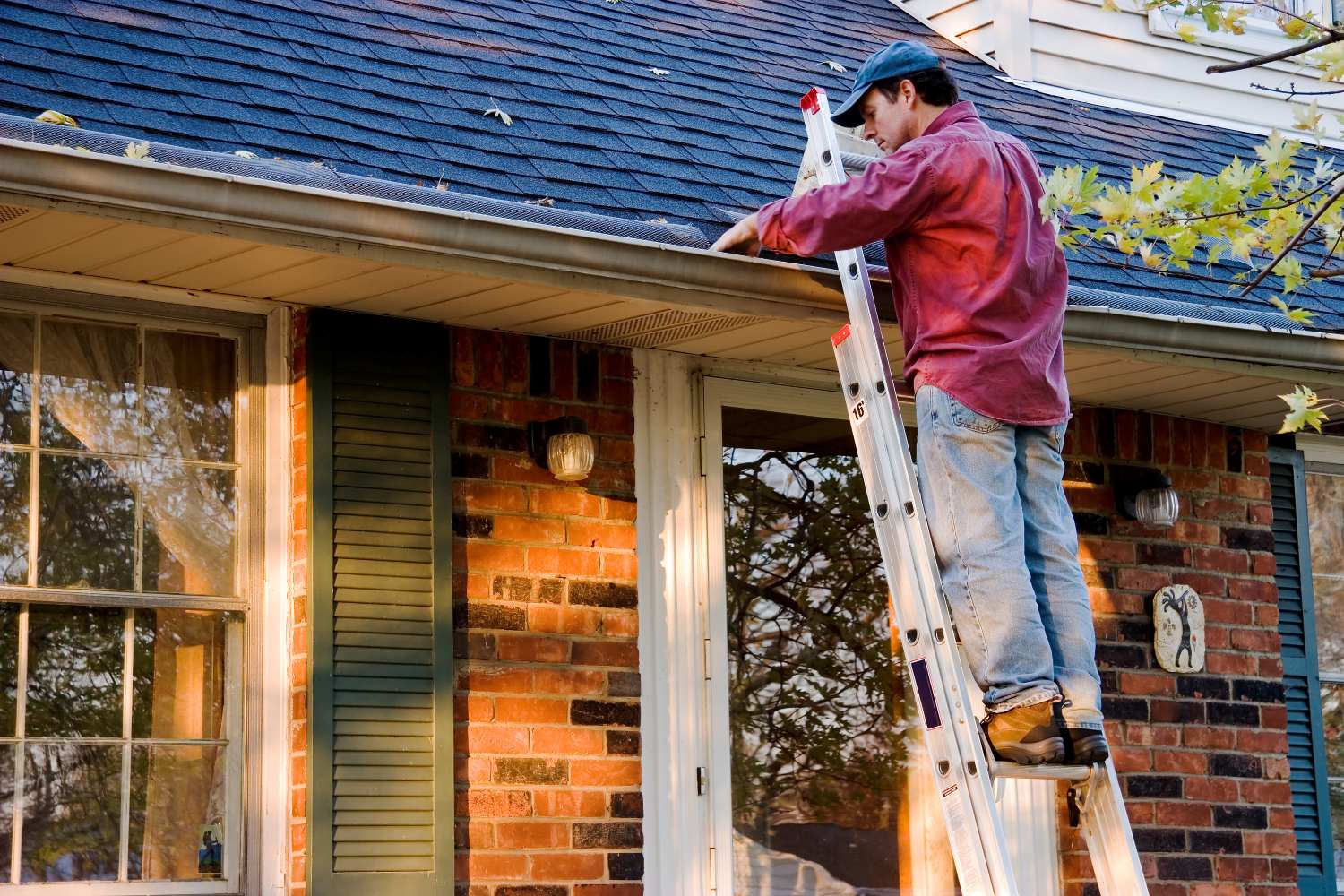
Clogged or damaged gutters are a leading cause of roof failure and associated water damage. When gutters are blocked with leaves, twigs, and debris, water cannot flow freely. This can lead to pooling on the roof surface, which accelerates wear and can cause water to back up under shingles, damaging the underlying deck and interior ceilings.
Furthermore, overflowing gutters deposit water directly against your home’s foundation, creating another set of expensive structural problems. Cleaning gutters at least twice a year and more frequently if surrounded by trees is non-negotiable. Ensure downspouts extend at least five feet away from the foundation to direct water flow away from your home. Installing gutter guards can also reduce debris accumulation and minimize maintenance frequency, although they still require periodic checks to ensure they are functioning correctly.
Addressing Moss, Algae, and Debris Promptly
The accumulation of organic matter on your roof is more than an aesthetic issue. Moss, algae, and piles of leaves retain moisture against the roofing material. This constant damp environment can degrade shingles, promote wood rot in the decking, and compromise the roof’s structural integrity. Moss, with its root-like structures, can lift shingle edges, break the seal, and allow wind-driven rain to penetrate.
Gentle removal using a leaf blower or a soft-bristle broom is recommended for debris. For algae or moss, a solution of 50% water and 50% oxygenated bleach applied with a low-pressure sprayer can be effective, but harsh pressure washing should always be avoided as it strips protective granules and drastically shortens shingle life. Ensuring proper attic ventilation can also create a dry roof surface that’s less conducive to organic growth.
Ensuring Adequate Attic Ventilation and Insulation
Your roof system’s longevity is profoundly affected by the conditions in the attic. Inadequate ventilation allows heat and moisture to build up during the summer months, causing shingles to overheat and age prematurely. In winter, warm, moist air from your home’s interior can rise into a cold attic, leading to condensation that rots wood, encourages mold, and contributes to ice dam formation.
Proper ventilation, with intake vents at the soffits and exhaust vents at the ridge, can create a continuous flow of air that regulates temperature and moisture levels. Coupled with sufficient insulation on the attic floor, which minimizes heat transfer from the living space, this system can help protect the roof structure from the inside out.
Professional Inspections: Investing in Expert Evaluation
While homeowner inspections are vital, they’re no substitute for a periodic professional assessment. Certified roofing contractors possess the experience to identify subtle signs of wear, potential flashing failures, or ventilation issues that an untrained eye may miss. They can also spot issues in their earliest stages when roof repairs are most affordable.
Scheduling a professional inspection every two to three years, or as recommended by the roofer, can provide a comprehensive evaluation and peace of mind. The minor cost of such an inspection is insignificant compared to the cost of undetected damage progressing for years. A professional can also provide documentation of your roof condition, which is invaluable for insurance purposes and future home sales.
Key Takeaway
Your roof is a dynamic system requiring ongoing care. The modest investments of time and resources into some maintenance routines pale in comparison to the staggering cost of emergency repairs or a full replacement. By keeping these tips in mind, you can safeguard your home’s value and your wallet from avoidable and severe expenses for years to come.
Building Long-Term Protection Through Consistent Care
Making Roof Maintenance a Sustainable Practice
Roof maintenance becomes sustainable when integrated into regular home care routines rather than treated as occasional emergencies. Seasonal inspections catch damage from recent storms before it worsens. Annual professional assessments identify problems homeowners lack expertise to recognize. Gutter cleaning schedules prevent the water backup causing most preventable roof damage. Small consistent efforts accumulate into major cost savings and dramatically extended roof lifespans.
Long-term roof protection requires documentation of maintenance activities, repairs completed, and inspection findings creating records that support insurance claims, prove diligent homeownership, and inform future maintenance decisions. Photographs track condition changes over time. Receipts demonstrate investment in proper care. Professional inspection reports provide expert opinions about remaining lifespan and recommended interventions before problems become critical.
The roof represents one of the most expensive home components to replace, making maintenance among the highest-return investments homeowners can make. Every dollar spent on preventative care potentially saves ten or more in avoided emergency repairs and premature replacement. Treat roofs as the critical protective systems they are rather than invisible components requiring attention only when failure forces action. Consistent maintenance preserves the barrier between comfortable living spaces and whatever weather brings, protecting both property and the financial security that catastrophic roof failure would threaten.