Creating a Sanctuary at Home: Interiors That Feel Safe, Grounded, and Timeless
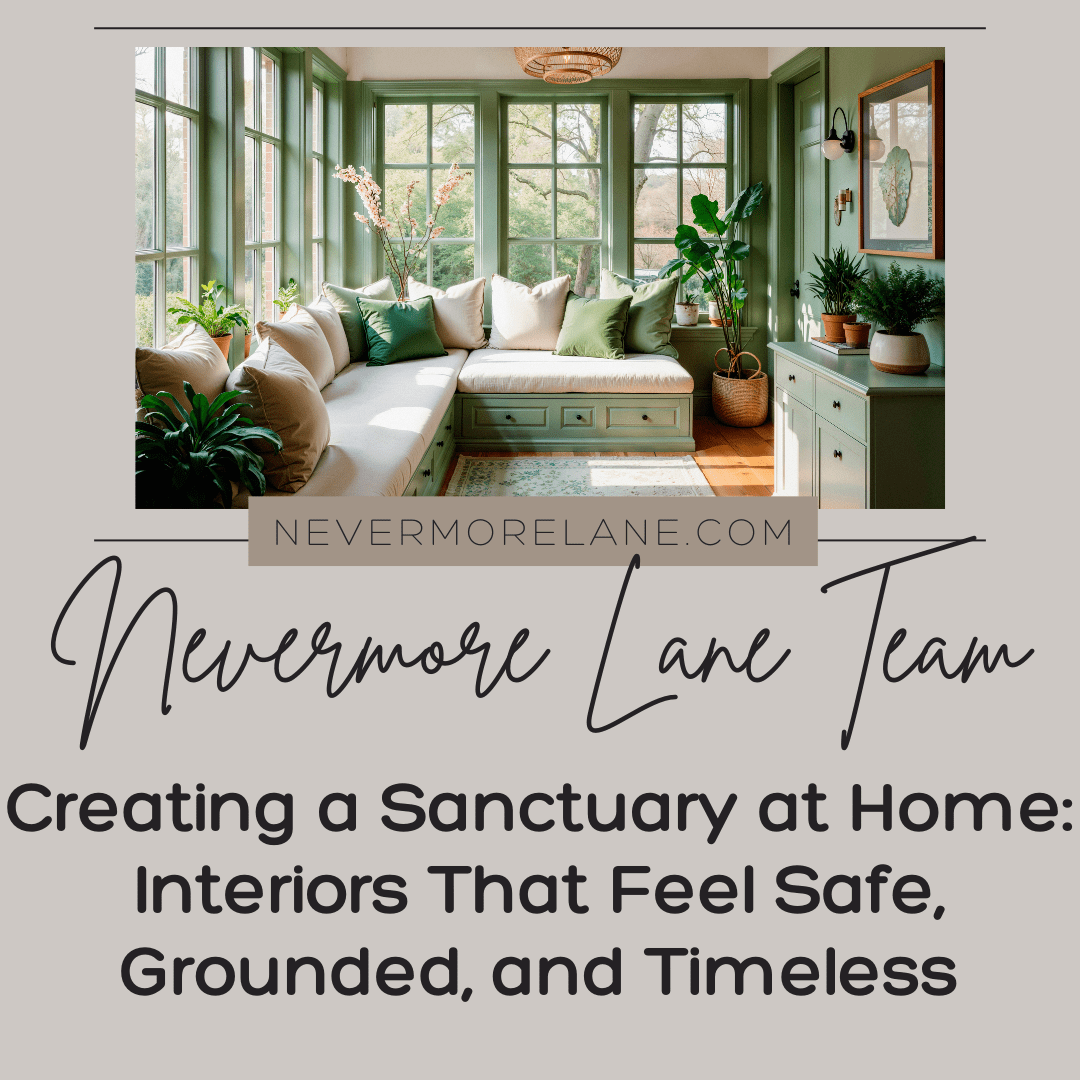
Your heart rate drops the moment you walk through the door. Not because you’re tired, though that’s part of it. Something about the space itself, the way light hits that wall, how sound absorbs into surfaces, tells your nervous system to stand down. Researchers at Princeton found that cluttered environments increase cortisol production by 22%, while organized spaces can lower stress markers within minutes.
Building a home that functions as a sanctuary isn’t about following trends. It’s about understanding how physical elements interact with your psychological need for safety and permanence. The homes that feel like refuges share certain qualities, though they look nothing alike. What matters are deliberate choices behind every surface, threshold, and light source.
Most people approach interior design backwards. They think about what looks good first, function second. But your body reads spaces before your eyes do. Walk into a room with eight-foot ceilings versus twelve-foot ceilings, and your breathing pattern changes. These aren’t preferences; they’re physiological responses.
The homes that truly shelter us are built on principles that predate contemporary design theory. They acknowledge that humans need weight, texture, natural light, and boundaries that feel solid. When A&E Modern Construction works on residential projects, the first question isn’t about style but how people want to feel when they’re home. That shift changes everything.
The Weight of Materials: Why Substance Matters More Than Surface
Touch any wall in your home. Does it feel hollow? Most modern construction uses drywall over studs, creating surfaces that sound like drums when you knock. Historic homes — built with plaster, solid wood paneling, stone — feel different when you’re inside them. Mass matters. Thermal mass, meaning heavy materials absorb and release heat slowly, creating temperature stability your body registers as comfort.
A 2019 study from the University of Oregon tracked occupants in buildings with different wall compositions. People in rooms with concrete, brick, or thick plaster walls reported feeling calmer and sleeping better than those in standard stud-and-drywall spaces, even when temperatures were identical. The difference was temperature variation. Lightweight walls fluctuate with external conditions, creating microstress. Heavy walls buffer those changes. Your nervous system notices.
This doesn’t mean you need to rebuild with stone. But material choices have consequences. Real wood floor versus laminate. Plaster versus paint. Natural fiber rugs versus synthetic. Each decision adds or subtracts from the physical substance of your space. Substance translates to presence — that quality of a room feeling occupied even when empty.
Craftspeople have known this for centuries. Japanese carpenters speak of wood as a living material that continues to move and breathe after it’s cut. Italian plasterers mix materials by hand because machines can’t replicate the variations that make surfaces feel warm. You walk into a room finished by someone who understands materials and you feel the difference.
Thresholds That Mean Something: The Forgotten Architecture of Doors
Doors are just holes in walls until you start paying attention. Then they become one of the most psychologically potent elements in your home. Every threshold signals a transition — from public to private, from active to restful. Weak thresholds create spaces that bleed into each other. Strong thresholds give you permission to shift gears.
The average American home built after 2000 uses hollow-core doors. They weigh about 18 pounds and cost $30. A solid-core door weighs 60-90 pounds and costs $150-300. That difference translates to how completely a space can be claimed. Close a hollow door and sound travels through easily; close a solid door and you create separation. Your brain processes this faster than conscious thought.
Sound transmission, measured in STC ratings, tells the story. Hollow-core doors have an STC of 20-25. Solid-core doors rate 25-35. Add weather stripping and you can push that to 40-45 — the point where a closed door creates genuine acoustic privacy. For bedrooms or home offices, this matters. Sleep studies show even low-level noise disruption reduces sleep quality by 15-30%.
Beyond acoustics, doors create ritual. Closing a substantial door — feeling its weight, hearing the latch engage — signals to your brain that you’re entering or leaving a defined space. Close your bedroom door at night and you’re completing a psychological transition. These small rituals become the scaffolding of sustainable routines.
Light as Language: Reading What Your Walls Are Saying
Natural light doesn’t just illuminate; it calibrates your internal clock. Your suprachiasmatic nucleus regulates circadian rhythm based on light input. Morning light signals your body to suppress melatonin and increase cortisol. Evening light tells your system to wind down. Artificial lighting that ignores these patterns fights your biology.
Restorative homes use light in layers. Not a single overhead fixture, but multiple sources at different heights. A floor lamp here. A table lamp there. This approach reduces eye strain by about 40% compared to single-source overhead lighting.
Color temperature separates welcoming lighting from institutional lighting. Most LED bulbs default to 5000K — cool, bluish light that feels harsh in homes. Dropping to 2700-3000K creates the warm glow associated with incandescent bulbs. Your brain processes warm light as safe.
Dimmer switches represent one of the highest return-on-investment modifications. For about $25 per switch, you adjust light levels throughout the day. Research shows this flexibility improves mood metrics by 18% and reduces evening restlessness by 23%.
Patterns That Ground: Repetition Without Monotony
Your eyes seek order but your brain craves variation. A brick wall, laid in a running bond, has rhythm — each course offset by half a brick. A wall of identical square tiles has only repetition, which reads as mechanical.
Wood grain offers the clearest example. Each board is unique, yet all sharing characteristics. Walk across a real wood floor and your eyes constantly adjust to subtle changes. Walk across laminate that repeats the same pattern and your brain dismisses it.
Traditional craftspeople understood this. Persian rugs, Japanese fabrics — patterns with intentional irregularities. These variations prove human hands made decisions in real time. Eye-tracking studies show people spend 60% more time looking at handmade objects.
Scale plays into this. Large patterns can make small rooms feel smaller. Small patterns can feel busy. Mid-scale patterns tend to work across various dimensions because they align with how humans naturally scan spaces.
Building Your Own Refuge: Where Theory Meets Thursday Evening
None of this matters if it stays theoretical. The question is whether you’re willing to make choices that prioritize how spaces feel. Start with one room.
Assess what’s actually wrong. Sit in the room for twenty minutes without your phone. What bothers you? Not what you think should bother you, but what your body responds to. Your physical responses provide better data than any Pinterest board.
Make one change and live with it for a week. Replace overhead lighting. Add a curtain. Swap a hollow door for solid. Change happens slowly in homes that feel permanent. The house that’s always mid-renovation never settles enough to become a refuge.
Budget matters. Not every sanctuary needs expensive materials. But understanding why elements work lets you make strategic choices. Spend on doors if acoustic privacy matters. Invest in lighting if you struggle with energy. Your sanctuary should reflect what your nervous system needs.