Being a Dummy Reader Doesn’t Mean You Don’t ‘Get’ Books
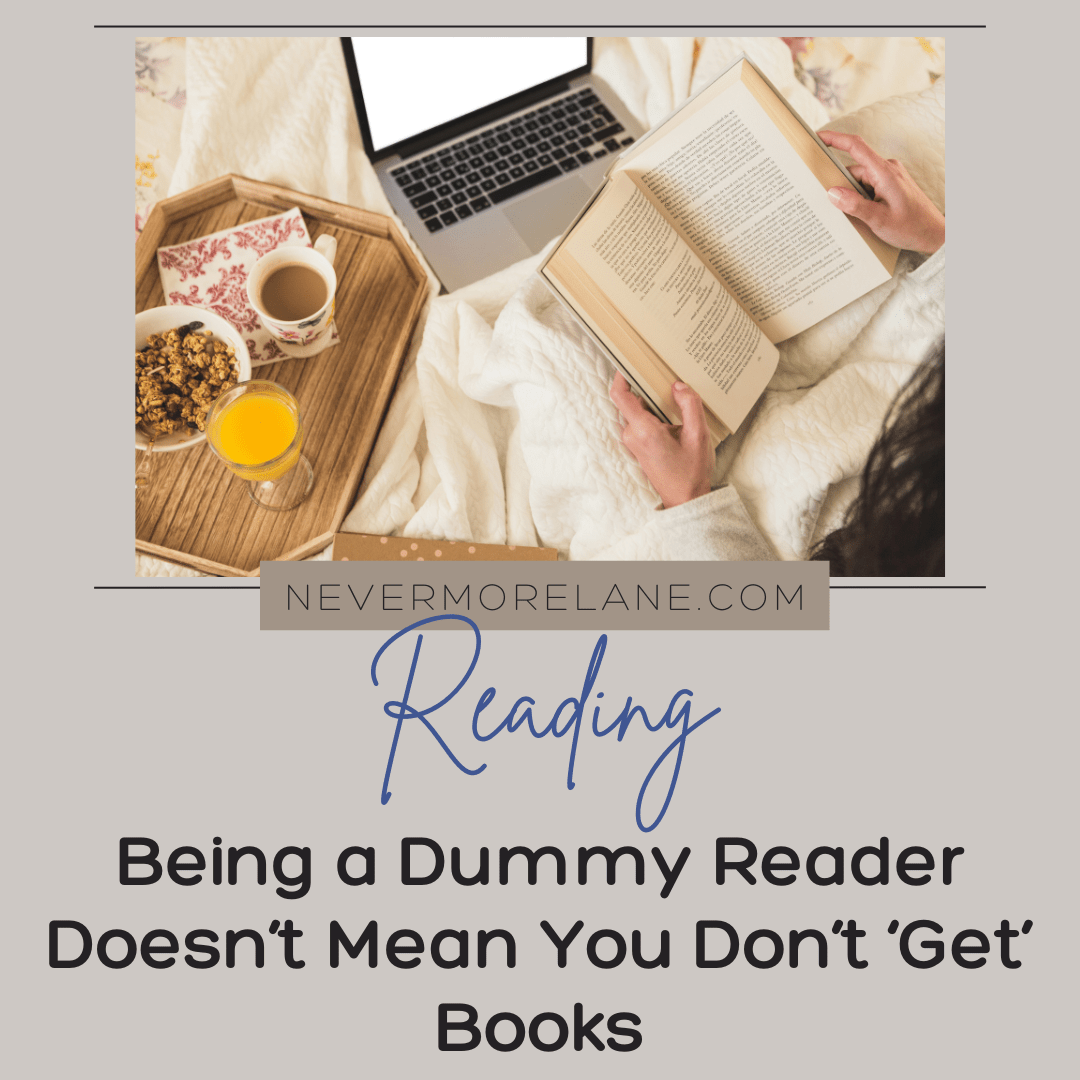
You know that moment when someone asks what you’re reading, and you hesitate before answering? Maybe you’re deep into a cozy mystery series, a romance novel with a pastel cover, or a young adult fantasy, and you can feel the judgment creeping in before you even speak. There’s this unspoken hierarchy in the reading world that suggests some books are more “worthy” than others, and if you’re not tackling dense literary fiction or academic texts, you’re somehow not a “real” reader. That weight of expectation can turn the simple pleasure of reading into an anxiety-inducing performance.
Here’s the truth that nobody talks about enough: the books you choose to read say absolutely nothing about your intelligence, depth, or capacity to understand complex ideas. The shame that comes from being labeled or labeling yourself as a “dummy reader” is manufactured nonsense designed to make you feel small for enjoying what you enjoy. Reading is supposed to be a doorway to other worlds, a companion in quiet moments, a source of comfort and growth. It was never meant to be a competition or a measure of your worth as a thinking person.
What if you could release that shame entirely and embrace your reading life exactly as it is? Imagine picking up that beach read, that graphic novel, or that romance without a single whisper of self-doubt. At Nevermore Lane, we believe in the magic of reading in all its forms, the kind of magic that happens when you give yourself permission to love what you love without apology. Let’s explore why being a so-called “dummy reader” actually reveals a sophisticated understanding of what books can offer and why your reading choices deserve celebration, not justification.
Why Reading Preferences Don’t Measure Intelligence
The assumption that reading “easy” books reflects limited intelligence is based on a fundamental misunderstanding of how reading works and what it offers. Intelligence is multifaceted and complex, encompassing emotional wisdom, creative thinking, analytical skills, practical knowledge, and dozens of other capacities that no single book or genre can fully engage. When you choose a cozy mystery over a philosophical treatise, you’re not demonstrating intellectual limitation. You’re making a choice about what kind of mental and emotional experience you want to have at that moment.
Consider this: some of the most brilliant people you know probably enjoy “simple” entertainment in other areas of their lives. The astrophysicist who watches reality TV. The surgeon who loves pop music. The lawyer who plays mobile games. We don’t question their intelligence based on these choices because we understand that recreation serves a different purpose than professional challenge. Reading deserves the same nuanced understanding. A neuroscientist might spend her workday analyzing brain scans and her evening absorbed in a lighthearted romance, and both activities serve her life beautifully without contradicting each other.
The books you read also reflect what you need at different seasons of life. During periods of stress, trauma, or overwhelm, your brain naturally gravitates toward familiar patterns and comfortable narratives. This isn’t intellectual weakness. It’s psychological wisdom. Your mind knows what it needs to process difficult emotions, find safe spaces for rest, or maintain connection to joy when life feels heavy. Honoring those needs through your reading choices demonstrates self-awareness and emotional intelligence that goes far deeper than literary snobbery ever could.
Furthermore, the ability to find meaning, connection, and insight in supposedly “simple” books requires its own form of sophisticated engagement. When you can appreciate the craft in a well-constructed romance plot, recognize the social commentary in a young adult dystopian series, or find genuine comfort in familiar mystery formulas, you’re demonstrating literary awareness and emotional attunement. These skills matter just as much as being able to decode experimental fiction or parse dense theoretical texts.
The Hidden Depth in So-Called Simple Books
Every genre and reading level contains layers of meaning that become visible when you approach them with genuine curiosity rather than dismissive assumptions. Romance novels, often dismissed as the ultimate “dummy” reading, actually offer sophisticated explorations of consent, power dynamics, emotional communication, and the navigation of intimacy. The best romance authors understand human psychology deeply and craft narratives that help readers explore their own desires, boundaries, and relationship patterns in safe, imaginative spaces.
Young adult fiction, another frequently maligned category, tackles incredibly complex themes through accessible language. Books written for teenagers address identity formation, systemic injustice, mental health, grief, belonging, and moral complexity with a directness that adult literary fiction sometimes obscures behind elaborate prose. The emotional honesty in young adult literature can cut straight to the heart of human experience in ways that resonate across age groups. Reading these books as an adult doesn’t mean you can’t handle “real” literature. It means you value emotional clarity and stories centered on transformation and hope.
Even the coziest of cozy mysteries, with their small-town settings and amateur detectives, contain observations about community, justice, human nature, and the way societies function. They explore how ordinary people respond to extraordinary circumstances, how communities protect or expose their members, and how truth emerges through careful attention to detail. The comfort these books provide doesn’t negate their substance. It enhances their ability to explore difficult topics within a framework that feels manageable and ultimately hopeful.
Genre fiction across the board, from fantasy to science fiction to thrillers, uses imaginative frameworks to examine real human concerns. These books ask “what if” questions that allow readers to explore ethics, politics, technology, and social structures from angles that realistic fiction can’t always access. Dismissing these explorations as lesser because they involve dragons or spaceships or impossible murders reveals a narrow understanding of how storytelling works and what it can accomplish. The packaging doesn’t determine the depth of the gift inside.
Reading as Self-Care Instead of Self-Improvement
The pressure to use reading as a tool for constant self-improvement has transformed what should be a pleasure into yet another productivity metric. This mindset suggests that every book you pick up should make you smarter, more cultured, more informed, or more impressive at dinner parties. But reading can and should serve purposes beyond accumulating knowledge or social capital. Sometimes the most valuable thing a book can do is help you breathe, rest, feel less alone, or remember what joy feels like.
When you frame reading as self-care rather than self-improvement, you free yourself to choose books based on what you need rather than what you think you should want. After a difficult day, your nervous system might need the soothing predictability of a comfort read rather than the challenge of something new and demanding. That’s not intellectual laziness. That’s honoring your whole self, including your emotional and physical needs, not just your brain’s capacity for processing complex ideas. The books that help you regulate, rest, and restore deserve just as much space in your reading life as the ones that stretch and challenge you.
This approach also acknowledges that personal growth happens in unexpected ways and through unexpected sources. The romance novel that helps you understand healthy communication patterns. The cozy mystery that reminds you to pay attention to details in your own life. The young adult fantasy that reignites your sense of wonder and possibility. Growth doesn’t only come from struggle and difficulty. It also emerges from joy, comfort, recognition, and the gentle expansion that happens when you feel safe enough to explore new ideas or remember forgotten parts of yourself.
Rejecting the self-improvement paradigm doesn’t mean abandoning growth entirely. It means recognizing that growth is multidirectional and that sometimes the most radical thing you can do is resist the pressure to always be optimizing yourself. Reading “easy” books can be an act of rebellion against hustle culture, against the commodification of every moment, against the idea that your worth is measured by your productivity and accomplishment. In choosing pleasure over prestige, you’re reclaiming reading as something that belongs to you, not to anyone else’s standards or expectations.
Building Your Reading Life Around What Actually Brings You Joy
The most sustainable reading life is one built on genuine pleasure rather than external validation. When you release the need to prove something through your reading choices, you create space to discover what truly resonates with you. This might mean reading only mysteries for six months. It might mean alternating between graphic novels and dense nonfiction. It might mean rereading the same comfort books over and over while rarely picking up anything new. Whatever pattern emerges when you follow your authentic interests will serve you better than any prescribed reading list ever could.
Pay attention to how different books make you feel during and after reading them. Notice which stories linger in your thoughts, which characters feel like companions, which worlds you want to return to again and again. These responses provide more useful guidance than any critic’s review or bestseller list. Your emotional and imaginative responses to books are data about who you are, what you value, and what feeds your spirit. Trusting those responses means trusting yourself, and that trust extends far beyond your reading life into every area where you make choices about how to spend your time and energy.
Building a joyful reading life also means curating your literary community carefully. Surround yourself with fellow readers who celebrate diverse tastes rather than policing them. Seek out book communities, whether online or in person, where people share recommendations with enthusiasm rather than judgment, where “I didn’t connect with that one” is acceptable and “You shouldn’t read that” is not. The right reading community amplifies your joy and expands your horizons through genuine sharing rather than diminishing your pleasure through shame and comparison.
Remember that your reading life will evolve as you evolve, and that’s exactly as it should be. The books that sustained you during one chapter of life might not speak to you in the next. New interests will emerge. Old favorites might lose their appeal or suddenly become relevant again years later. This fluidity is healthy and natural. Embracing it means approaching your reading life with curiosity and flexibility rather than rigid rules about what you should or shouldn’t enjoy. The freedom to change your mind, follow your instincts, and trust your own experience creates a reading life that grows with you instead of constraining you.
Embracing Your Inner Dummy Reader with Pride
What if “dummy reader” wasn’t an insult at all but rather a badge of honor for someone wise enough to read for pleasure? What if it described someone who has figured out that life is too short to spend it trying to impress people who measure worth by how difficult your entertainment choices are? Reclaiming this label means rejecting the entire premise that some reading is better than other reading and embracing the radical idea that the best book is always the one you actually want to read.
Your dummy reader status, if you choose to claim it, announces to the world that you value your own experience over external approval. It says you’ve done the math and decided that the joy of sinking into a book you love outweighs the fleeting satisfaction of seeming sophisticated to strangers. This choice requires courage because it means standing firm in your preferences even when the literary establishment, social media, or well-meaning friends suggest you should want something different. But that courage pays dividends in the form of a reading life that actually serves you instead of depleting you.
The beautiful irony is that readers who embrace their “dummy” status often end up with richer, more varied reading lives than those who carefully curate their choices for maximum impressiveness. When you’re not worried about what counts as worthy, you’re free to explore widely, to take recommendations from unexpected sources, to revisit childhood favorites, to try genres you might have dismissed as beneath you. This openness leads to discoveries and delights that the self-serious reader, trapped in their narrow definition of quality, will never experience.
So go ahead and be a dummy reader. Read the books with the prettiest covers. Follow series for twenty installments. Reread your comfort books until they fall apart. Choose escapism over enlightenment whenever that’s what your soul needs. Give yourself permission to close a celebrated book that everyone loves if it’s not working for you, and permission to love a book that critics pan if it’s speaking to your heart. Your reading life belongs to you, and the moment you stop apologizing for it is the moment it becomes truly magical.
Your Reading Journey Awaits
Being a dummy reader doesn’t mean you don’t get books. It means you get something far more important: you understand that reading exists to serve your life, not the other way around. You’ve figured out that the relationship between reader and book is personal, intimate, and utterly unique to each individual. The books that change your life might be the ones that would bore someone else to tears, and that’s not a flaw in the system. That’s the beautiful diversity of human experience showing up on the page.
Every time you pick up a book that brings you joy, regardless of its reputation or difficulty level, you’re participating in one of humanity’s oldest and most democratic forms of magic. Stories belong to everyone, not just to those with the “right” education or tastes. Your presence in the reading community, with all your supposedly lowbrow preferences, makes that community richer and more honest. You remind us all that reading is fundamentally about connection, imagination, and the sacred space between a human heart and a well-told story.
The next time someone makes you feel small about your reading choices, remember that you’re not the one with the problem. A person who needs to police others’ pleasure is dealing with their own insecurities, not responding to any actual deficit in you. Your reading life, built on authentic joy rather than performance, is more aligned with the true spirit of storytelling than any amount of prestigious suffering through books you don’t enjoy could ever be. Keep reading what you love, and trust that the right books will always find you when you need them.
Ready for more musings on living a treasured, intentional life? Explore more posts here at Nevermore Lane, where we celebrate the magic in everyday moments and the wisdom in following your own path. And if you’ve enjoyed this perspective on reading without shame, I’d love to continue the conversation over coffee. Pour yourself a cup, settle in with your favorite “guilty pleasure” read, and know that you’re in exactly the right place, reading exactly the right thing, at exactly the right time. Your reading journey is valid, valuable, and entirely your own.
Like what you read? Drop me a line – let’s chat over virtual coffee.
~ Chrystal